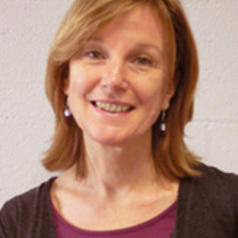
Professor of Philosophy, Macquarie University Jeanette joined Macquarie in 2009 as a CoRE joint appointment between the Philosophy Department and the Macquarie Centre for Cognitive Science. After completing her PhD in 1994 she spent a further ten years in the Philosophy Department at Monash as Lecturer/Senior Lecturer. From 2004 - 2008 she was Principal Research Fellow in The Centre for Applied Philosophy and Public Ethics at the Australian National University and also at Charles Sturt University (2008-9).
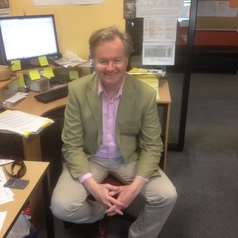
Law Teacher, University of Sydney Allan McCay is an Affiliate Member of the Centre for Agency, Values, and Ethics, at Macquarie University and teaches at the University of Sydney Foundation Program. He has taught at the law schools of the University of Sydney and the University of New South Wales, and the Business School at the University of Sydney. Allan trained as a solicitor in Scotland and has also practiced in Hong Kong He completed his PhD at the University of Sydney in 2013 and his thesis considered the ethical and legal merits of behavioural genetics based pleas in mitigation in sentencing. He is interested in free will, philosophy of punishment and the criminal law’s response to neuroscience.
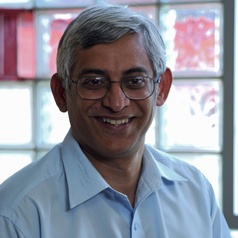
Professor, Department of Optometry and Vision Sciences and Melbourne Neuroscience Institute, University of Melbourne Trichur Vidyasagar (called Sagar) is a neuroscientist, with a special interest in vision. He is a professor in the Department of Optometry & Vision Sciences at the University of Melbourne and also an affiliate of the Melbourne Neuroscience Institute. Sagar first qualified as a medical doctor from the University of Madras. Having already been involved in research into vision and neuroscience during his undergraduate years, he proceeded to do a PhD at the University of Manchester, exploring neuroplasticity in the developing sensory system. He then moved to the Department of Neurobiology at the Max-Planck Institute for Biophysical Chemistry, Goettingen. During the 10 years at MPI, he studied the basic neural circuitry underlying visual perception. This work, which has continued when he moved to Australia, first to The Australian National University (John Curtin School of Medical Research and School of Psychology) and then to The University of Melbourne, has led to a new theory of how basic attributes of a visual scene such as lines, colours and movement are coded by the brain. This understanding could help not only in being able to explain many perceptual disturbances but also the development of neural prostheses for the blind. One of Sagar’s other research areas is the neural basis of visual attention and memory. This work is undertaken in both human subjects at the cognitive level as well as in trained macaques at the cellular level, thus seeking to link our understanding from the cellular to cognitive stages. The work of his team has also helped to elucidate the neural mechanisms that different parts of the brain use to communicate with each other. This research programme has led to insights into the neural processes that enable the brain to search for objects in the cluttered world around us and match our perceptions to stored memories, helping to further understand a number of neurological disorders such as dyslexia, ADHD and schizophrenia. Most notably, Sagar has developed a new theory that describes the neural machinery that we use for reading and identifies a basic aspect of visuo-spatial attention as the underlying reason for the differences in reading performance between good and poor readers. Sagar has over 75 peer-reviewed publications in neuroscience. Additionally, he has had a life-long interest in the ecological impact of the food we eat and done his own (unpublished) calculations that show how even halving the present meat and dairy consumption in the world could potentially prevent catastrophic global warming due to the reduction in its direct ecological footprint and due to the carbon sequestration from the reforestation of large tracks of current pasture and croplands that were previously woodlands.
Project manager and author for Journalism, Media and Democracy (JMAD) Research Center, Auckland University of Technology Merja Myllylahti is a researcher at Auckland University of Technology in New Zealand. Her research interests lie in digital media economy , online news business models and media ownership. She is also a project manager and author at the AUT Center of Journalism, Media and Democracy (JMAD). She is experienced financial journalist and TV reporter having worked 15 years in London for newspapers, TV and online media.
Professor of Social Policy, London School of Economics and Political Science Anne Power is a graduate in Modern Languages from the University of Manchester. She obtained the graduate Diploma in Social Administration at the London School of Economics in 1964 and an MA in Sociology from the University of Wisconsin in 1966. She taught in Tanzania, then worked with Martin Luther King’s ‘End Slums’ campaign in Chicago in 1966. On her return to Britain she was Warden at the Africa Centre in London from 1966-67 and then Friend’s Neighborhood House in Islington between 1967 and 1972 where she organized community based projects. From 1972 to 1979 she was Coordinator of the North Islington Housing Rights Project reversing slum clearance in favor of regeneration, securing rehousing rights for ethnic minority and furnished tenants, developing estate based management and organizing tenant management co-operatives. She was appointed national consultant to the Department for the Environment’s Priority Estates Project between 1979 and 1989 and helped local authorities in England and Wales to rescue run down estates. She also acted as advisor to the Welsh Office. In 1985 London University awarded her a PhD on the history of council housing and the emergence of unpopular estates. In 1991, Anne Power became founding Director of the National Tenants Resource Centre, which opened in 1995 at Trafford Hall, Chester and provides residential training for people living and working in low-income communities. Anne Power is Professor of Social Policy and Director of the post-graduate MSc/Diploma in Housing at the London School of Economics. Since 1987 she has been involved in European, American and international housing and urban problems and as a result has developed a new housing MSc/Diploma in international housing and social change. In 1997, Anne Power became Deputy Director of the ESRC funded research Centre for the Analysis of Social Exclusion (CASE). She is responsible for research into change in poor neighborhoods, the impact of poor neighborhood conditions on families; a study of area abandonment; and evaluation of community self-help linked to training. Other research interests include European, American and international urban problems; crime; social exclusion; role of residents; design in relation to social organization; social and management problems; central / local government relations; community involvement; sustainable development. Anne Power is a member of the government’s Housing and Urban Sounding Boards, advising Ministers on housing policy and urban matters. She is also a member of the Sustainable Development Commission, chaired by Jonathon Porritt, set up to suggest ways to reconcile the needs of the environment, the economy and society. In May 2002 she was appointed Chair of the Independent Commission of Inquiry into the Future of Council Housing in Birmingham, and produced a report, ‘One size doesn’t fit all’. She was awarded a CBE in June 2000 for services to regeneration and promotion of resident participation.
Postdoctoral researcher in Cell and Developmental Biology, UCL Kaustubh Adhikari is a statistical geneticist at University College London, studying phenotypic and genetic diversity in Latin America to identify the genes behind many of our physical appearance traits.