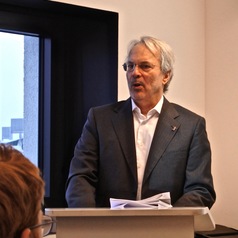
Extraordinary Professor, Department of Political Sciences, University of Pretoria Henning Melber (PhD) is also Senior Advisor/Director emeritus, The Dag Hammarskjöld Foundation, Uppsala/Sweden, Senior Advisor, The Nordic Africa Institute, Uppsala; Senior Research Fellow, The Institute of Commonwealth Studies/School for Advanced Study, University of London; van Zyl Slabbert Visiting Professor for Sociology and Political Sciences at the University of Cape Town in 2017; Professor Extraordinary, Centre for Africa Studies/University of the Free State, Bloemfontein; Co-editor: Africa Yearbook/Managing co-editor: Africa Spectrum/Editor-in-chief: Strategic Review for Southern Africa
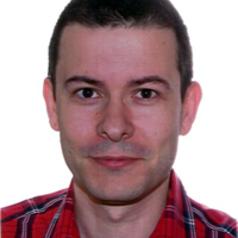
Reader in Physics, University of Bath I am a Research Fellow of the Royal Society and a Reader. Prior to that, I was a Research Fellow in the Cavendish Laboratory, at the University of Cambridge, where I was associated with Homerton College. My research focuses on the interaction between powerful laser light and nanostructured materials. Powerful lasers constitute highly sensitive probes for material properties at the nanoscale, especially through nonlinear optical effect, such as Second Harmonic Generation (SHG). I seeks to apply SHG to chiral plasmonic nano/meta-materials in order to achieve enhanced chiroptical effects. The latter could enable the manufacturing of healthier and safer pharmaceuticals. Research interests: Chirality, Plasmonics, Second Harmonic Generation, Metamaterials, Nanophotonics
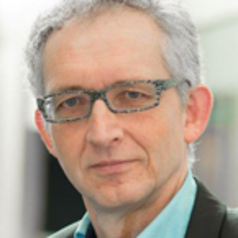
Director of Science Policy Research Unit, University of Sussex Professor Johan Schot joined the University of Sussex as the Director of SPRU – Science Policy Research Unit - in January 2014. He is a Professor in the History of Technology and Sustainability Transitions Studies. His research is wide ranging but has always focused on integrating social science and historical perspectives for a better understanding of the nature and governance of radical socio-technical change. Prior to coming to Sussex, he held academic posts at the Eindhoven University of Technology and University of Twente, Netherlands. Under Johan’s directorship, SPRU is embarking on an ambitious, new strategy to expand and build on its impressive track record across research, teaching, impact and engagement. The strategy, designed in the lead-up to the 50th anniversary in 2016, will draw on SPRU’s extensive activities and capture the best thinking within and beyond SPRU. As part of this new strategy, Johan and SPRU colleagues aim to develop a new innovation theory which will address the current crisis of capitalism and a number of key challenges our world is facing: inequality, climate change, the democratic deficit, and the need to develop new system of provision for security, food, water, energy, healthcare and mobility. Necessarily the program will theorize the nature, scale and scope of long-term transformative change, and ways of providing directionality to economic growth. The new theory will synthesize insights from economics of innovation, science & technology studies, history of technology, and other relevant fields. Johan is in an excellent position to nurture the development of such a programme in SPRU. His work has always been at the junction of various academic fields and disciplines. In 2009, Johan Schot was elected to the Royal Netherlands Academy of Arts and Sciences (KNAW) for the genuine interdisciplinarity of his work. He has been heavily involved in the development of innovative new concepts and interpretations, and has co-produced highly cited and influential academic contributions. In 2002 he was awarded a VICI grant by the Netherlands Organization for Scientific Research (NWO). This is a personal award for top-scholars comparable with the ERC Advance Investigator Grant. His ability to create and pioneer large scale, creative, academic collaborations has helped to transform policy practices, broaden academic understandings, and develop new innovative outputs in the form of programmes, book series and networks. Johan has always been keen to support and invest in PhD students and early career scholars. He was the founder and director of several doctoral programmes as well as a string of summer schools and master classes. A passionate teacher, Johan has been heavily involved in designing and developing undergraduate and graduate programmes that incorporate social science and humanities perspectives into the education of future business leaders, policy makers, engineers and scientist.
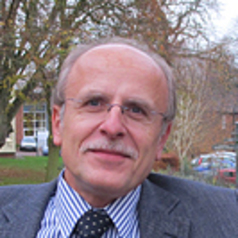
I am Professor of Comparative Politics at Keele University, where I convene the Keele European Parties Research Unit (KEPRU). My current research focuses mainly on political parties, including their organization, their role in deeply divided societies and party competition. I was part of a major ESRC-funded project (hosted by KEPRU) on the impact of European integration on the internal organization of national political parties throughout Western Europe. Recently, I have been working with an international group of scholars on the links between social democratic parties and trade unions. I continue to research into the organizational adaptation of radical right-wing parties and into the strategies of those parties and of their competitors, as well as to specialize on Austrian party politics. In 2009, the Austrian Federal President awarded me the Austrian Cross of Honour for Science and Arts. In 2014 I was appointed to a three-year Guest Professorship at Tongji University in Shanghai and started looking into the organisational adaptation of the Chinese Communist Party. Since 2015, I have been Keele University's Dean for Internationalisation.
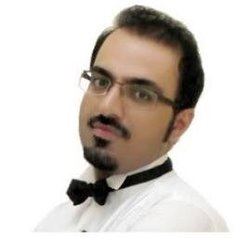
Lecturer in Cyber Security and Forensics, University of Salford Dr.Ali Dehghantanha (www.alid.info) has served for several years in variety of industrial and academic positions with leading players in Cyber-Security and E-Commerce. He has long history of working in different areas of computer security as security researcher, malware analyzer, penetration tester, security consultant, professional trainer, and university lecturer. He regularly travels the globe on speaking, teaching, and consulting engagements and assist clients in securing their information assets. Ali is imminently qualified in the field of cyber-security; he has awarded a prestigious EU Marie Curie post-doctoral fellowship in cyber forensics, Ph.D in Security in Computing and a number of professional qualifications namely CISM (Certified Information Security Manager - ISACA), CCFP (Certified Cyber Forensics Professional - ISC2), CISSP (Certified Information System Security Professional - ISC2), LPT (Licensed Penetration Tester), CEH (Certified Ethical Hacker), CHFI (Certified Hacker and Forensics Investigator) and he is a Certified IT Security Instructor (CEI). As a forensics researcher, Ali is actively researching on latest trends in “Real-Time Malware Detection and Analysis in Mobile and Pervasive Systems”, “0-Day Malware and Exploit Detection Techniques” and “Big-Data Forensics”. He is now attached with University of Salford (UoS)- Greater Manchester and is the program leader for MSc. of Information Security.
Research Associate Professor of Environment and Natural Resources, University of Vermont Dr. Lini Wollenberg received her B.S. (1980) MSc (1986) and PhD (1991) degrees from the University of California, Berkeley, USA. Lini is currently Flagship Leader for Low Emissions Agriculture for Climate Change, Agriculture and Food Security (CCAFS) and Research Associate Professor at the Gund Institute for Ecological Economics and Rubenstein School of Environment and Natural Resources, University of Vermont. She was previously the Director of the Center for Sustainable Agriculture at the University of Vermont (2007-2009); Principle Scientist at the Center for International Forestry Research (CIFOR) (1994-2005); and Program Officer for Asia’s Rural Poverty and Resources Program at the Ford Foundation (1991-1994). Lini is a member of the Forest, Trees and Livelihoods editorial board. Lini’s areas of expertise include mitigation, local governance, environment and rural livelihoods, community-based forest management, participatory action research and adaptive collaborative management. She has worked primarily in Asia, especially Indonesian Borneo. Lini has produced over 60 publications and assisted in more than 85 publications of research partners.