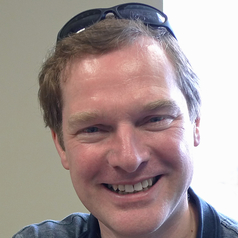
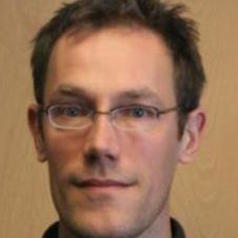
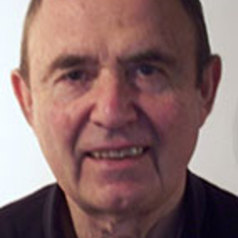
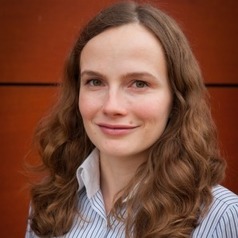
Andrew Maynard is a Professor in the School for the Future of Innovation in Society at Arizona State University, and Director of the Risk Innovation Lab. His research and professional activities focus on risk innovation, and the responsible development and use of emerging technologies. He is especially interested in novel approaches to understanding and addressing risk; effective approaches to developing socially responsive, responsible and beneficial technologies; understanding and responding to the increasingly complex couplings between converging technologies and society; and effective science communication and engagement – particularly through social media. Through the ASU Risk Innovation Lab, he is exploring novel ways of understanding, thinking about and acting on risk from an entrepreneurial and innovation perspective. He is interested in understanding how risk as a “threat to value” shapes evolving risk landscapes around emerging technologies – especially where the value under threat is social, cultural and personal – and how creativity and serendipity can reveal new approaches to navigating these landscapes. Andrew is widely published in the academic press and in public media. His peer review papers stretch from physics and toxicology to risk perception, governance, and policy. He also contributes to a regular column in the journal Nature Nanotechnology (where he writes on emerging ideas and research around nanotechnology and risk), and writes for the column “Edge of Innovation” on the news and commentary website The Conversation. In addition, he directs and produces the YouTube science education channel “Risk Bites”. Andrew’s science training is in physics – specializing in nanoparticle analysis – and for many years he conducted and led research on aerosol exposure in occupational settings. In the early 2000’s he became increasingly involved in guiding US federal initiatives supporting nanotechnology research and development, and in addressing potential risks. In 2005 he became Chief Science Advisor for the Project on Emerging Nanotechnologies (and later the Synthetic Biology Project) at the Woodrow Wilson International Center for Scholars, and for five years helped inform national and global initiatives addressing the responsible development of nanotechnology. Over this period, he became increasingly interested in science communication and science policy, and began working closely with academics, policy makers, industry, non-government organizations, and journalists, on science-informed decision making. This interest continued between 2010 - 2015 as Director of the University of Michigan Risk Science Center, and Chair of the Environmental Health Sciences Department. In 2015 he joined the faculty of the School for the Future of Innovation in Society at Arizona State University to continue his work and collaborations on socially responsible, responsible and beneficial research and development. In the course of his work, Andrew has testified before congressional committees, has served on National Academy panels, and has worked closely with organizations such as the World Economic Forum and the International Life Sciences Institute (ILSI) that promote public-private partnerships. He is currently co-chair of the World Economic Forum Global Agenda Council on Nanotechnology, and on the Board of Trustees of ILSI North America. He is also a member of the National Academies of Science Committee on the Science of Science Communication, and advises the science education/engagement program “I’m a Scientist”. While at the University of Michigan he was involved with the innovative science communication training program RELATE, and continues to serve as an advisor to the initiative. In 2015 he was awarded the Society of Toxicology Public Communication Award.
My research focuses on the transformation of African pastoral systems. I examine how pastoralists adapt to changing ecological, political and institutional conditions that affect their lives and livelihoods. I have been conducting research with pastoralists in the Far North Region of Cameroon since 1993. The long-term research has resulted in strong collaborations with local researchers, which has allowed me to develop innovative, interdisciplinary research projects with colleagues at the Ohio State University and the University of Maroua in Cameroon. Check out my website for more information about my research and teaching activities: http://mlab.osu.edu
Dr. Roundy studies waves of the tropical atmosphere and ocean and how these waves interact with one another and with atmospheric moist deep convection to modulate global weather and climate. Areas of emphasis include analysis of observations to study modulation of tropical cyclogenesis and the El Nino/Southern Oscillation (ENSO) by convectively coupled waves and intraseasonal oscillations.
Roger King is visiting professor at the School of Management at the University of Bath. He is also adjunct professor at the Teaching and Education Development Institute at the University of Queensland, Australia. He is research associate at the Centre for the Analysis of Risk and Regulation, London School of Economics and Political Science. Roger is co-chair of the Higher Education Commission inquiry, and helped produce a report called 'Regulating Higher Education', launched in parliament in October 2013. He has also recently concluded a six-year period as Visiting Professor at the Centre for Higher Education Research and Information (CHERI) at the Open University. Previously, in the 2000s, he has been a Visiting Professor at the following Australian universities: Griffith, QUT, and Sunshine Coast. He has also been Visiting Research Fellow at the Association of Commonwealth Universities (2003-5). He was Vice-Chancellor of the University of Lincoln (UK) from 1989-2001 and the founding Chair of the Institute for Learning and Teaching in Higher Education (now the Higher Education Academy) from 1998-2001. He has been a member of the Board of the Observatory of Borderless Higher Education (OBHE) since its founding in 2001. He has undertaken various consultancy and Board positions in recent years. He is also the Series Co-Editor (with Noel Entwistle) of Palgrave Macmillan's Universities into the Twenty First Century, which has produced a dozen or so well-received titles since 2002. He is also co-convenor of the Higher Education Policy Group for the Political Studies Association. He is on the research advisory group of the QAA. Recent book publications include: The State, Democracy and Globalization (2003); The University in the Global Age (2004); The Regulatory State in an Age of Governance (2007); Governing Universities Globally (2009); and a Handbook on Globalization and Higher Education (with Simon Marginson and Rajani Naidoo, 2011). In addition he has written a number of published journal and other articles, including on global science; network power and social constructivism; in higher education model diffusion; university rankings; and risk-based regulation. Currently he is researching marketization, risk governance, and social networks in higher education policymaking.
My research has always been focused on understanding animal behaviour and how it can be used to improve animal conservation and animal welfare. Although, much of his research is applied some of it addresses fundamental questions about how animals communicate, for example. In recent times my captive research has focused on questions regarding “Fitness for the Ark”; that is, can captive (zoo) animals be used in reintroduction programmes and what training might they need to survive in the wild. In the field I have studied primates, maned wolves, fish and birds. I am particularly interested in the human wildlife interface in how sound pollution from mining activities affects wildlife. And in human-animal interactions in urban environments especially how such interactions can be managed. My research approach is both interdisciplinary and multidisciplinary as I believe strongly that this is how we will be able to answer the ‘big questions’. Thus, I collaborate widely with researchers that include engineers, geographers, mathematicians, psychologists and sport scientists. I have always been fascinated by the natural world and the need to conserve it for future generations. Thus, I studied Biology BSc (Hons) at the University of Nottingham (graduated 1989), followed by a PhD at the University of Edinburgh (graduated 1993) in animal behaviour/animal welfare under the supervision of Prof. Alistair Lawrence. I then embarked on a wildlife career working as Research Coordinator for the Royal Zoological Society of Scotland (Edinburgh Zoo), where I was able to put into practice much of the theory I had gained during my university education. In 2001, I moved to Brazil, as a Professor of Animal Behaviour, to further fulfill my ambition to study wildlife. Here I developed a number of long term research projects on primate species (notably titi monkeys and marmosets), birds, carnivores and urban wildlife. At the beginning of 2013 I moved to the University of Salford to take-up a Chair in Wildlife Conservation.
Maria joined the Business School as a Lecturer in Microeconomics in September 2015. She is at the last stage of her PhD studies at the University of Leicester. Before joining Huddersfield, she taught at the Univesity of Birmingham, and before that worked as a senior economist in Russian Regional Development Bank. Her doctoral studies were sponsored by the ESRC. Maria's research interests lie in the areas of Game Theory, Behavioural Economics and Information Economics. In her PhD thesis, she developed axiomatic models of social preferences and investigated information exchange between firms via industrial espionage. She also programmed and ran an economic experiment which studied preference for fairness in social dilemmas. Maria is a lecturer for the following modules: Intermediate Microeconomics and Quantitative Economics (2nd year BSc Economics) Microeconomics (MSc Economics)