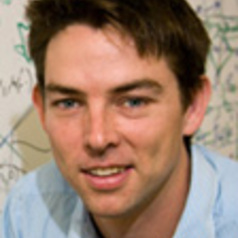
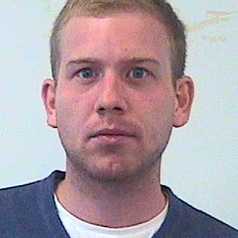
Associate Professor in Physics, The University of Queensland A/Prof Stace completed his PhD at the Cavendish Lab, University of Cambridge in the UK on quantum computing, followed by postdoctoral research at the Department of Applied Mathematics and Theoretical Physics, also at Cambridge. During this time he was a fellow at Queens' College. He has been a researcher at the University of Queensland since 2006, firstly on an ARC Postdoctoral Research Fellowship, then an ARC Research Fellowship, and currently on a Future Fellowship. His research has largely focused on applying methods from quantum optics to solid state devices for use in quantum information applications, and more recently on error correction protocols. He also works on high precision measurement in collaboration with experimental colleagues at the University of Adelaide, in a project whose ultimate aim is to contribute to the international definition of Boltzmann's constant, and some biophysics. Dr Stace also consults for UniQuest, UQ's commercial arm, on scientific and technical matters.
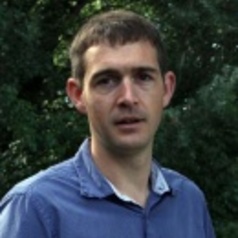
Associate professor of climate science , University of Reading Ed Hawkins is a climate scientist in the National Centre for Atmospheric Science (NCAS) at the University of Reading. Current research interests are in decadal variability and predictability of climate. He runs the Climate Lab Book blog and was an author on the latest Intergovernmental Panel on Climate Change (IPCC) assessment report.
Climate Extremes Research Fellow, University of Melbourne I'm a Research Fellow at the University of Melbourne interested in climate extremes and their attribution to human-induced climate change.
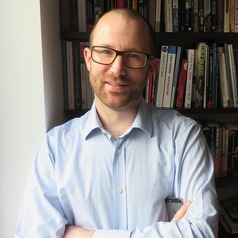
James Mehigan is a lecturer in criminology at the Open University and a barrister at Garden Court Chambers. As a lecturer his research interests include policing, prisons, human rights and criminal law. As a barrister he has acted in numerous high profile appeals and inquests and specialises in criminal defence, prison law, inquests and human rights. He is called to the bars of England & Wales, Ireland and Northern Ireland. He is a trustee of the UK branch of Front Line Defenders, a NGO that focuses on the protection of human rights defenders at risk around the world. James is a former member of the Independent Monitoring Board at Pentonville Prison.
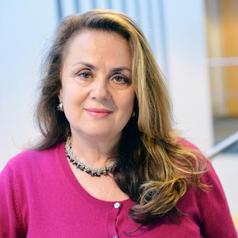
Marianna holds degrees in medicine, health economics, and a PhD in public policy from London School of Economics and Political Science. Before joining academia in 2003 she has worked as a medical doctor in Greece, China, and the UK, as a volunteer and manager for humanitarian organizations Médecins du Monde and Médecins sans Frontiers in Iraq and Albania, and as the EU senior resident adviser to governments in transition (in Russia, Georgia and Armenia). Marianna is at present a Senior Editor for Organization Studies, and co-directs pro bono an online think tank Centre for Health and the Public Interest a charity that aims to disseminate research informing the public and policy makers (http://chpi.org.uk). Marianna is also a Network Fellow at the Edmond J Safra Center for Ethics, Harvard University in 2014-2015.
Samuel is an ESRC funded doctoral researcher based in the Sussex Centre for the Study of Corruption (SCSC) interested in party funding regimes and corruption in Western Europe. His thesis is titled: Party Funding Regimes and Corruption: Linkages, Relationships and Trends. The research is a comparative study of three advanced democracies in Western Europe (Denmark, France and the UK) and investigates whether a certain type of party funding regime (e.g. public or private funding) leads to the prevalence of a certain type of corruption. There has been little research - academic or otherwise - which attempts to investigate these linkages, the hypothesis is that certain types of party funding regime are not necessarily more corrupt than other types; but that perhaps different types of corruption occur in different types of party funding regime. It is important to understand more about how democracy is funded and how that might lead to specific types of corrupt practices.