Professor Dorrik Stow FRSE: Director, Institute of Petroleum Engineering; Director, Centre for Energy Economics Research & Policy; Professor of Petroleum Geoscience, Heriot-Watt University. He is an internationally renowned geologist and oceanographer with an extensive record of scientific publications, including over 300 scientific papers, numerous books and edited volumes. He specialises in the deep sea and its sedimentary record – modern, ancient and subsurface. In pursuing this scientific quest he has sailed on all the world’s major oceans, and visited, lectured or worked in more than 50 countries. He has worked in and with the oil industry, particularly in their on-going quest for deep-sea oil and gas and on new and tight reservoir targets, and has led major international missions for scientific drilling into the deep Indian Ocean seafloor and the Gulf of Cadiz, as well as many other expeditions on land and at sea. He also maintains a strong interest in the field of geoscience, development and capacity building, especially concerning hazard mitigation, geoscience education and marine management. He is enthusiastic to popularise ocean and earth sciences through lectures, writing and broadcast.
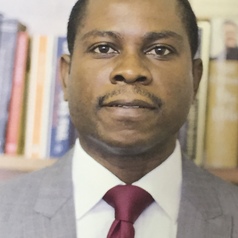
Appointed as an associate professor of economics in 2012, and a professor of economics in 2014. Joined UWC in April 2015 from NMMU. NRF Rated as an established researcher in 2012 for the 6-year cycle, 2012-2018.
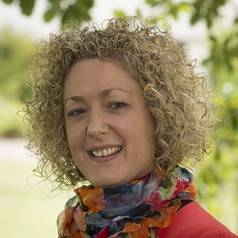
Amanda is the Head of Department of Management at Deakin University. She has experience in higher education in both Australia and the UK, holding previous appointments at Monash University (MBA Programs Director) and the University of Kent (Deputy Director, MBA Programs).
Dr Naomi Stead is Associate Professor in the School of Architecture at the University of Queensland, and Deputy Director of the research centre ATCH (Architecture | Theory | Criticism | History). Her research interests lie in the cultural studies of architecture - in its production, reproduction, and reception, and the place of architecture in the broader cultural imaginary. Current research projects examine experimental writing practices in architecture, and the representation of architecture and architects in popular media. She was a co-investigator on the ARC Discovery project 'The Cultural Logic of Queensland Architecture: Place, Taste and Economy' (2011-2014) with Prof John Macarthur and Dr Deborah van der Plaat, and was the leader of the ARC Linkage project ‘Equity and Diversity in the Australian Architecture Profession: Women, Work and Leadership’ (2011-2015) which led to the founding of the award-wnning website Parlour: Women, Equity, Architecture, edited by Justine Clark. Having been trained as an architect at the University of South Australia, Stead received her PhD from the University of Queensland, and has taught at the University of Technology Sydney, and the University of Queensland. Her doctoral thesis, ‘On the Object of the Museum and its Architecture’ (2004), examined the cultural politics of architecture in recent, purpose-built social history museums. Stead edited the 2012 book Semi-Detached: Writing, Representation and Criticism in Architecture (Uro, Melbourne, 2012). She was from 2012-2015 co-editor of Culture Unbound: Journal of Current Cultural Research (Norrkoping, Sweden), and from 2011-2014 editor of Architectural Theory Review (Sydney). Stead has been a visiting postdoctoral fellow at the Advanced Cultural Studies Institute of Sweden, and a UQ Postdoctoral Research Fellow. Her scholarly work has been published in anthologies such as Critical Architecture (Jane Rendell et al. eds, Routledge, London, 2007), Architecture and Authorship (Katja Grillner et al. eds, Black Dog, London, 2007) and Architecture, Disciplinarity and Art (Andrew Leach and John Macarthur eds, A & S Books, Ghent, 2009), and Mongrel Rapture (Mark Raggatt and Matiu Ward eds, Uro, Melbourne, 2015). She has published in journals including the Journal of Architecture, Volume, OASE, Performance Research, JAS: Journal of Australian Studies, Fabrications, and Critical Studies in Television. She is a past Editorial Board member of the Society of Architectural Historians of Australia and New Zealand, and has edited three volumes of conference proceedings. She has supervised eleven PhD and research Masters students to completion, and been a keynote at Australian and international conferences. Stead also maintains a number of ‘para-academic’ writing, exhibition, and art projects. These include the 2009 exhibition ‘Mapping Sydney: Experimental Cartography and the Imagined City’ at the UTS DABLab; the 2015 exhibition 'Hung Out to Dry: Space, Memory, and Domestic Laundry Practices,' with Kelly Greenop and Allison Holland at the UQ Art Museum; the 2015 exhibition 'Portraits of Practice: At Work in Architecture' with Justine Clark, Maryam Gusheh and Fiona Young at the Tin Sheds Gallery, Sydney. In 2009 Stead made a series of short films for the UTS Equity and Diversity Unit in collaboration with Sam Scotting; she has an ongoing writing collaboration with Dr Katrina Schlunke of UTS; and continues an ongoing visual research project Documentation: The Visual Sociology of Architects. Stead is widely published as an art and architectural critic, having written more than fifty commissioned feature and review articles in industry magazines. These include Places Journal (for which she is a columnist), Architecture Australia (of which she was a contributing editor 2003-2012), Architectural Review Asia Pacific, Monument, Artichoke, Pol-Oxygen, and [Inside]: Australian Design Review. In 2008 she was awarded the Adrian Ashton Prize for architectural writing by the NSW chapter of the Australian Institute of Architects.
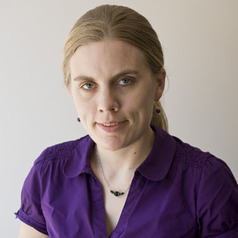
Dr Jo Abbott is a health psychologist, research fellow and the Deputy Director (Acting) of the National eTherapy Centre at Swinburne University of Technology. Dr Abbott's research interests include the development and evaluation of technology-delivered health interventions, sleep psychology, mental health, psycho-oncology and health psychology.
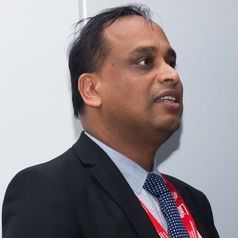
Dr Sen is an expert in nano chemistry and nano-biomaterials with more than 20 years research experience from laboratory scale development to commercial products. He is the principal inventor of three Great Britain patents and has published more than 50 high impact peer review journal articles of his original work, two high impact review articles, two book chapters and seven articles in books in the area of nano-biomaterials chemistry. He managed several research projects as a principle investigator in the past and currently managing a unique research area “Magnetic Hyperthermia” in collaboration with nanoscale Biomagnetics SL, Spain funded partially by Royal Society, UK. He is the coordinator of one on-going international project funded by UKERI (www.nanowateratulcan.org) in collaboration with two industrial organisations and one academic organisation. He has successfully delivered as a chair / coordinator of one International workshop on magnetic nanomaterials in August 2015 (https://nanowateratuclan.org/an-international-workshop-on-magnetic-nanoparticles/) and one international symposium “Functional Nanomaterials in Industrial Applications: Academic-Industry Meet” in March 2016 (www.nanosymposiumatuclan.net). Due to his outstanding research reputation, he has been invited to present his group’s research work at top international nanotechnology conferences across the globe, chaired several sessions and participated as a panel member of several forum discussion with academic and industrial organisations. He is a Fellow of Royal Society of Chemistry, Higher Education Academy, UK and member of the Editorial board of two peer review journals, a member of the peer review panel of the research council UK and Royal Society, UK. He has also completed a foundation degree in project management (PRINCE II) endorsed by the UK government as the project management standard for public projects