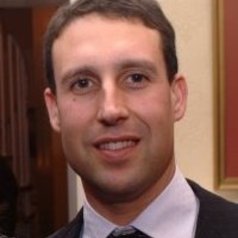
Rajani Naidoo is Professor and Director of the International Centre for Higher Education Management, School of Management, University of Bath, UK. She sits on the editorial board of numerous journals and is on the research and development steering committee of the European Foundation for Management Development. Her research interests include new forms of imperialism in higher education and the transformation of higher education into a global commodity; higher education for global wellbeing and the changing nature and conditions of the academic profession.
I am a Reader in Genetics at the University of Aberdeen. I graduated in Biochemistry from Imperial College London, and received my PhD from the University of Cambridge, after which I carried postdoctoral research at the University of Colorado and the Netherlands Institute of Cancer Research, Amsterdam.
Dr Alex Ireland is a Research Associate within the School of Healthcare Science at Manchester Metropolitan University. His main research interest is in how the muscle and impact forces which squash, bend and twist our bones during movement end up determining their size and shape. This work has involved examination of a number of different populations from spinal cord injury patients to elite tennis players, and from toddlers to nonagenerian pole vaulters. Alex is currently employed on an MRC-funded project investigating how changes in our motor nerves affect our muscles and movements as we age.
Ian McAuley's research and teaching interests are in the fields of public sector management and public policy. He has qualifications in Engineering (BE) and Management (Dip Bus Mgt) from the University of Adelaide and public administration (MPA) from the John F Kennedy School of Government, Harvard University.
Dr Samuel Alexander is a lecturer with the Office for Environmental Programs, University of Melbourne, teaching a course called ‘Consumerism and the Growth Economy: Interdisciplinary Perspectives’ in the Masters of Environment. He is also a research fellow with the Melbourne Sustainable Society Institute and co-director of the Simplicity Institute. In 2015 he published two books of collected essays, 'Prosperous Descent: Crisis as Opportunity in an Age of Limits' and 'Sufficiency Economy: Enough, for Everyone, Forever' both available from the Simplicity Institute publications page. His other books include 'Simple Living in History: Pioneers of the Deep Future', 'Entropia: Life Beyond Industrial Civilisation', and 'Voluntary Simplicity: The Poetic Alternative to Consumer Culture.'
Robert's primary research interest is in software engineering, and specificially software testing and reliability. His work on adaptive random testing has been cited in the latest version of the IEEE Software Engineering Body of Knowledge (SWEBOK), guide to "generally accepted knowledge". The IEEE is the global professional organization of software engineering practitioners and researchers. He has also conducted research into testing web applications, as well as the social and psychological aspects of testing and broader software engineering practice.