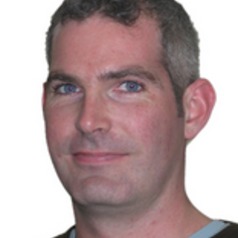
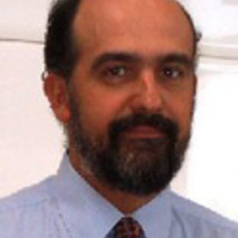
Michael specialises in EU Law, particularly EU constitutional law, the Single Market and EU welfare law. His work on the EU constitution and institutions covers processes of constitutional reform as well as the relationship between Union law and the national legal systems. He has published widely on the EU's constitutional framework after the Lisbon Treaty, on the principle of direct effect of Union law in national courts, and on the enforcement of Union law. Michael has also written extensively on single market law, especially the free movement of goods, persons and services, and processes of harmonisation of Member State laws. In the field of EU welfare law, Michael's research has focused on the interaction between free movement rights and social security entitlement and the impact of EU citizenship in this area. Michael looks in particular at the role played by the Court of Justice in shaping and delimiting citizenship and fundamental rights. Together with other members of the Liverpool European Law Unit, Michael's research has contributed to wider public and political debates about European law. For example, Michael has provided written and oral evidence to a range of Parliamentary committees and enquiries; and acted as an external advisor to various Government departments and EU institutions on important developments - such as the enactment of the European Union Act 2011, the Review of the Balance of Competences Between the UK and the EU, and efforts to resolve the Eurozone crisis. Michael is Joint Editor of the Common Market Law Review - the world's leading journal for European legal studies.
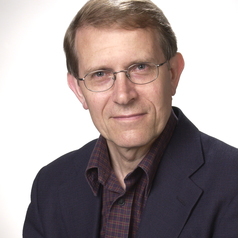
David Hutchison has been leading a research group in computer networks for 30 years, focusing largely on Quality of Service (QoS) and more recently on resilient systems. He has completed many projects, mostly with international and industry collaborations, and has written many papers in his areas of interest. He has served on the key conference technical program committees in his field and on several journal and book publishing editorial boards.
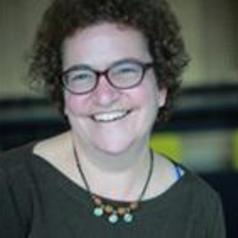
Carolyn Whitzman is Professor in Urban Planning at the University of Melbourne. She is the lead researcher for Transforming Housing and lead editor of 'Melbourne: What Next? A discussion on creating a better future for Melbourne' (Research Monograph No. 1, Melbourne Sustainable Society Institute, University of Melbourne, 2014), 'Building Inclusive Cities: Women’s Safety and the Right to the City' (Earthscan, 2013), author of 'Suburb, Slum, Urban Village: Transformations in a Toronto Neighbourhood 1875-2002' (University of British Columbia Press, 2009) and 'The Handbook of Community Safety, Gender, and Violence Prevention: practical planning tools' (Earthscan, 2008), and the co-author of 'Safe Cities: guidelines for planning, design, and management' (Van Nostrand Reinhold, 1995). She has also published numerous peer-reviewed scholarly publications, book chapters, and reports on partnerships for social justice in the city, with particular emphasis on the supporting the rights of women, children and people with disabilities to access affordable housing, public transportation, social services, and public space.
I am a PhD student at the University of Cambridge in the faculty of Education. My current research examines the ways in which behavioural genetics research on intelligence does and could shape how American educators conceptualize intelligence and student success. Specifically, I study how genetics research on IQ and educator understandings of intelligence may engage with the phenomenon of ethnic minority and low income underrepresentation in US gifted education programs.
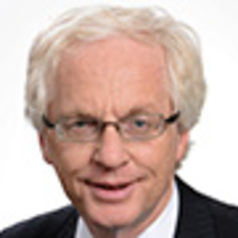
Roger joined Huddersfield in February 2011, having previously been at Manchester. After his PhD at Cambridge, he has worked on particle physics experiments at DESY (TASSO, and the discovery of the gluon, and subsequently JADE, and the measurement of the B lifetime) , CERN (OPAL doing precision studies of the Z ), and SLAC(BaBar, and the discovery of CP violation in B mesons). He is currently a member of the LHCb collaboration. He has written a textbook on Statistics, founded the Cockcroft Institute, started the ThorEA association, and originated the National Particle Physics Masterclasses. He was the PI of the CONFORM project that led to the successful operation of EMMA, the worlds's first nsFFAG accelerator.
Nauro Campos is Professor of Economics and Finance at Brunel University London, a post he has held since 2005. He is also a Research Fellow at IZA-Bonn and a Research Professor at ETH-Zürich. His main fields of interest are political economy and European integration. He has previously taught at the Universities of Bonn, CERGE-EI (Prague), Newcastle, Paris 1 (Sorbonne) and Warwick. He was a Fulbright Fellow at Johns Hopkins University (Baltimore), a Robert McNamara Fellow at The World Bank, and a CBS Fellow at Oxford University. He is a member of the Scientific Advisory Board of the (Central) Bank of Finland and was a visiting scholar (usually more than once) at the IMF, World Bank, European Commission, University of Michigan, ETH, USC, Bonn, UCL and Stockholm. From 2009 to 2014, he was seconded as Senior Economic Advisor/SRF to the Chief Economist of the Department for International Development (during the reigns of both Winters and Dercon.) He received his Ph.D. from the University of Southern California (Los Angeles) in 1997, where he was lucky enough to learn about institutions from Jeff Nugent and Jim Robinson and (more than) happy to be Dick Easterlin’s RA for three years. His research has been supported, among others, by the European Commission, World Bank, Spencer Foundation (Chicago), Department for International Development, and the Economic and Social Research Council.