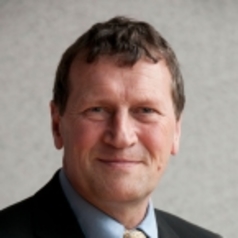
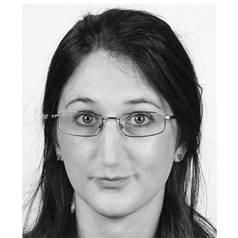
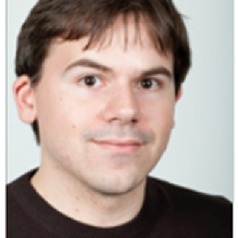
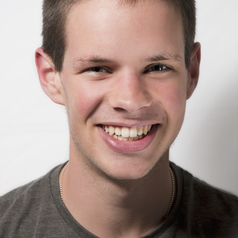
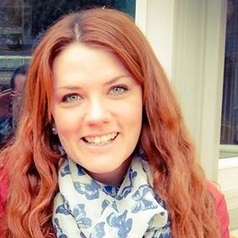
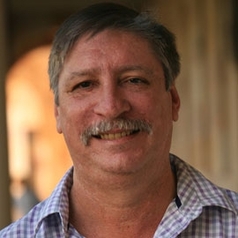
Before coming to MMU, I led Social Work and Criminal and Community Justice teams at other universities. I have been a lecturer in mental health for fifteen years. Prior to becoming a lecturer, I spent fourteen years in various roles within the mental health service, in particular as an Approved Mental Health Professional. Thirty years ago I founded (in Sheffield) the first service for male sexual abuse survivors outside London and am a well-respected figure in the survivor community having been a member of the All-Party Parliamentary Group on Rape and Sexual Abuse and executive member of The Survivor's Trust. I currently manage the teams delivering social work, social care and social change degrees. I have conducted research into the needs and experiences of male survivors for some time, but have also provided consultancy and published on the mental health needs of asylum seeker children. More recently, I have diversified into other areas of mental health promotion and am working on developing resilience in children which was the main focus of my PhD.
I am researching the process of atmospheric carbon dioxide in the ancient Mars atmosphere being sequestered into stable mineral carbonate. Such carbonate minerals have been observed by satellite, rovers, landers and in meteorites from Mars that have landed on Earth. I examine these sources and attempt to resolve the mineralogy and reaction pathways involved. There is a lot of advanced microscope work of Mars fragments, which I love. I also conduct laboratory experiments in pressure vessels that mimic early Mars hydrothermal systems. We can utilise the same reactions in rock formations on Earth to store atmospheric carbon dioxide as minerals. A method much more stable than other current carbon capture and storage methods. I am also working with Engineers in Space Glasgow to build a new prototype rover tool that uses ultrasonic grinding to expose a smooth rock surface, so that rock reactions can be observed more clearly. I write weekly for the Huffington Post and run the public outreach project 'Science Hooker': Check it out.
I am a Research Associate at the University of Kent, working as part of the NORFACE research project entitled 'Welfare State Futures: Our Children’s Europe' (WelfSOC). My research interests include Euroscepticism, differentiated integration in the European Union and comparative party politics in Europe. I hold a PhD in Politics from the University of Edinburgh, a LL.M. in European Law from the University of Kent and a BA in Political Science from the University of Namur (Belgium). Prior to joining Kent, I worked as a Teaching Fellow in Politics at the University of Bath, and as a guest researcher at the ARENA Centre for European Studies (University of Oslo). I tweet @BenLeruth.
James is a PhD student at Queen Mary University of London. He is interested in conservation and population genetics with a focus on woody plants. His current research seeks to understand the decline of Dwarf Birch in the Scottish Highlands due to habitat fragmentation, climate change and population genetic processes. James also has extensive field experience on biodiversity research expeditions around the world, from the deserts of Arabia, to the Amazon rainforests. He founded the social enterprise Discover Conservation, and is passionate about citizen science and public engagement. James also speaks regularly to a variety of audiences across the UK. For more information, please visit www.jamesborrell.com
My research broadly includes impacts of and responses to sexual violence, conflict related abuse and torture. I am particularly interested in the effects of these on women seeking asylum, specifically in relation to accessing support in key dispersal areas. I am currently researching the impacts and harms of the British asylum system on women seeking asylum in Merseyside, including the harms of immigration detention and wider forms of structural violence. Findings from this, and my previous research, will be published in my first monograph in 2016. Affiliation: European Group for the Study of Deviance and Social Control (Board Member) Sociology of Rights Group British Sociological Association (Law, Crime and Rights conference convener) Prisons, Punishment and Detention Working Group (Co-ordinator) Merseyside Rape and Sexual Abuse Centre (Board Member) Research interests Recent publications Books and Book Chapters Canning, V. (forthcoming – expected 2016) Asylum, Gender and State Power: Harm and Structural Violence in the British Asylum System Oxon: Routledge. Canning, V (ed.) (2014) Sites of Confinement: Prisons, Punishment and Detention, European Group for the Study of Deviance and Social Control Publishing. Canning, V. (2011) Who’s human? Developing sociological understandings of the rights of women raped in conflict, in Hynes, P., Lamb, M., Short, D. and Waites, M. (eds.) Sociology and Human Rights London: Routledge. Journal Articles Canning, V. (2015) Unsilencing Sexual Torture: Responses to Refugees and Asylum Seekers in Denmark, British Journal of Criminology, Online First: http://bjc.oxfordjournals.org/content/early/2015/08/14/bjc.azv079.abstract Canning, V. (2014a) International Conflict, Sexual Violence and Asylum Policy: Merseyside as a Case Study, Critical Social Policy, February 2014, Vol. 34, Issue 1: 23-45. Canning, V. (2014b) Women, Asylum and the Harms of Detention Criminal Justice Matters December 2014, Vol. 98. Canning, V. (2011) Women Seeking Sanctuary: Questioning State Responses to Violence against Women in the Asylum System, Criminal Justice Matters September 2011, Vol. 85. Canning, V. (2010) Who’s human? Developing sociological understandings of the rights of women raped in conflict, International Journal of Human Rights Vol. 14, nos 6-7, 847-862. Wider Publications Canning, V. (2014a) Violence in Britain: Behind the Wire at Immigration Removal Centres, The Conversation, available at http://theconversation.com/violence-in-britain-behind-the-wire-at-immigration-removal-centres-25519 last accessed 26/08/2014. Canning, V. (2014b) Interview: Amnesty International Finds Global Torture ‘Flourishing’ available at http://voiceofrussia.com/uk/news/2014_05_13/Amnesty-International-report-finds-global-torture-flourishing-3174/ May 2014. Canning, V. (2013) Illusions of Freedom: The Paradox of Border Confinement, Oxford University Border Criminologies available http://bordercriminologies.law.ox.ac.uk/illusions-of-freedom/ last accessed 17/02/2014. Canning, V. (2011a) Policy or Practice? Exploring Support for Conflict Rape Survivors Seeking Asylum in Merseyside, Asylum Aid: Women’s Asylum News June 2011. Canning, V. (2011b) Transcending Conflict: Exploring Sexual Violence Support for Women Seeking Asylum in Merseyside, PhD Thesis (awarded March 2012). Conference Participation: Selected
Craig has extensive consulting experience and has undertaken a number of projects looking at renewable energy scenarios, including the preparation of a discussion papers for both government and industry. Most recently, he co-authored The University of Queensland’s latest major energy research paper on Delivering a Competitive Australian Power System. A member of the University’s Renewable Energy Technical Advisory Committee, he was instrumental in having the 1.22 MW Solar Photovoltaic Array at the St Lucia campus deployed. Craig is also a member of the School of Economics, Energy Economics and Management Group (EEMG), which focusses on making key solar technologies more affordable. In conjunction with this group, he worked on the I-Grid Research Cluster with the CSIRO Distributed Energy Flagship to model and quantify the benefits of distributed energy systems while taking into account the costs of deploying and integrating them into the Australian electricity system.