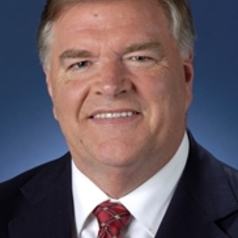
Mr Beazley was elected to the Federal Parliament in 1980 and represented the electorates of Swan (1980-96) and Brand (1996-2007). Kim Beazley was a Minister in the Hawke and Keating Labor Governments (1983-96) holding, at various times, the portfolios of Defence, Finance, Transport and Communications, Employment Education and Training, Aviation, and Special Minister of State. He was Deputy Prime Minister (1995-96) and Leader of the Australian Labor Party and Leader of the Opposition (1996-01 and 2005-06). Mr Beazley served on parliamentary committees, including the Joint Intelligence Committee and the Joint Foreign Affairs, Defence and Trade Committee. After his retirement from politics in 2007, Mr Beazley was appointed Winthrop Professor in the Department of Politics and International Relations at the University of Western Australia. In July 2008 he was appointed Chancellor of the Australian National University, a position he held until December 2009. Mr Beazley took up an appointment as Ambassador to the United States of America in February 2010. He served as Ambassador until January 2016. Upon returning to Australia he has been appointed as President of the Australian Institute for International Affairs, Distinguished Fellow at the Australian Strategic Policy Institute, Senior Fellow at the Perth USAsia Centre and Board Member of the Australian American Leadership Dialogue. In 2009, Mr Beazley was awarded the Companion of the Order of Australia for service to the Parliament of Australia through contributions to the development of government policies in relation to defence and international relations, and as an advocate for Indigenous people, and to the community.
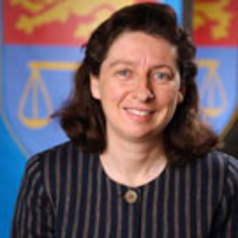
Anne Twomey has practised as a solicitor and is admitted to practice in New South Wales, Victoria, the ACT, and the High Court. She has worked for the High Court of Australia as a Senior Research Officer, the Commonwealth Parliamentary Research Service as a researcher in the Law and Government Group, the Commonwealth Senate as Secretary to the Senate Legal and Constitutional Committee, and The Cabinet Office of NSW as Policy Manager of the Legal Branch. She has acted as a consultant to various government bodies.
Rhiannon McCluskey is a Research Officer at the Institute of Development Studies. Her research focuses on governance, taxation, and accountability in developing countries. For the International Centre for Tax and Development, she has conducted research in Sierra Leone, Tanzania, and Kenya in order to investigate the effectiveness of donor initiatives to build capacity in international taxation. Rhiannon holds a BA in Peace and Conflict Studies, Political Science and African Studies from the University of Toronto and an MA in Governance and Development from the Institute of Development Studies.
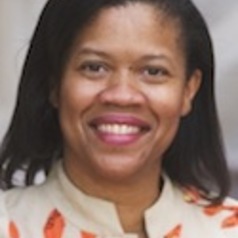
A. Mechele Dickerson is a law professor at the University of Texas at Austin. She holds the Arthur L. Moller Chair in Bankruptcy Law and Practice at the University of Texas School of Law. Before she joined the law faculty at UT Law, she was a member of the faculty at William & Mary Law School. She is the author of “Homeownership and America's Financial Underclass: Flawed Premises, Broken Promises, New Prescriptions.” Professor Dickerson teaches classes on consumer law, debt and spending to law and undergraduate students and is a nationally recognized expert on consumer debt and bankruptcy law. Dickerson's current research explores the causes and consequences of consumer debt and examines how the culture of debt and consumption in this country has been perceived, and has shifted, over time. Professor Dickerson received both her B.A. and J.D. from Harvard University.
I am a Senior Lecturer in Social Policy in the Department of Applied Social Science at Lancaster University. I am also a member of the Centre for Disability Research (CeDR). My research interests include social security, income maintenance and labour market policy and their implications for disabled people. My main current research interests are concerned with analysing contemporary and historical changes in income maintenance and labour market policy. I am interested in the ways in which such policies are shaped by concerns with groups in the population that are deemed to be 'problematic', such as lone mothers and young people, and the ways in which income maintenance and labour market policies are held to be more important because of their macro-economic benefits, rather than their social benefits. I am currently engaged in research at the National Archives which is focusing upon the introduction of Family Income Supplement in 1971 and how one of the guiding principles - that market wages should not be subsidised by the state - which had shaped social security policy making from the introduction of the Poor Law Amendment Act, was overcome by policy makers in the 1970s. More directly related to criminology, I am interested in the press reporting of crime, particularly the reporting of sexual offences and the ways in which groups in the population (most notably black and working class men) are constructed as sex offenders.
John Rennie Short is an expert on urban issues, environmental concerns, globalization, political geography and the history of cartography. He has studied cities around the world, and lectured to a variety of audiences. Recent books include Urban Theory (2015, 2nd ed.), Human Geography: A Short Introduction (2014), Stress Testing The USA (2013), Cities and Nature (2013, 2nd ed.) and Globalization, Modernity and The City (2012). Before coming to UMBC in 2002, he was a Professor in the Maxwell School of Citizenship and Public Affairs at Syracuse University. From 1978 to 1990 he taught at the University of Reading UK. He has held visiting appointments as Senior Research Fellow at the Australian National University, as the Erasmus Professor at Groningen University and as the Leverhulme Professor at Loughborough University. Among his research fellowships are the Vietor Fellowship to the Beinecke Library at Yale University, the Dibner Fellowship at the Smithsonian, the Kono Fellowship at the Huntington Library and the Andrew Mellon Fellowship at the American Philosophical Society.