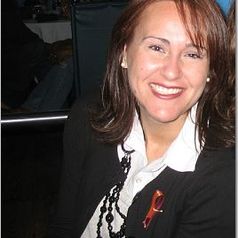
Erin O'Brien
Dr. O'Brien is Chair of the Political Science Department at University of Massachusetts Boston.
1 articlesOur contributors
Meet the researchers, writers and practitioners bringing perspective to the global conversation.
Join the conversation14544 contributors
Dr. O'Brien is Chair of the Political Science Department at University of Massachusetts Boston.
1 articles
I was born and raised in Salina, Kansas, a town near the geographic center of the contiguous United States. I read History and English at the University of Kansas. I first came to Oxford on an undergraduate study abroad year and was immediately drawn to the tutorial system. I was fortunate to return to Britain as a post-graduate Marshall Scholar at Worcester College, Oxford. After finishing a D.Phil. in modern history, I went to Gonville and Caius College, Cambridge on a Junior Research Fellowship, before assuming my present post as University Lecturer in American History and Tutorial Fellow in History at Corpus Christi College. My principal research focuses on nineteenth century American history. From the perspective of the twenty-first century, the rise of the United States appears natural and inevitable. Yet there was nothing pre-ordained about the consolidation of the American Union, nor the establishment of the American empire. I am interested in why this group of former British colonies bound together and how their fragile union survived fundamental ideological and political disputes, such as those unleashed by the entrenchment of slavery in the Southern states. Most of my research has focused on nineteenth century US foreign relations and Americans' paradoxical relationship with empire. As Americans struggled to free themselves from their colonial past, they constructed their own empire, engaged in their own conquests, and exercised effective control over other peoples. My work connects the United States' foreign relations with its project of nation-building at home. In addition to the above, I have secondary research interests in the American Civil War, international finance and economics in the nineteenth century, Anglo-American relations, and US cultural expansion. I supervise post-graduate researchers working on America in the world in the nineteenth and early twentieth century, the American Civil War, and US economic development.
1 articles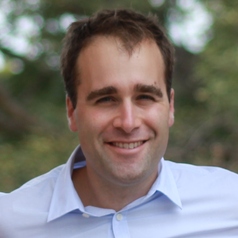
Stefan is a senior principal scientist in strategic foresight in Data61 at CSIRO. He leads a team of researchers and consultants working on scenario planning, megatrends analysis, risk analysis, decision support and strategy problems. His academic qualifications from the University of Queensland and University of New England are in the fields of geography, economics and decision theory. Stefan has published widely in the international scientific literature. His work involves a combination of original research and the provision of consulting and advisory services. Stefan's most recent book "Global Megatrends" is currently available through CSIRO Publishing.
1 articles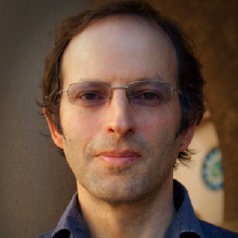
Associate Professor David Glance is the Director of the UWA Centre for Software Practice, a UWA research and development centre. Originally a physiologist working in the area of vascular control mechanisms in pregnancy, Professor Glance subsequently worked in the software industry for over 20 years before spending the last 10 years at UWA. The UWA CSP has developed the eHealth platform MMEx which has been used to provide electronic patient management in WA and other parts of Australia. Professor Glance's research interests are in health informatics, public health and software engineering.
52 articles
Jaime Luque joined the Wisconsin School of Business as assistant professor in the Department of Real Estate and Urban Land Economics in September 2012. Jaime has previously taught at the Department of Economics at the Carlos III University of Madrid. Jaime’s main academic research focuses on mortgages and securities lending. He also has some work on regional and urban economics. Jaime’s research has been published in journals such as Journal of Economic Theory, Journal of Public Economics, and Regional Science and Urban Economics. He has also written opinion pieces for the Financial Times, Expansion and La Repubblica, as well as for the Vox.eu and Eurointelligence economics op-ed sites. Professor Luque's teaching specializations include real estate finance and urban economics. He has recently published the textbook "Urban Land Economics" with Springer International Publisher, an initiative that involved the participation of numerous students from the Real Estate program at the Wisconsin School of Business.
1 articles
Rahul Telang is professor of Information systems and Management at the Heinz College at Carnegie Mellon University and at the Tepper School of Business (Courtesy). He has been at the Heinz College since 2002 and predominantly teaches in the School of Information Systems and Management. Professor Telang’s is broadly interested in how Information and Communication Technologies (ICTs) and associated digitization of information impact consumers, business and policies. Within this thread, his interest lies in two major domains. First is Digital Media Industry with a particular focus on how digitization (and associated piracy) in copyrighted industries is affecting the incentives of content provider, distributors and users. His research is directed towards understanding and shaping an optimal copyright and intellectual property policy in the Digitization Era. He was the recipient of Sloan Foundation Industry Study fellowship and a number of Google Faculty awards. He is also co-director of a center IDEA (Initiative for Digital Entertainment Analytics). He has worked extensively with industry and policy makers on variety of issue surrounding digitization of Media. His second area of work is on economics of information security and privacy. His key interest is in understanding the incentives of various parties (users, firms and hackers), why markets fail, how to create a useful policy framework and how to measure the effectiveness of such policies. His work explored the controversy surrounding vulnerability disclosure, vulnerability markets and their role in generating optimal outcomes. Recently, he has been examining the role of data breach disclosure laws on identity thefts. He was the recipient of NSF CAREER award for his work on economics of information security. He is also part of Cylab and Institute for Infrastructure Protection (I3P). Currently, he is working on a large NSA funded project on examining home users’ security and privacy behavior. Some of his other work has explored the role of broadband in schools, ICTs in for form of EMR (Electronic Medical Records) in hospitals, issue of number portability, exclusivity and so on in mobile industry.
1 articles