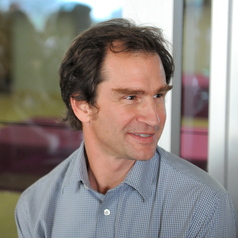
Professor Michael Selgelid is Director of the Centre for Human Bioethics, and the World Health Organization (WHO) Collaborating Centre for Bioethics therein, at Monash University in Melbourne, Australia. He is a member of the Board of Directors of the International Association of Bioethics and serves on the Ethics Review Board of Médecins Sans Frontières. Since 2014 he has served as an Advisor to the WHO Emergency Committee that led to Ebola being declared a Public Health Emergency of International Concern. His main research focus is public health ethics—with emphasis on ethical issues associated with infectious disease. He edits a book series in Public Health Ethics Analysis for Springer and a book series in Practical Ethics and Public Policy for ANU Press. He is Co-Editor of Monash Bioethics Review and an Associate Editor of Journal of Medical Ethics. Michael earned a BS in Biomedical Engineering from Duke University; and a PhD in Philosophy from the University of California, San Diego.
Rebecca Macmillan is a Ph.D. Candidate in the Department of English at the University of Texas at Austin, and currently the Assistant Editor of Texas Studies in Literature and Language. Her dissertation looks at contemporary poetry projects that incorporate visual materials and employ archival strategies to document ordinary forms of present-day crisis. Her broader research and teaching interests include: poetry and poetics, theories of the archive, photography, feminist and affect studies, and memoir.
I am a theoretical physicist working at the University of Bath. I completed my doctoral studies at the University of Oxford in 2007 and have subsequently held research fellowships at the Centre for Quantum Technologies in the National University of Singapore and Keble College, Oxford, as well as a senior scientist post at the Clarendon Laboratory in the University of Oxford. My current research focuses on the dynamical properties of so-called strongly-correlated many-body systems, e.g. ones where interactions and cooperative emerging effects are dominant. Systems I study range from ultra-cold atoms to solid-state materials like high-temperature superconductors.
At the Hintzelab we are researching the evolution of natural and artificial intelligence. We use computational modeling to understand what environments and evolutionary pressures give rise to intelligence, and how cognitive mechanisms evolved. At the same time we want to bring about Artificial Intelligence by the means of evolution. The idea is that conventional approaches in software design will ultimately be limited to our understanding of the human brain, and we simply don’t want to wait until cognitive- and neuro-science figured “it” out, but instead use the one process that already made cognitive entities: evolution!
Malcolm Moran has directed sports journalism programs for nearly a decade after spending more than 30 years at The New York Times, USA TODAY and other publications. Moran is director of the Sports Capital Journalism Program in the Department of Journalism and Public Relations at IUPUI, where he joined the faculty in January, 2013. For more than six years, he was the inaugural Knight Chair in Sports Journalism and Society at Penn State University, where he directed the John Curley Center for Sports Journalism. Since 1980, he has covered more than 25 bowl games with national championship stakes. He has covered 26 NCAA Final Fours, 11 Super Bowls, 16 World Series and three Olympic Games. He is a member of the board of the Football Writers Association of America and has had several stories recognized in the organization’s best writing contest. Moran is a past president of the United States Basketball Writers Association and a member of the organization’s Hall of Fame. In 2007, he received the Curt Gowdy Print Media Award from the Naismith Memorial Basketball Hall of Fame for lifetime coverage of basketball.
Since 1995 I have held the position of Research Scientist at The Ohio State University, where I collect data as part of the National Longitudinal Surveys on income, wealth, and life experiences of thousands of Americans. My personal finance research has been widely quoted in the media and has been highlighted in the Wall Street Journal, USA Today, Fox News, Good Morning America, Scientific American and numerous other news outlets. Besides publishing numerous scholarly articles I wrote the book "Business Information: Finding and Using Data in the Digital Age" for McGraw-Hill/Irwin and "Business Macroeconomics: A Guide for Managers, Traders and Practical People." More information on the macroeconomics book can be found at http://businessmacroeconomics.com/. I also teach at Boston University's School of Management. From 1988 to the present my teaching has spanned a wide range of levels from senior executives taking intensive classes to high school students encountering economic theories for the first time. I have taught giant lectures of over 450 students, classes of fifty, and small seminars with fewer than ten people. My personal blog is found here http://u.osu.edu/zagorsky.1/