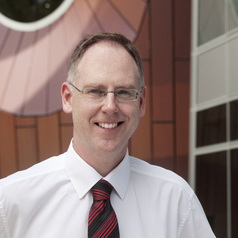
Peter was educated at the University of Otago, the University of New England and Simon Fraser University. He has been a visiting Scholar at the University of Otago, The University of British Columbia, Rutgers University and The University of Oxford. Peter’s research is focused on the interactions between economic growth, economic development and international trade. He has also written on human capital accumulation, trade and environmental issues, the causes of long run growth through history, corruption, military spending and immigration. Peter has also served as an expert consultant to the Productivity Commission and to the Department of Innovation, industry, Science and Research.
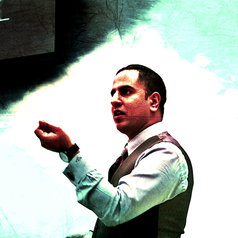
Usman W. Chohan (b. Manhattan, NY) has previously been a Consultant with the World Bank Institute in their department of Social Accountability, working on issues of fiscal governance reform, and specifically, the implementation of Parliamentary Budget Offices (PBOs) to help bring impartial and nonpartisan financial expertise into governance institutions. His work with the World Bank led him to collaborate with and inform experts as far apart as Sydney, Washington DC, Vienna, Kampala, Ouagadougou, Abuja, Ottawa, and Canberra [1]. His budget reform work has been used to challenge and contextualize the laws underpinning legislative budget institutions in even the strongest democracies [2], such as in Canada, where his work was used to inform the landmark parliamentary debate on amending the Parliamentary Budget Office Act (C-476, 2013). Prior to this he was the Special Situations Analyst in the Global Equities Team at Natcan Investment Management, the investment arm of the National Bank of Canada. The Global Equities team had six investment professionals including Usman and $3 billion dollars in Assets under Management (AuM). Usman has an MBA in Strategy and Leadership from McGill University [3]; he has done Masters coursework at MIT-Tsinghua [4]. He is currently pursuing a PhD in Economics on a full scholarship from UNSW (Australia) [5], where he is exploring the Fiscal Policy implications of Legislative Budget Offices. Given his rich 'tri-sector experience' that encompasses private sector, public sector and academia [6], Usman enjoys consulting, research, and teaching in equal measure. He delivered the 2015 Foreign Affairs Lecture in the Global Leadership Program (GLP) at Macquarie University in Sydney [7], and has been a guest lecturer in several courses at McGill University in Montreal since 2013. He is also a Global Shaper of the World Economic Forum in their Canberra Hub (2016). Usman was nominated the Chief Administrator of Urdu Wikipedia in 2005 [8], which he had helped grow, build and code in its embryonic stages, by a 7-2 administrator vote. Usman is also a respected sitar player who, as a leading proponent in a new generation of sitarists [9], has performed live in more than 5 countries on 3 continents, including at the prestigious Borges Center for the Performing Arts in Buenos Aires (2012) [10]. With his voracious appetite for reading, Usman has completed the Goodreads Challenge of reading 100 new books every year successfully since 2012 [11]. Usman is fluent in eight languages [12], and speaks 5 out of the 7 Official languages of the World Bank. These include English, Mandarin [13], French [14], and Spanish [15], among others. Given that his last four residences were Montreal, Buenos Aires, Canberra, and Beijing, you will likely find him roaming somewhere between these four coordinates at the ends of the earth. REFERENCES: [1] http://www.revparl.ca/36/3/36n3e_13_chohan.pdf [2] http://www.parl.gc.ca/legisinfo/BillDetails.aspx?billId=5997160&Language=E&Mode=1&View=10 [3] https://www.mcgill.ca/desautels/programs/mba-programs/meet-our-community/meet-our-students/usman-waqqas-chohan [4] http://usmanchohan.blogspot.com.au/2014/07/my-tsinghua-grades.html [5] https://www.unsw.adfa.edu.au/our-people/mr-usman-chohan [6] https://www.youtube.com/watch?v=anmWMFN4_aI [7] https://www.youtube.com/watch?v=xiikCBP5u48 [8] https://www.ur.wikipedia.org [9] https://www.youtube.com/watch?v=2ECAyLcTtjA&list=UU5LIjx6HsLEK2QuRUb03kYA&index=2 [10] https://www.youtube.com/watch?v=s4lO7kUaZUM [11] https://www.goodreads.com/author/show/13959169.Usman_W_Chohan [12] https://www.youtube.com/watch?v=anmWMFN4_aI [13] Ibid [14] http://www.revparl.ca/36/3/36n3f_13_chohan.pdf [15] https://www.youtube.com/watch?v=2ECAyLcTtjA&list=UU5LIjx6HsLEK2QuRUb03kYA&index=2
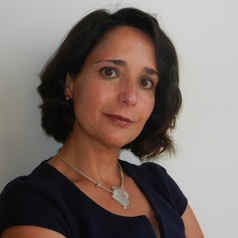
Eunice Goes holds a PhD in Government from the London School of Economics and Political Science(2002), a M.A. in Politics from the University of Warwick (1997) and a B.A. in International Relations from Lusíada University (Lisbon, Portugal, 1994). Dr Goes has taught politics and researched at different British and American universities based in London, namely the LSE, the Royal Holloway College of the University of London, UCL, Ithaca College, amongst others. Dr Goes research interests lie in the areas of British politics, European politics, democracy, the interplay between the media and political institutions, the role of ideas in policy-making and multicultural citizenship. She has written about British politics and the Eurozone crisis. Currently she is currently writing a book on the Labour Party under Ed Miliband which will be published in 2015 by Manchester University Press. In parallel with her academic career, she has worked as a journalist. She started her journalistic career at “Diário Económico”, the Portuguese equivalent of the Financial Times in August of 1993 as a foreign news correspondent, and between 1996 and 2007 she was the London correspondent to the Portuguese reference newspapers “Diário de Notícias” (until 2001) and “Expresso” (from 2001 until 2007). Dr Goes has contributed with articles to “The Independent”, www.opendemocracy.com. She collaborates with the BBC and is a regular guest on the BBC News program “Dateline London”, and on the “World Today”, broadcasted by the BBC World Service. She is a Visiting Research Fellow at the Portuguese Institute of International Relations (www.ipri.pt)
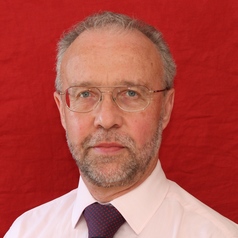
Professor Peter Cowling is a member of the Department of Computer Science and the York Centre for Complex Systems Analysis (YCCSA) at the University of York. His research is focussed on models and algorithms for decision making in games and resource optimisation problems, and to this end he works with a wide range of industry partners in the games and IT industries. He is the Director of 3 large projects in the area of digital games and media: The Digital Creativity Hub (DC Hub -www.digitalcreativity.ac.uk) was recently awarded £18 million in funding which will drive our ambition to become a world centre of research in digital games, interactive media and the space where they converge. It has over 80 partners from digital content industries. The EPSRC Centre for Doctoral Training in Intelligent Games and Game Intelligence (IGGI - www.iggi.org.uk) has over £12 million in support to train 56+ PhD students working with the games industry over the next 7 years. The New Economic Models and Opportunities for digital Games (NEMOG - www.nemog.org), as well as the DC Hub and IGGI is actively investigating how digital games and interactive media can be repurposed to achieve economic, scientific, social and cultural impact - primarily through working with industry and public sector organisations. He has also worked on a number of projects to develop IT decision support systems for road maintenance, personnel scheduling, logistics and manufacturing. He has published over 100 papers in leading scientific conferences and journals and gained over £35 million in research funding across 38 projects.
Phil Godsiff is a Senior Research Fellow at the Surrey Centre for the Digital Economy, (CoDE), part of the Business School at the University of Surrey, UK. CoDE was formed to study the impact of digital technology on business, the economy, and society. Working closely with businesses, CoDE adopts a multi-disciplinary approach to analyzing the broad economic, organizational, and sociological changes brought about by the advance and spread of digital technology. His research interests include the effect of developments in the digital economy on industries, such as financial services, where existing business models may no longer be appropriate, and where new forms of currency and organization, such as crypto- and personal currencies, have the potential to emerge leading to profound effects on the economy and wider society. He is an Investigator on a recently awarded UK Research Council grant titled “CREDIT”, which is examining the nature and practices of these crypto currencies, and will be defining the future research agenda. The main themes of the research are to explore the effect of these “currencies” on the digital transformation of business models, and to clarify issues around governance, standards and regulation. He took part in ministerial roundtable discussions at the UK Treasury after the UK Chancellor’s 2015 Budget announcement of an expanded research programme into Digital and Crypto Currencies. He was a member of the expert panel comprising practitioners and academics which advised Sir Mark Walport, the UK Government Chief Scientific Officer, during his preparation of his report “Distributed Ledger Technology: beyond blockchain” published in January 2016. Phil contributed the chapter on disruptive potential which explored the way blockchain technology might spark the next industrial revolution, and the implications for the economy and society. He holds an M.A. in Economics from Cambridge University, and a PhD in Management from Exeter University. He received his PhD in 2013 with a study on “wicked problems”, (those without a rational solution), and how they impacted the operations of a government agency. He is a Fellow of the Institute of Chartered Accountants, and spent 30 years working at a senior level in in the Financial Services industry.
Neal Hartman is a Senior Lecturer in Managerial Communication at the MIT Sloan School of Management who focuses on organizational communication issues. His teaching of management communication and intercultural communication emphasizes working in teams, conflict and conflict resolution, leadership, and cross-cultural communication. Hartman has lectured on cross-cultural, leadership, and organizational communication issues, and has taught in the International MBA Programs at Tsinghua, Fudan, and Zhongshan (Lingnan College) Universities in China. He also serves as co-lead facilitator for CMI-Enterprises, which is part of the Cambridge-MIT Initiative, working with undergraduate students from MIT Sloan, Cambridge University, and other European universities to develop their entrepreneurial skills. Hartman holds a BA in music theory and composition and an MS in higher education administration from the University of South Carolina and an ABD in organizational communication from the University of Texas.