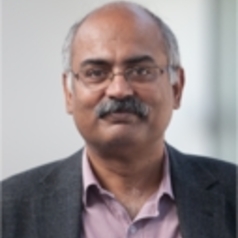
Professor Reich is Professor in the Division of Global Affairs and Department of Political Science at Rutgers University, and a leading international authority on globalisation and on enhancing human security. Professor Reich has had a distinguished career in academic research and administration. His work has been published in the leading journals in his field, and by major university presses. He played a significant leadership role in establishing the Ford Institute for Human Security in the Graduate School of Public and International Affairs at the University of Pittsburgh, an Institute that was created by funding that he generated. Reich served for six years as the inaugural director. Professor Reich currently holds an appointment in the Division of Global Affairs at Rutgers University’s Newark campus. His recent books include Good-Bye Hegemony! Power and Influence in the Global System (with Richard Ned Lebow, Princeton University Press, 2014), Global Norms, American Sponsorship and the Emerging Patterns of World Politics (Palgrave, 2010), and Child Soldiers in the Age of Fractured States (University of Pittsburgh Press, 2009)
My doctoral research project studies the collaboration between the International Monetary Fund (IMF) and the World Bank from an ideational perspective. I seek to explain why, in marked contrast to parallel developments in the global political economy, the IMF and the World Bank opted to partly deinstitutionalise their collaboration after the global financial crisis.
Sumon Bhaumik received his undergraduate education at Presidency College, Calcutta, and got his masters and doctoral degrees in Economics from the University of Southern California. Since then, he has worked both within and outside of academics in Bulgaria, Germany, India and the United Kingdom. He joined the University of Sheffield in 2014. His research interests are wide ranging, and include corporate governance and firm performance, banks and credit markets, and impact of economic (including financial sector) reforms. He has published widely, including in high profile journals such as Strategic Management Journal, Journal of International Business Studies, Journal of Development Economics, Journal of Banking and Finance, Journal of Corporate Finance, and Journal of Comparative Economics. In the past decade, he has also worked on a number of projects funded by ESRC, DfID, NESTA, UKTI and UKIERI.
I have three principle fields of research interest: Low Carbon Shipping The development and implementation of technologies and operational practices for the reduction of CO2 emission from shipping. This research area is highly multi-disciplinary, and while my focus is on the development of techno-economic models for the shipping industry and the design of robust and effective policy and instruments for CO2 emission reduction, my research interests cover all aspects of shipping economics, logistics and operation. Marine Renewables Wave, offshore wind and tidal power offer significant potential as low carbon energy supplies of the future. My research interest is in developing and performing hydrodynamic and structural analysis of these devices to establish both their performance and their safety (from a structural integrity perspective). Safety of Damaged Ships and Offshore Structures Ships and offshore structures are designed to withstand structural loads which in accidents can be exceeded. They may then have to survive in a harsh environment before remedial action or recovery to a safe haven can be achieved. This research interest is focused on the development of analysis techniques to assess the survivability of damaged structures in waves - with particular focus on the fluid structure interaction of flooded damaged structures.
Current teaching areas: - Macroeconomics, Quantitative methods Research expertise : - Economic growth and macroeconomics - The macroeconomics of natural resource abundance - Macroeconomic analysis of aid for health - Development economics - The economics of civil conflict and post-conflict countries - Panel models and systems of equations