Professor of Landscape Archaeology, University of Glasgow I am Professor of Landscape Archaeology in the School of Humanities, University of Glasgow, Scotland. I specialise in historical and landscape archaeology, particularly in Cyprus and in Scotland, and am particularly interested in the relationship between people and environment. I have conducted archaeological survey in Cyprus, Egypt, Greece, Scotland and Turkey. From 2017 to 2024 I was director of the publication phase of the Excavations at Kourion’s Amathous Gate Cemetery, Cyprus, and I an currently co-director of the Glencoe Archaeological Project.
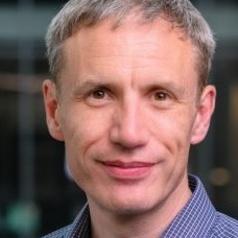
Senior Lecturer, University of Sheffield Mark Stevenson is a Senior Lecturer in Sheffield University's School of Computer Science where he is a member of the Natural Language Processing group. The aim of his research is the development of systems to extract knowledge from text and assist users in accessing this information. He has been Principal Investigator of projects funded by a range of sources including the EU, EPSRC and Google. He was an EPSRC Advanced Research Fellow and co-ordinator of the EU-funded project PATHS. He has also worked in a range of commercial and academic organisations including Reuters Ltd (where he was involved in the production and dissemination of the widely used Reuters Corpus), Adastral Park (British Telecom’s research lab) and the Center for the Study of Language and Information, Stanford University.
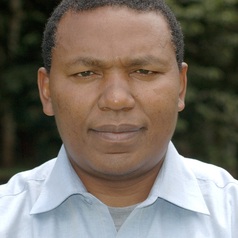
Ethnobotanist, National Museums of Kenya Patrick is an ethnobotanist interested in traditional uses of African biodiversity, and especially in food and nutrition. He works for the National Museums of Kenya. His research interests are: ethnobotany, traditional foods, indigenous knowledge, food and nutrition, biodiversity, and traditional farming systems.
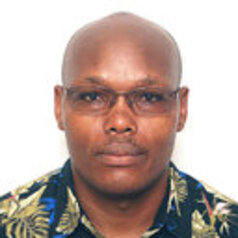
Lecturer, Pwani University Fredrick Kayusi has been a lecturer and research scientist in Pwani University's Department of Environmental Science in Kilifi-Kenya for more than five years. He has a Master of Science degree in geography from Pwani University and is currently a PhD candidate. He also has a Post Graduate Certificate in Representing the Real World in Geographic Information System and Diploma in Advanced Diploma in Geographic Information Systems from Alison in Galway, Ireland. He researches earth sciences, slope stability, mining, sustainability transformations in post-mining regions, geotechnical solutions, climate change, GIS & GPS services, and sediment dynamics in Kenya's hydrological systems, trying to understand their sources, fate and the biophysical conditions that control sediment deposition and accretion and their possible effects on critical habitats. He is also interested in mainstreaming geoscience as key contributor to ecosystem assessment, management, and the blue economy. He has also been involved in slope stability mapping, specifically generating slope stability maps and satellite imagery (remote sensing).
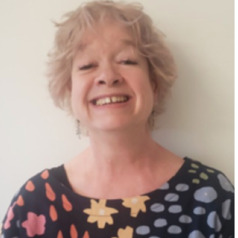
Professor of Psychology, University of Adelaide Professor Anna Chur-Hansen is a Registered Psychologist with Endorsement in Health Psychology, who holds a PhD in Medical Education. She studies the human-animal bond and its impact on human physical, psychological and social health.
Research Fellow in Wildlife Conservation, University of Adelaide Jasmin is passionate about protecting Australia's threatened communities and species. Her research aims to design innovative solutions, linking world-leading science with on-ground management, to better protect South Australia’s threatened communities and species as they adapt to global change. She works with wildlife as well as flora and fungi, and is the Vice President of Fungimap Inc., Austalia's national citizen science-led NGO for fungi. Jasmin’s transdisciplinary research focuses on understanding how ecosystems respond to differing disturbance and other global changes - and what we can do to enhance their capacity to cope with the negative impacts. Her transdisciplinary approach bridges basic and applied research, and co-designs field surveys with industry partners to ensure their findings are put into action to make a difference for conservation. Jasmin uses design thinking to draw on her deep understanding of the needs of others, and brings together global (biogeography and invasion science) and local (community ecology, population ecology and citizen science) approaches, to build long term partnerships that have a real impact on improving biodiversity conservation.