

 Menu
Menu

 Search

- News

- Economy

- Central Banks
- Investing
- Research
- Roundups
- Digital Currency
- Insights
- Technical Analysis
- Technology
- Business
- Law
- Health
- Nature
- Fintech
- Science
- Topic
- Opinions
- ©Econometrics LLC . All Rights Reserved.
Stuart Phillips
Professor, Kinesiology, Tier 1 Canada Research Chair in Skeletal Muscle Health, McMaster University
Dr. Stuart Phillips is a Distinguished University Professor in the Department of Kinesiology. He is a Tier 1 Canada Research Chair in Skeletal Muscle Health in Aging. Dr. Phillips' work centres on the interaction of exercise/physical activity, aging, and nutrition in skeletal muscle and body composition. Dr. Phillips is a fellow of the American College of Sports Medicine and the Canadian Academy of Health Sciences.

Less 
Stuart Phinn
Professor of Geography, Director - Remote Sensing Research Centre, Chair - Earth Observation Australia, The University of Queensland
Stuart Phinn receives research funding from the Australian Government, Queensland, New South Wales and Victorian State Governments, and Google's Earth Engine Program
Less
Stuart Rennie
Associate professor, University of North Carolina at Chapel Hill
Stuart Rennie (PhD, Philosophy, University of Leuven, Belgium) is Associate Professor in Social Medicine at the University of North Carolina at Chapel Hill (USA) and core faculty at the UNC Bioethics Center. He is currently Principal Investigator of a NIH/Fogarty International Center bioethics training projects in South Africa, and also co-Principal Investigator of a NIH-funded project on the ethical, legal and social implications big data research for health in Africa. Dr. Rennie was Lecturer in Applied Ethics in the Department of Philosophy at the University of Cape Town, and is Extraordinary Associate Professor in Medicine at the University of Stellenbosch, South Africa. At UNC, he teaches bioethics in the School of Medicine and at the School of Public Health. He has published on a variety of bioethics themes, including informed consent, HIV testing policies, medical rationing, implementation ethics, research involving children and adolescents, health surveillance, health inequality and social justice.
Less
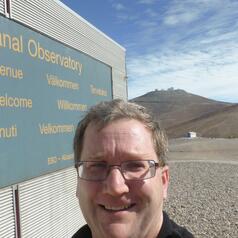
Stuart Ryder
Adjunct Fellow, School of Mathematical and Physical Sciences, Macquarie University
Dr Stuart Ryder is an Adjunct Fellow with the School of Mathematical and Physical Sciences, and a member of the Astrophysics and Space Technologies Research Centre at Macquarie University. His research interests include supernovae, and the emerging field of Fast Radio Bursts. Stuart also works part-time as a Program Manager with Astronomy Australia Ltd at their Sydney office, overseeing Australia's Strategic Partnership with the European Southern Observatory, Giant Magellan Telescope, and engagement with the Rubin Observatory's Legacy Survey of Space and Time.
Less
Stuart Turville
Associate Professor, Immunovirology and Pathogenesis Program, Kirby Institute, UNSW Sydney
The overall goal of my present research work at the Kirby Institute is two-fold. Firstly to define the basic mechanisms of HIV spread, from tracking entry and fusion of single HIV virions through to the more logistically challenging task of tracking viral spread through cell-cell contact. To date our laboratory is one of only a few laboratories worldwide that can image HIV spread in live HIV infected primary cell types.
The second component of my laboratory is currently involved and actively collaborating with research groups involved in using gene therapy for a treatment of a range of chronic diseases including HIV. Indeed a functional cure for HIV may lie in gene therapy. For instance, functional removal of human genes that HIV needs or attacking the viral genes directly, all represent ways to silence the viral reservoir in the long term. Whilst there are many approaches that work in cell line models, the present limitation to this approach is gene delivery. For instance the cells of the immune system that HIV attacks are unfortunately very difficult to deliver genes to. The broad aim of this project is to systematically determine the best protocol for gene delivery by using different combinations of viral proteins.
We are actively looking for capable honours, masters and PhD students who have a strong interest in the intersection of virology and cellular biology to undertake NHMRC funded projects.
Less

Stuart Wilks-Heeg
Head of Politics, University of Liverpool
Stuart joined the University of Liverpool in 2002 as a Lecturer in Social Policy. He was promoted to Senior Lecturer in 2010 and became Head of the Department of Politics in 2014. He is recognised as a leading expert on the UK democratic process, particularly with regard to issues associated with the mechanics of the electoral process. Stuart frequently provides UK political commentary and analysis for newspapers and broadcasters regionally, nationally and internationally. He also contributes to a range of leading political blogs, and tweets on UK politics @stuartwilksheeg
Less
Stuart Wilks-Heeg
Head of Politics, University of Liverpool
Stuart joined the University of Liverpool in 2002 as a Lecturer in Social Policy. He was promoted to Senior Lecturer in 2010 and became Head of the Department of Politics in 2014. He is recognised as a leading expert on the UK democratic process, particularly with regard to issues associated with the mechanics of the electoral process. Stuart frequently provides UK political commentary and analysis for newspapers and broadcasters regionally, nationally and internationally. He also contributes to a range of leading political blogs, and tweets on UK politics @stuartwilksheeg
Less

Stuart J. Turnbull-Dugarte
Associate Professor in Quantitative Political Science, University of Southampton
Less

Stuti Bhatnagar
Research Fellow (Asian Security), Australian National University
Dr Stuti Bhatnagar is a Research Fellow (Asian Security) at the Strategic and Defence Studies Centre (SDSC) at ANU. At SDSC she will also act as the Coordinator for the Graduate Research and Development Network on Asian Security (GRADNAS).
She has previous experience as a Researcher and sessional academic with the University of New South Wales, Sydney and the University of Adelaide in South Australia.
With a PhD in politics and international relations from the University of Adelaide, she specialises in Indian foreign policy and South Asian politics.
She has several peer-reviewed academic publications to her credit and is the author of India’s Pakistan Policy: How Think Tanks Are Shaping Foreign Relations published by Routledge in 2020.
Less

Su'ad Abdul Khabeer
Associate Professor of American Culture, University of Michigan
Su'ad Abdul Khabeer is a scholar-artist-activist originally from Brooklyn, NY. She is the curator of Umi's Archive, a multimedia project documenting Black and Muslim histories and co-founder of Sapelo Square, a digital media and education collective on Black Muslim in the US. Su’ad’s first book, Muslim Cool: Race, Religion and Hip Hop in the United States, is a field defining study on Islam and hip hop that examines how intersecting ideas of Muslimness and Blackness challenge and reproduce the meanings of race in the United States. Su’ad’s written scholarly work on Islam and hip hop is accompanied by her performance-based work including her one woman solo show, Sampled: Beats of Muslim Life. In 2018, Su’ad was profiled as one of 25 influential American Muslims by CNN and and received the Soros Equality Fellowship in 2019. She has written broadly for outlets including: The Root, the Washington Post, Vice and Ebony Magazine, and has appeared on Al Jazeera English. Su’ad received her PhD in cultural anthropology from Princeton University, is a graduate from the School of Foreign Service at Georgetown University and completed the Islamic Studies diploma program of the Institute at Abu Nour University (Damascus). Su’ad is currently an associate professor of American Culture at the University of Michigan - Ann Arbor.
Less
Sudhir Nair
Associate Professor of Business, University of Victoria
Prior to pursuing his PhD, Sudhir spent 15 years working in large corporations e.g., Citibank as well as with entrepreneurial entities that he founded or co-founded. Sudhir’s research interests coalesce around international strategy. He is particularly interested in the reasons and consequences for individuals or businesses crossing organizational or geographic boundaries.
Sudhir sees the idea of boundaries (both organizational and international) and the role they play of particular interest in a simultaneously globalizing and de-globalizing world that is also progressively becoming more specialized. The “when, why and how” firms seek to cross boundaries, thus becomes critical to understand how it impacts organizations and then to find ways to help these entities navigate these challenging issues. More recently, he has been researching the newcomer (immigrant and refugee) space in Canada from an interdisciplinary perspective.
Less
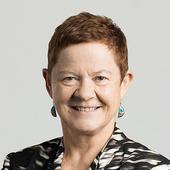
Sue Barrell
Chair of Australian National University's Institute for Space and Council Member, University of Technology Sydney
Less

Sue Bookey-Bassett
Assistant Professor, Daphne Cockwell School of Nursing, Toronto Metropolitan University
Dr. Sue Bookey-Bassett is a Registered Nurse and Assistant Professor in the Daphne Cockwell School of Nursing at Toronto Metropolitan University. She is also co-lead of the Better Work Better Care Coalition. In addition to her academic role, she has held numerous nursing leadership roles in healthcare organizations, nursing and health professional associations provicinally and internationally. Dr. Bookey-Bassett's program of research focuses on 2 key areas: 1) health workforce capacity building (leadership, teamwork, integrated care); and 2) healthy work environments for nurses (workload). She teaches courses in the undergraduate and graduate programs at Toronto Metropolitan University focusing on professional practice, interprofessional education, leadership, and integrated care. She is passionate about creating better healthcare work environments enabling healthcare professionals to provide safe quality care delivery.
Less
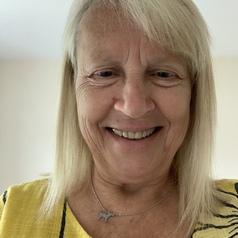
Sue Grayston
Professor of Soil Microbial Ecology, University of British Columbia
BSc (Hons) Microbiology (Sheffield,UK) 1982
PhD Microbial Ecology (Sheffield, UK) 1988
Postdoctoral Fellow, University of Saskatchewan 1988-90
Senior Researcher, MicroBioRhizogen Corp., Saskatoon 1990-93
Principle Scientific Officer, Macaulay Land Use Research Institute, Aberdeen, Scotland 1993-2003
Canada Research Chair in Soil Microbial Ecology, UBC, Canada 2003-13
Professor of Soil Microbial Ecology, Faculty of Forestry and Faculty of Land & Food Systems, UBC 2008-present
110 peer-reviewed publications
Less
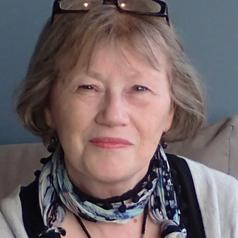
Sue Hand
Professor emeritus, UNSW Sydney
Professor Sue Hand is a vertebrate palaeontologist researching the history of Australian mammals, continuing climate and environmental change in Australia, New Zealand and Oceania, implications of that change for forest and island faunas, and the biodiversity, global relationships and evolutionary ecology of bats.
Her research interests are largely in the area of palaeontology, phylogenetics and biogeography, and specifically taxonomy, systematics, morphometrics, phylogenetics, biocorrelation, biogeography, palaeogeography, evolutionary biology and palaeoecology. Her area of special interest is fossil and modern bats, a major component of Australasia's living and fossil faunas, representing a quarter of Australian mammal species.
In these research areas, she has supervised/co-supervised 45 Honours, 3 Masters and 25 PhD students.
A key focus of the UNSW palaeontology group is the study of the fossil-rich Cenozoic faunas of the Riversleigh World Heritage Area in northwestern Queensland.
She has served on the Australian Research Council's Biological and Biotech Science Committee for ERA 2018, and ARC College of Experts 2019-2021
Less

Sue Kossew
Emeritus Professor of Literary Studies at School of Languages, Literatures, Cultures and Linguistics, Faculty of Arts, Monash University
I have lived in Zambia, South Africa, the UK and Australia and have degrees from the Universities of Cape Town, East Anglia and New South Wales. My PhD (UNSW) was a postcolonial reading of the works of J.M. Coetzee and André Brink. I have held academic and leadership positions at UNSW and Monash Universities; and have been Distinguished Visiting Chair of Australian Studies at the University of Copenhagen (2009) and R. Marika Chair of Australian Studies at the University of Cologne (2013).
My books include Pen and Power: A Post-colonial Reading of J. M. Coetzee and André Brink (1996), Writing Woman, Writing Place: Australian and South African Fiction (2004), Lighting Dark Places: Essays on Kate Grenville (ed. 2010) and Strong Opinions: J. M. Coetzee and the Authority of Contemporary Fiction (co-ed. 2011). Recent publications are Rethinking the Victim: Gender and Violence in Contemporary Australian Women’s Writing with Anne Brewster (Routledge, 2019) and Reading Coetzee’s Women (co-ed, Palgrave, 2019).
I have published numerous book chapters and journal articles on J. M. Coetzee, and on postcolonial, Australian and South African literatures. I was awarded an ARC Discovery Grant entitled "Rethinking the Victim: Gendered Violence in Contemporary Australian Women's Writing" in 2014 with Assoc. Prof. Anne Brewster with whom I am currently researching contemporary Australian women's writing on war.
Less

Sue Olney
UoM-BSL Principal Research Fellow, School of Social and Political Sciences, The University of Melbourne
Associate Professor Sue Olney is the UoM-BSL Principal Research Fellow in the School of Social and Political Sciences at the University of Melbourne, and a Visiting Fellow in the Public Service Research Group in the School of Business at UNSW Canberra. Her research examines the impact of market-based reform of public services on marginalised citizens, with a focus on disability services, employment and the welfare-to-work service system.
Sue has worked in universities, government and in the not-for-profit sector, and been involved in a range of cross-government, cross-sector and interdisciplinary research projects, government and community sector initiatives, committees and working groups to promote access and equity in employment, education, training and disability services in Australia and internationally. She is on the editorial board of the Australian Journal of Public Administration and is the Director of the social policy discussion platform Power to Persuade.
Less

Sue Onslow
Senior Lecturer, Institute of Commonwealth Studies, School of Advanced Study
Dr Sue Onslow is Senior Lecturer at the Institute of Commonwealth Studies in the School of Advanced Studies, University of London. She is a leading British oral historian and is currently working on the AHRC-funded oral history of the modern Commonwealth. She is on the Editorial Board of the Cold War History journal. She is also a member of Chatham House, a member of the Advisory Board for the Marjan Project for Conflict and Wildlife Conservation (King's College) and on the board of the Young People in International Affairs at Monash SA University, South Africa. She has published extensively on post-war British foreign policy, South Africa, Rhodesia/Zimbabwe and the Cold War in the region. She is preparing a monograph on South Africa and the Rhodesian UDI period, to be published in 2012; and an oral history of the Rhodesian security forces in the Rhodesian bush war.
Less

Sue Watt
Associate Professor in Psychology, University of New England
I am a specialist in social psychology and have studied prejudice towards several groups in Australia and overseas, focusing on the psychological underpinnings of these attitudes. In a related area, I conduct research on the topic of immigration. I am interested in the processes involved in adjusting to a new society, and have examined acculturation from the points of view of the immigrant and the receiving society, including receiving community responses to immigrants who adopt different acculturation strategies. My most recent research investigates Australians’ attitudes to refugee settlement in regional locations, and their shifting attitudes over time as refugees become embedded in the local community.
Less

Sugandha Srivastav
British Academy Postdoctoral Fellow, Environmental Economics, University of Oxford
Dr Sugandha Srivastav is a British Academy Postdoctoral Fellow and lecturer in Environmental Economics at the Smith School of Enterprise and the Environment.
Her research focuses on designing effective climate policy in low and middle-income countries. She also explores incentives for clean innovation & finance, and the political economy of energy transitions.
Sugandha is an affiliate of the Economics Department, an Early Career Research Fellow at Saïd Business School and a researcher for the Climate Compatible Growth Programme, where she leads the workstream on Economic Policy in low- and middle-income countries. Sugandha was awarded the Distinguished CESifo affiliate award for her work on bringing early-stage green technologies to market.
Sugandha has worked as an environmental and energy economist at Vivid Economics and ICRIER advising governments, private firms, and international organisations on a broad range of issues related to climate, energy, innovation, and natural resource management. She holds a DPhil in Environmental Economics from Oxford, and an MSc in Economics from LSE.
Sugandha’s research interests include the:
economics of clean innovation
environmental & energy economics
public economics
political economy of energy transitions
Less


Sujani Rathnayake
I am an M. Sc graduate from the Department of Integrative Biology of the University of Guelph. During my M.Sc I engaged in projects related to molecular and chemical fingerprinting-based authentication of food matrices, namely, sushi, maple syrup, and fish species sold in retail stores in North America.
Less
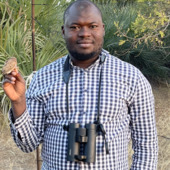

Sule Nur Kutlu
Assistant Professor, Haskayne School of Business, University of Calgary
Sule Nur Kutlu is an assistant professor in the Business Technology Management Area of Haskayne School of Business, University of Calgary. She received her Ph.D. from the Department of Operations and Information Management of the School of Business, University of Connecticut. Her research focuses on economics of information systems and data privacy. Her current research interests include third-party information sharing and data protection regulations on online platforms.
Less
Suleena Duhaime
Lecturer, Faculty of Medicine, L’Université d’Ottawa/University of Ottawa
Dr. Suleena Duhaime is a surgeon at Montfort Hospital in Ottawa and a lecturer in the Department of Surgery at University of Ottawa’s Faculty of Medicine.
Less

Suleman Lazarus, PhD
Visiting Fellow, London School of Economics and Political Science
Dr. Suleman Lazarus holds a PhD in Cybercrime and Criminology.
He is an Associate Editor for the Association for Computing Machinery (ACM) journal "Digital Threats: Research and Practice."
Dr. Lazarus is a Visiting Fellow at the Mannheim Centre for Criminology at the London School of Economics and Political Science (LSE) and a Fellow at the Centre of Excellence on Ageing (CEA) at the University of Surrey. He is also an Honorary Lecturer at the University of Portsmouth.
Dr. Lazarus created the “Tripartite Cybercrime Framework (TCF),” categorizing cybercrimes into socioeconomic, psychosocial, and geopolitical motivational groups.
He has authored numerous peer-reviewed articles in journals such as "Telematics and Informatics," “Deviant Behavior,” and "Cyberpsychology, Behavior, and Social Networking." Dr. Lazarus's research focuses on cyber criminals and society.
Less
Sulemana Bawa
PhD Candidate in Conservation Biology, University of Oxford
With an extensive knowledge and interest in the application of Local Ecological Knowledge in natural resources management, Sulemana’s DPhil seeks to understand the relevance and contribution of indigenous knowledge systems to contemporary Nature-based Solutions, and the application of acoustic and remote sensing technology to the measurement of ecosystem recovery. He will employ camera traps and soundscape measurements to identify patterns in species recovery and biodiversity shifts across different nature recovery interventions while investigating the strengths and limitations of bioacoustic monitoring vs. traditional survey methods at spatial and temporal scales. Sulemana Bawa has a background in conservation biology with substantial research experience in ornithology, herpetology and freshwater ecology. Prior to his studies at Oxford, he has led rewilding initiatives and developed community-based biomonitoring approaches for collaborative resource management in Ghana.
Less
Sumon Bhaumik
Sumon Bhaumik received his undergraduate education at Presidency College, Calcutta, and got his masters and doctoral degrees in Economics from the University of Southern California. Since then, he has worked both within and outside of academics in Bulgaria, Germany, India and the United Kingdom. He joined the University of Sheffield in 2014.
His research interests are wide ranging, and include corporate governance and firm performance, banks and credit markets, and impact of economic (including financial sector) reforms. He has published widely, including in high profile journals such as Strategic Management Journal, Journal of International Business Studies, Journal of Development Economics, Journal of Banking and Finance, Journal of Corporate Finance, and Journal of Comparative Economics. In the past decade, he has also worked on a number of projects funded by ESRC, DfID, NESTA, UKTI and UKIERI.
Less

Sune Svanberg
Emeritus Professor of Physics, Lund University
After a post-doc year at Columbia University, New York and initial work on atomic laser spectroscopy, I worked on laser-based spectroscopy at Chalmers up till 1980, when I became professor and head of the Atomic Physics Division at Lund Institute of Technology (technical faculty at Lund University) up till 2008. In Lund I carried out a programme of laser spectroscopy, including basic atomic physics and applications to energy, environmental and medical research. Basic studies included studies of radiative properties of atoms and ions as well as superintense laser/matter interactions (high harmonics generation, X-ray laser pumping and broadband X-ray generation). Applications include laser radar sounding of pollutants in the atmosphere and hydrosphere, laser diagnostics of combustion processes, and laser-based detection and treatment of cancer and cardio-vascular disease. I also proposed and helped establish a High Power Laser Facility, including a multi-terawatt 10 Hz laser.
In 1995, I was appointed director of the newly established Lund Laser Centre, which also gained the EC status of a European Large Scale Facility. I remained its director till 2010, and continued as Senior Professor at the centre.
I am a member of the Royal Academy of Sciences (and during 10 years a member of its
Nobel Committee for Physics; two years as chairman), and the Royal Academy of Engineering
Sciences.
Less
Sunghoon Kim
Associate professor, University of Sydney Business School, University of Sydney
Sunghoon Kim is an Associate Professor in the Discipline of Work and Organisational Studies at the University of Sydney Business School. He is the program director for the Master of Human Resource Management and Industrial Relations, The University of Sydney. He received his PhD from Cornell University and his MBA and BBA from Seoul National University. Before joining Sydney University, he was an Associate Professor at UNSW Business School. He also taught at Cornell University and Peking University.
Sunghoon is an established scholar in the field of strategic human resource management and comparative employment relations. He has served as an Associate Editor of Human Resource Management (FT 50 journal), Asia Pacific Journal of Human Resources, and Human Resource Development Quarterly. He served as the Program Committee Chair of AOM HR Division’s 2nd International Conference in Sydney (2016).
His research has been published in international journals such as Human Resource Management, Industrial and Labor Relations Review, Journal of International Business Studies, Organization Studies, International Journal of Human Resource Management, Management and Organization Review, and Asia Pacific Journal of Human Resources. Sunghoon co-edited Routledge Handbook of Human Resource Management in Asia, and China’s Changing Workplace beyond the Transition(Routledge). He is a contributor to the Google funded APRU project entitled “Transformation of Work in Asia-Pacific in the 21st Century”.
Sunghoon, is passionate in teaching the subjects of human resource management, including reward and performance management, strategic human resource management, international and comparative human resource management..
Less
Sungik Yang
Assistant Professor of History, Arizona State University
Sungik Yang is currently Assistant Professor of History at the School of Historical, Philosophical and Religious Studies (SHPRS) at Arizona State University. He received his PhD in History and East Asian Languages (HEAL) at Harvard University.
Less
Sungkavi Selvakumaran
PhD Candidate, Swinburne University, and Lecturer in Public Health, Torrens University Australia
Less


- Market Data




