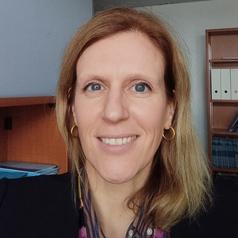
Researcher, University of Sydney I have a PhD in Political Sociology from Macquarie University. I am a qualitative researcher. I have worked as a researcher for UTS, Macquarie and USYD on various projects relating to housing, rent regulation and data breaches. Currently, I work for the University of Sydney Business School.
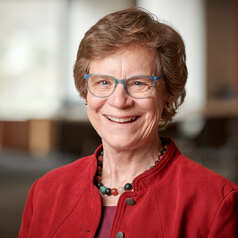
Lecturer in Studies in Women, Gender, and Sexuality, Harvard University Marya T. Mtshali, Ph.D. is a Lecturer in Studies in Women, Gender, and Sexuality at Harvard University and an Associate Director within the PhD Network at Northeastern University. Previously, she was Assistant Professor of Sociology at Bucknell and a Postdoctoral Research Fellow at Harvard Kennedy School. Her areas of expertise include race, class, and gender, as well as American inequality and qualitative research. She is currently working on her book manuscript "(In)Visible Terrains: Racialized Heteronormativities in the World of Black-White Interracial Couples."
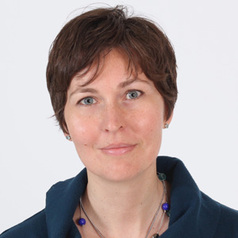
Professeur adjointe en Psychiatrie, McGill University Dre Raucher-Chéné a obtenu son diplôme français de médecine en psychiatrie en 2010 et a travaillé pendant dix ans en tant que clinicienne à temps plein dans un service psychiatrique universitaire en France. Elle a poursuivi sa formation en recherche en entreprenant une maîtrise en neuropsychologie (2012), un doctorat en psychologie (2018) et un boursier postdoctoral (2019-2021) à McGill/Douglas avant de se joindre à l’Université McGill à titre de professeure adjointe en 2023. Le programme de recherche du Dre Raucher-Chéné est axé sur le développement d’une compréhension globale de la psychopathologie cognitive des maladies mentales graves (c.-à-d. le trouble bipolaire et le trouble du spectre de la schizophrénie), à tous les stades, de la neuro-imagerie à la remédiation.
Director, One Health Institute, Assistant Dean, and Professor of Epidemiology and Swine Health Management, Ontario Veterinary College, University of Guelph Cate Dewey, DVM, MSc, PhD, is an Assistant Dean of Special Projects, Director of the One Health Institute, and a Professor of Epidemiology and Swine Health Medicine in the Department of Population Medicine at the Ontario Veterinary College, University of Guelph, Canada. Her current research utilizes a One Health approach to prevent zoonotic diseases in vulnerable populations. Previously, she explored the connections between swine health, disease management, and welfare. Dr. Dewey has successfully supervised 32 doctoral and 20 master’s students, and she has published over 230 peer-reviewed articles. At the University of Guelph, she has served in key leadership roles, including Chair of the Department of Population Medicine and Associate Vice-President Academic. As the inaugural Director of the One Health Institute, she was instrumental in launching new graduate programs and Canada’s first Bachelor of One Health degree. She is currently developing a series of micro-credentials aimed at professionals across various sectors, including government, non-profits, academia, and private industries, with the first course set to launch in February 2025.
Visiting Scholar in One Health, University of Guelph As a veterinarian and epidemiologist, Dominique Charron’s work addresses global problems at the interface of human and animal health, ecosystems, climate change and sustainability, largely through a complex systems lens. As a veterinarian and epidemiologist, she seeks to advance policy and education in One Health, while strengthening gender and social equity perspectives. In One Health and beyond, she seeks to enable more effective systems and processes for the uptake and application of science by decision makers and communities. She is a member and former Rapporteur of the One Health High-Level Expert Panel that advises the Quadripartite International organizations (World Health Organization, UN Food and Agriculture Organization, UN Environment, and World Organization for Animal Health). Most of Dominique’s career has been dedicated to developing and leading ecohealth and sustainable development research programmes at Canada’s International Development Research Centre – where she has contributed to strengthening research ethics and research quality frameworks, honed skills in results frameworks, evaluation and knowledge translation systems. Her book, Ecohealth Research in Practice (Springer, 2012) influenced the field and is widely used in teaching. Her past research addressed climate change and infectious diseases, and agroecosystem health. She has over 40 peer reviewed publications. She was a lead author of a chapter of Canada’s first Climate Change and Health Assessment (2005) and contributed to the UN Research Roadmap for the COVID-19 Recovery (2020). She holds a Doctor of Veterinary Medicine and PhD in Epidemiology from the University of Guelph.
Professor, School of Environment and Sustainability, Royal Roads University Sarah Elizabeth Wolfe is a Professor in the School of Environment and Sustainability at Royal Roads University. Her research is focused on the emotional drivers of climate responses and resource use. She is a founding member of the Society, Environment and Emotions Lab, www.seelab.ca