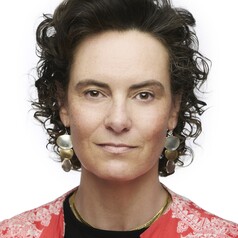
Associate Professor, University of the Witwatersrand Bonita Meyersfeld is a human rights lawyer, academic and advocate. She is an associate professor at Wits School of Law School and an advocate at the Johannesburg Bar and the Pan African Bar Association of Southern Africa. From 2012 to 2017, she was the director of the Centre for Applied Legal Studies. She is the founder of Lawyers against Abuse, an NGO which provides legal and psycho-social services and representations to clients experiencing gender-based violence. She has appeared before the International Criminal Court, the Constitutional Court, the Supreme Court of Appeals and the High Court of South Africa. She has worked in various international NGOs and was a parliamentary legal advisor in the House of Lords in the United Kingdom. She was an editor of the South African Journal on Human Rights. Bonita obtained her LLB (cum laude) from Wits and her masters and doctorate in law from Yale Law School. Bonita teaches and publishes in the areas of gender-based violence, business and human rights, and international law. She is the author of the book, Domestic Violence and International Law. Bonita has consulted for, and presented expert statements to, various United Nations fora. In 2018, Bonita was appointed Chevalier de l’Ordre national du Mérite (Knight of the National Order of Merit) by the President of France in honour of her academic and practical work in human rights and gender-based violence.
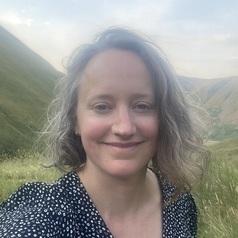
Associate professor, Cape Peninsula University of Technology I hold a PhD in plant biotechnology from the University of KwaZulu-Natal, and currently hold an Associate Professor position at the Cape Peninsula University of Technology, in Cape Town, South Africa. My research is in biotechnology for conservation and food security, as well as in learning, teaching and curriculum development in higher education. I am particularly interested in the applications of artificial intelligence in advancing science and education for social justice.
Research Professor, Political Economy Research Institute, UMass Amherst I am a labor economist. I specialize in the topics of the U.S. low-wage labor market and the political economy of racism. I received my Economics Ph.D. from the University of Massachusetts Amherst. I am a co-author of, A Measure of Fairness: The Economics of Living Wages and Minimum Wages in the United States (2008). I also co-edited Capitalism on Trial: Explorations in the Tradition of Thomas E. Weisskopf (2013). My journal articles and research reports cover a wide range of topics, including the economics of minimum wage and living wage laws; overtime pay for agricultural workers; the effectiveness of affirmative action policies; trends in racial earnings inequality, the role of the Earned Income Tax Credit on improving population health outcomes; the economics of single payer programs; and the employment-related impacts of clean energy policies. I have been a regular contributor to the magazine Dollars & Sense. I am a board member of the National Economics Association.
Senior Lecturer in Social Science, University of Glasgow Dr Naomi Richards is Director of the End of Life Studies Group at the University of Glasgow. She is a Senior Lecturer in Social Science and is a social anthropologist by training. She specialises in dying and death, ageing and old age, and visual and ethnographic methods. Dr Richards has published over 30 peer-reviewed articles in a variety of social science and clinical journals, in addition to 6 book chapters. Over the last decade she has been funded to undertake empirical and theoretical investigations into: the UK’s assisted dying debate; the phenomenon of old age rational suicide; the relationship between assisted dying and palliative care internationally; and the international Death Café movement. Between 2019-23, she led the Dying in the Margins study - a qualitative visual methods study which aimed to uncover the reasons for unequal access to home dying for people experiencing poverty and deprivation. This lead to the Cost of Dying exhibition. She continues to work on experiences of financial hardship at end life, specifically in rural Scotland, through the Marie Curie-funded Unreached study. She also co-leads the DeathWrites research network, supporting creative writers based in Scotland to write and publish powerful, accessible work on the subject of dying, death, grief and loss. Dr Richards teaches multiple courses on the University of Glasgow’s End of Life Studies Programme (PGCert/PGDip/MSc) and pioneered a partnership with the Royal College of Physicians of Edinburgh to produce a unique microcredential on End of Life Challenges and Palliative Care, introducing social science theories and ways of thinking to health and social care professionals.
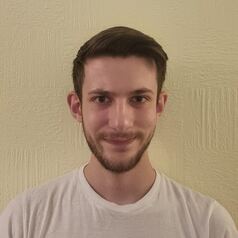
Research Assistant, Forensic Linguistics, Aston University My primary research area focuses on combatting extremism and online hate crime, and contributing to the area of authorship analysis. I work on this by incorporating methodologies involving discourse analysis, corpus linguistics, and pragmatics. Working as a Research Assistant for the Aston Institute for Forensic Linguistics, I am dedicated to the application of effective approaches that can be used to address current and emerging linguistic challenges; improving the delivery of justice through the analysis of language.
Research Fellow at the School of Medicine, Cardiff University PhD Medicine, Cardiff University 2013 BSc Biomedical Science, University of Wales Institute Cardiff, 2001 I am a Research Fellow joint supported by the Wales Cancer Research Centre and the Systems Immunity Research Institute studying the role of immune cell biology during Glioblastoma and other brain cancers, working with Professor Awen Gallimore within the Division of Infection & Immunity, School of Medicine I was previously a Research Asscoiate working with Professor Ian Humphreys in the Humphreys Research laboratory within the Division of Infection & Immunity, School of Medicine under the theme of Persistent and Resistant Infections. I was also a member of the Viral Immunology research group within the Division. Currently my research examines what role immune cells, particularly T-cells, play during Glioblastoma (GBM). I am interested in examing how we can design novel treatments for this fatal disease which is one of the most poorly survived cancers. There are no effective therapies for GBM with survival rates of between 12 to 15 months, thus the work we do aims to address this problem and make key step changes in our understanding of the interface between the immune system and the brain tumour.