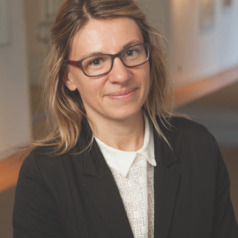
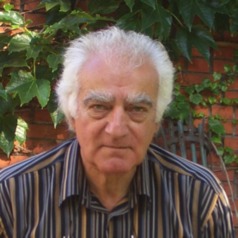
Associate Professor, Department of Information Technologies, HEC Montréal Expertise: Social acceptance of new information technologies Responsible adoption of new information technologies Electronic commerce: consumers' information-seeking and decision-making process Automated decision-making systems Digital transformation of organisations Effective use of information technologies
Associate Professor, International Relations, Carleton University Aaron Ettinger specializes in International Relations and US foreign policy. His research focuses on US foreign policy in the post-Cold War era and its implications for world order. His current project explores Canada-US relations during the Trump presidency. Recent published work covers a range of issues including US and Canadian foreign policy, sports and politics, and International Relations pedagogy. His research appears in International Studies Review, International Studies Perspectives, Survival, Security Dialogue, Millennium, International Journal, Canadian Foreign Policy Journal, Politics, Comparative Strategy, Cambridge Review of International Affairs, and International Journal of Sports Policy and Politics.
Assistant Professor, School of Kinesiology, Western University Hayley Baker’s scholarly interests include leadership, gender, and sport. Her research has focused on addressing the underrepresentation of women coaches at Canadian universities by exploring normalized institutional practices and processes. More recently, she has examined the implementation of gender-based violence policies in universities and the institutional responses to gender-based violence within Canadian university sport.
Physicien théoricien, Université Paris Cité Jacques Treiner a fait paraître une centaine d’articles et d’ouvrages de physique théorique, notamment dans le domaine des fluides quantiques. Il a été professeur à l’Université Pierre et Marie Curie à Paris et a publié des ouvrages de vulgarisation comme « Quel est l’âge de la Terre ? » aux éditions du Pommier (septembre 2011, nouvelle édition juin 2022) et « Un peu de science, ça ne peut pas faire de mal », aux éditions Cassini (juillet 2017). Il a traduit plusieurs ouvrages, dont les Marchands de Doute, de Naomi Oreskès et Erik Conway (Ed. Le Pommier). Il a également réalisé trois films scientifiques, et co-écrit avec Olivier Treiner une pièce de théâtre intitulée « Fission », produite par le théâtre de la Reine Blanche et jouée en 2016. Il intervient comme conférencier sur l’anthropocène et l’articulation des problématiques énergétiques, démographiques et climatiques. Il est aujourd'hui chercheur associé au Laboratoire interdisciplinaire des énergies de demain (LIED) de l'Université Paris-Diderot et préside le Conseil des experts du Shift Project.
Lecturer in Mass Communications, University of Lagos Unwana Samuel Akpan lectures at the Department of Mass Communication, University of Lagos, Akoka, Nigeria. He was a postdoctoral research fellow/visiting scholar in the School of Communications and Media Studies, Department of Communication, Culture and Media Studies, Howard University, Washington DC, USA. Unwana also taught at the Programmes Production Department, National Broadcast Academy, Ikeja, Lagos. He does research in communication and media, examining, understanding, disrupting and disseminating ideas on how communication and culture intersect. With innovative research initiatives and decades of industry experience, his research and teaching investigate and explore broadcast content, sports and communication, African communication systems, media literacy, corporate speech writing, media aesthetic, the intersections of popular culture and media studies, particularly as they address genre transformation, popular media, and theories of realism and spectacle.
Lecturer in the History of Modern Africa, University of Bristol I am a social historian of modern Africa, with a particular focus on gender and women's history. My interests include African oral histories, histories of humanitarianism, welfarism and development, counter-insurgency warfare, colonial violence, and digital humanities. My current book project explores the relationship between colonial counter-insurgency tactics and international humanitarianism in the context of the Mau Mau insurgency in Kenya, 1952-1960. It uses villagisation, a counter-insurgency measure enforced during the campaign to administer tighter control over the movement of civilians, as a site to interrogate the relationships between humanitarian organisations, the colonial administration and the displaced indigenous women and their children. The project analyses the supposedly reformative practices deployed by the British colonial government and external actors, like the British Red Cross Society, in response to women and girls suspected of supporting forest fighters. These practices publicly endorsed ideas of African women’s advancement and development. While the colonial government projected a reformative discourse for their approach to women and children, this research shows that this process was gendered and inherently violent in practice. Villagisation in this campaign operated as a tool to subdue a specific demographic of the Kenyan population suspected of fuelling anti-colonial action: women and girls.