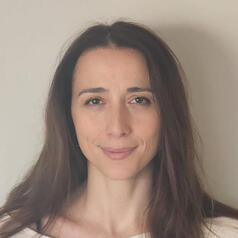
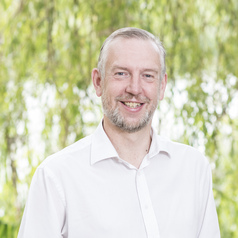
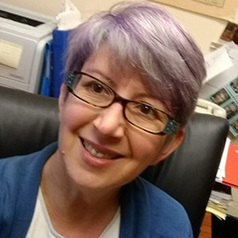
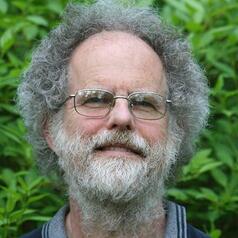
Senior Lecturer in Contemporary International History, The Open University Luc-André Brunet is Senior Lecturer in Contemporary International History at The Open University in the UK and Co-Director of the Peace and Security Project at LSE IDEAS. His research focuses on the dynamics between peace and anti-nuclear activism, on the one hand, and policymaking and diplomacy, on the other. He is Principal Investigator of the AHRC-funded project ‘Global Histories of Peace and Anti-Nuclear Activism’ and is currently completing a book on Canada, the global nuclear order and the end of the Cold War. He is editor of NATO and the Strategic Defence Initiative: A Transatlantic History of the Star Wars Programme and (with Eirini Karamouzi) the forthcoming volume Beyond the Euromissile Crisis: Global Histories of Anti-Nuclear Activism. He also co-edits a new book series with McGill-Queen’s University Press on Global Nuclear Histories.
Senior Lecturer in Contemporary History, University of Sheffield I joined the University of Sheffield in September 2014. I hold an MSc in European Politics and Governance and a PhD in International History, both from LSE. I have held a A.G. Leventis Fellowship at SEESOX, St Anthony's College, Oxford (2014-15), a Max Weber Fellowship at the European University Institute in Florence (2013-14) and a Pinto Postdoctoral fellowship at LSE IDEAS (2011-12). Before moving to Sheffield, I was a Lecturer of European Studies and History at Yale University and in 2019-2021, I was a Visiting Professor of History at the University of Tampere, Finland. My first book Greece, the EEC and the Cold War, 1974-1979: The Second Enlargement reveals the rationale behind Europe's decision to accept Greece in its circle and details the dynamics of the accession negotiations in the evolving environment of detente and the rise of the Left in Southern Europe. I am an expert in the history of European integration, Cold War, political and social history of Modern Greece, and Southern Europe. My second project focused on peace movements and the role of activism in nuclear policy. I was Principal Investigator of the two-year project (2016-2018), 'Protest as democratic practice: peace movements in southern Europe, 1975-1990' (Max Batley Fellowship Awards scheme) with Prof Ziemann and Prof Grasso (Politics). Dr Giulia Quaggio was the Postdoctoral fellow of the project. I published different pieces in International History Review, Journal of Contemporary History and Cold War History. Along with Luc-Andre Brunet we are running an AHRC networking grant (2022-2024) on ‘Global Histories of anti-nuclear activism in the Cold War’. We have published a special issue on Anti-nuclear activism in South Africa, and an edited volume Beyond the Euromissile Crisis: Global Histories of anti-nuclear activis (Berghahn, 2025), accompanied by a Open Learn MOOC on the same topic. My latest research looks at the role of tourism as an alternative way of telling Greece’s post-war social, economic and cultural history, and I am cooperating with visual arts and heritage experts, as well as graphic designers and architects to build a Digital Exhibition on ‘Imagining Greece’.
Senior Lecturer in Chemistry and Forensic Analysis, University of Surrey Dr Patrick Sears is a Senior Lecturer of Chemistry and Forensic analysis at the University of Surrey in the School of Chemistry and Chemical Engineering. He teaches forensic analysis across all years and supervises placements, final year projects and PhD students. His research expertise and background include developing analytical chemistry solutions for complex problems and understanding how analytical systems can be broken down to improve precision and accuracy. He collaborates with a number of companies including AstraZeneca, LGC and Waters. Having joined the university in 2018, Patrick previously worked at the defence science and technology laboratory (DSTL).
Postdoctoral Researcher in Chemical and Process Engineering, University of Surrey Mehrdad Zare is a chemical engineer with 10+ years of experience in industrial R&D, specialising in Tech development and commercialisation with a focus on CleanTech and water/wastewater. Through his PhD at the University of Surrey, he focused on developing sonolysis as a technology for the degradation of persistent organic pollutants (POPs). His current focus at the University of Surrey is on the industrialisation of sonolysis, a promising technology aimed at addressing the growing crisis of PFAS (per- and poly-fluoroalkyl substances) pollution. As part of this mission, he co-founded Mantisonix Ltd, a spin-out company dedicated to commercialising this innovative technology by building bridges between academic research and real-world application. The company aims to deliver a sustainable, scalable and robust solution to industries grappling with PFAS contamination, including sectors such as water utilities, industrial wastewater treatment, and groundwater decontamination.
Professor of History, University of South Carolina Professor Harrison regularly teaches the survey of European history, women in modern Europe, the Enlightenment and the French Revolution. She also teaches graduate seminars on feminist theory and methodology. Her first book, The Bourgeois Citizen in Nineteenth-Century France: Gender, Sociability, and the Uses of Emulation, explored the formation of a male bourgeois elite in provincial France. Her second book, Romantic Catholics: France's Postrevolutionary Generation in Search of a Modern Faith examines how lay French women, men, and children practiced their faith, aspiring to create a revitalized Catholicism that could reconcile itself with revolutionary political principles.
Professor of Ecology and Evolutionary Biology, Cornell University I was an undergraduate student at Oxford University UK, a graduate student at Aberdeen University UK, and a postdoc at Universities of East Anglia, Oxford and York UK. I've held faculty positions at Universities of York and Cornell. I am interested in the construction of post-glacial small mammal communities and have studied the natural colonization history of European shrews, voles, mice and small carnivores, revealing a wide range of species- and lineage-specific responses in terms of source areas and pattern of spread. Unnatural colonization history (i.e. transport by humans) is also of interest to me, particularly the way that the phylogeography of small mammals transported by humans can inform about the history of the humans moving them. Those separate lineages that make up a species and which are formed in different places and colonize in different ways, are genetically differentiated to various degrees and may become separate species themselves. I am interested in the speciation process and the analysis of hybrid zones to inform about that. I have, in particular, studied the origin of chromosomally distinctive lineages, and the hybrid zones between those lineages, using shrews and mice as models. I teach a variety of courses at Cornell including: BioEE 1780 Introduction to Evolutionary Biology and Diversity, BioEE 4500 Mammalogy and BioEE 4501 Mammalogy. I am Leader for Diversity and Inclusion in EEB, chairing the department’s DEI committee and representing the department in college and university diversity and inclusion efforts.