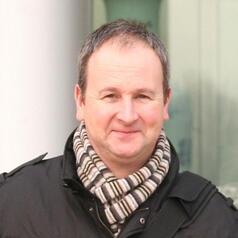
Professor, School of Science, Engineering & Environment, University of Salford My work explores the strategies adopted by infectious agents, at the individual and population level, to persist in nature, in particular those microorganisms that are arthropod transmitted. These efforts have centred on organisms of public health and veterinary importance, including the tick-transmitted Borrelia and Anaplasma species, and flea and louse-transmitted members of the bacterial genus Bartonella. Recent/ongoing projects include examination of the adaptation of A. phagocytophilum and B. burgdorferi strains to specific transmission pathways within natural multi-host, multi-vector system, quantification of genome-wide diversity within Bartonella species, and exploration of the molecular basis of arthropod exploitation by Bartonella species. I also have a slow-burning interest in the role of amoeba and other free-living protists as environmental hosts for pathogens. I also like to trawl the blood-steam of animals from near and distant corners of the planet in search of new haemoparasitic bacteria and protozoa; please get in touch if you can help out! I have been lucky enough to be part of a long-standing collaborative team, including scientists at the Universities of Aberdeen, Liverpool and Nottingham, interested in infectious disease ecology and using a model system of wild field vole (Microtus agrestis) populations to explore the influence of parasites on host population dynamics and host susceptibility to co-infectors, and the strategies adopted by hosts to counter parasitism
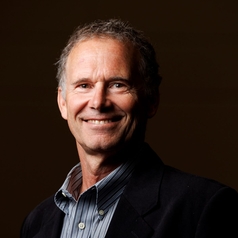
University Fellow, School of Science, Engineering & Environment, University of Salford I started my academic career at the University of Sheffield (2010-2012) where I researched the relationship between honey bees, parasitic Varroa mites and deformed wing virus. After a brief stint researching speciation in periwinkles at the University of Sheffield (2013-2014), I returned to insects with a PhD here at the University of Salford (2014-2017). Here I researched the effects of deformed wing virus on honey bees and virus spillover from honey bees to other insects. I then moved to Australia for a postdoc position at Western Sydney University (2017-2021) where I researched pollinator health in commercial apple and cherry orchards. I then took up a second postdoc position at Liverpool School of Tropical Medicine (2021-2023) where I worked on mosquito-microbiome interactions before returning to the University of Salford as a University Fellow in 2023. I am fascinated by the ecology and evolution of arthropod-associated viruses, in particular; the interplay between the ecology of the host(s), the host-virus interactions and the interactions among viruses and other microbes. These topics allow me to explore diverse systems, from understanding mosquito-virome/microbiome interactions and how these may be exploited to combat mosquito-borne pathogens and how global change is affecting vector-borne disease, to understanding honey bee disease relevant for the apiculture and honey industries, and studying pollinator health to conserve biodiversity and secure sustainable pollination in the face of global change.
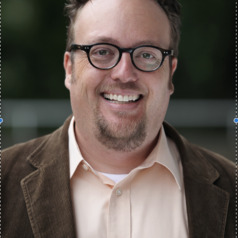
Clinical Psychologist and Professor of Counseling, University of Montana John Sommers-Flanagan is a professor of counselor education at the University of Montana and author or coauthor of over 60 professional publications, nine books, and numerous video trainings with Psychotherapy.net and Alexander Street Press. Some of his books, co-written with his wife Rita, include Tough Kids, Cool Counseling, (2nd ed., American Counseling Association, 2007), How to Listen so Parents will Talk and Talk so Parents will Listen (John Wiley & Sons, 2011), Clinical Interviewing (6th ed., Wiley, 2017), and Counseling and Psychotherapy Theories in Context and Practice (3rd ed., Wiley, 2018). John is a sought out keynote speaker and professional workshop trainer in the areas of (a) counseling youth, (b) working with parents, and (c) suicide assessment. He has published many newspaper columns, Op-Ed pieces, and a recent article in Slate Magazine. His work has been intermittently featured in Counseling Today, the ASCA School Counselor magazines. John’s resource and opinion blog at johnsommersflanagan.com receives approximately 12,000 hits per month. He is also co-host of the national Practically Perfect Parenting Podcast. In his wild and precious spare time, John loves to run (slowly), dance (poorly), laugh (loudly) and produce home-made family music videos.
William T. Evjue Distinguished Chair for the Wisconsin Idea & Professor of Journalism and Mass Communication, University of Wisconsin-Madison Michael W. Wagner (Ph.D., Indiana University, 2006) is Helen Firstbrook Franklin Professor of Journalism and Mass Communication at the University of Wisconsin-Madison where he directs the Center for Communication and Civic Renewal. Wagner’s research explores how individuals’ experiences in their local, state, and national information ecologies influence what they believe, what they want, and what they do. His scholarship has been published in outlets such as Cambridge University Press, Science, Journal of Communication, International Journal of Press/Politics, Annual Review of Political Science and many others. Wagner edits the Forum section of the journal Political Communication, which brings together scholars, practitioners, and political elites to contribute to discussions about contemporary issues. He has published public-facing work in outlets including the Washington Post, the Brookings Institution’s TechStream, the Scholars Strategy Network, Vox, Mischiefs of Faction, and PBS’ MediaShift. He has given more than 350 public talks across the globe about misinformation, polarization, and democracy. Wagner is on the Scientific Board of Advisors for the General Social Survey, is Associate Editor of Public Opinion Quarterly and has won several awards for teaching, public service, and research.
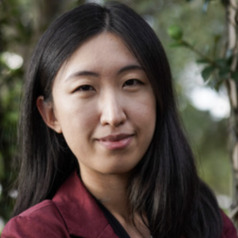
Assistant Professor of Communication, School of Communication and Information, Rutgers University I am an Assistant Professor at Rutgers University’s School of Communication and Information, Department of Communication. My work examines the intersection of mis/disinformation, structural inequalities, and contentious politics. I specialize in computational methods, quantitative methods, and mixed-methods. Google Scholar My research asks: How do people make informed decisions in today’s digital media environment with growing concerns over mis/disinformation, structural inequalities, and contentious politics? My work focuses on: (1) identifying dissemination of and discourses around mis/disinformation on digital platforms; (2) examining efforts aimed at mitigating mis/disinformation, e.g., fact-checking, content moderation, social media skepticism, media literacy, and cross-racial solidarity building in the face of racialized disinformation; and (3) studying how the broader media ecology interacts with identity and social inequality in shaping misperceptions, policy preferences, and support for racial justice movements. Methodologically, I use computational methods (natural language processing, machine learning, network mapping), experiments (quasi-experiment, web-based dynamic experiment), large-scale panel surveys, mixed-methods approaches, and work on the integration of textual, behavioral, and/or social geographical data. My work has been published in peer-reviewed journals including Journal of Communication, Human Communication Research, New Media & Society, Political Communication, Information, Communication & Society, Social Science & Medicine, Mass Communication and Society, and Social Media + Society. My work also appeared in public-facing outlets including The Washington Post, Brookings TechStream, and MediaWell. My research has been funded by the Social Science Research Council, the International Fact-Checking Network, and the Knight Foundation. I have received the Thomas E. Patterson Best Dissertation Award from the American Political Science Association, Paper of the Year award from Mass Communication and Society, and several Top Paper awards from the International Communication Association and the Association for Education in Journalism and Mass Communication. I received B.A. in Journalism and Sociology from Peking University, M.A. in Journalism and Mass Communication from the University of Wisconsin-Madison, and Ph.D. in Mass Communication from the University of Wisconsin-Madison.