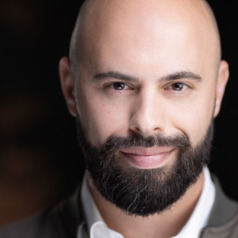
Researcher Associate, Centre for Urban Research, RMIT University Hugh is a Research Associate at RMIT University's Centre for Urban Research. His work centers on urban planning and urban greening, particularly the role of informal and neglected urban spaces in enhancing social and ecological outcomes. His recent research explores how urban greening can lead to improved biodiversity and human health outcomes in cities.
PhD candidate in venom genomics, University of Sydney Tian is a PhD candidate at the University of Sydney, looking at how diverse venoms from jellyfish to spitting cobras act on our cells. Through CRISPR screening and molecular techniques she aims to find these mechanisms of action and aid the discovery of new therapeutics for stings and bites. Tian also works as a casual academic, both as a demonstrator for university students and science outreach for the public. Tian completed her undergraduate and honours at the University of Melbourne in neuroscience and anatomy, focusing on how enrichment and social isolation can affect the developing brain. Here she also worked at the Harry Brookes Allen Museum of Anatomy and Pathology.
Professeur en sciences et technologies des aliments, Université Laval Le Dr Laurent BAZINET est professeur, au département de Sciences des Aliments, à l'Université Laval où il enseigne l’ingénierie des procédés industriels alimentaires. Il est titulaire de la Chaire de Recherche en partenariat sur la Valorisation Intégrée des coproduits par des Technologies ALimentaires écoefficientes dans le cadre d’une Économie circulaire et directeur du Laboratoire International Associé sur la Bioproduction d’Antimicrobiens Naturels. Ses intérêts de recherche portent sur l’étude des phénomènes électrodialytiques et leurs impacts sur les composés bio-alimentaires et leurs bénéfices santé. Il dirige 2 M.Sc., 10 Ph.D et 5 Post-doc dans le cadre de projets de recherche dont le budget total annuel s’élève à plus de 1.0 M$. Le Dr. Bazinet a publié plus de 267 articles et depuis 2020, il est reconnu comme le leader mondial de l'électrodialyse avec membrane de filtration et comme faisant partie du 2% des meilleurs scientifiques au monde.
Doctorant en Science des Aliments, Université Laval Tristan Muller is a PhD candidate in the Department of Food Sciences at Université Laval, Quebec, Canada, under the supervision of Dr. Laurent Bazinet. He is affiliated with the Institute of Nutrition and Functional Foods (INAF) and the Laboratory of Food Processing and Electro Membrane Processes. His research is driven by a keen interest in the causes and consequences of climate change, particularly focusing on the impacts of food systems. Tristan has recognized that promoting plant-based proteins is a crucial strategy for mitigating climate change. Designing nutritious products based on these proteins has become his primary objective. After completing his master's degree at AgroParisTech in France, he relocated to Quebec City, Canada, to pursue his goal of studying leaf proteins for human consumption. He is committed to advancing his research with the aim of contributing to the broader acceptance and utilization of these unconventional yet highly valuable protein sources.
Lecturer in Art History , University of Sydney Mark De Vitis joined the Art History Department at the University of Sydney in 2015. He specialises in the study of early modern visual culture, and the cultures of dress and dressing, both past and present. In support of his doctoral research he was the recipient of a residency at the Cité internationale des Arts, Paris through the Power Institute, and has also held a research fellowship at the Getty Research Institute in Los Angeles. He has most recently been awarded the 2016-2017 Charles Montgomery Gray fellowship at the Newberry in Chicago.
Political History Curator, Smithsonian Institution I study the deep history of American democracy, especially the wild partisan campaigns of the 1800s. At the same time, I collect objects from contemporary protests, conventions, elections, and riots for the Smithsonian, to try to preserve our own heated moment for generations to come. Together, it involves a bit of time-traveling, explaining the past to the present, and the present to the future. My first book, The Virgin Vote: How Young Americans Made Democracy Social, Politics Personal, and Voting Popular in the Nineteenth Century uncovered the forgotten history of the youth vote, to show that young men and women were once the most engaged, and sought after, demographic in American politics. My new book, The Age of Acrimony: How Americans Fought to Fix Their Democracy, 1865-1915, chronicles the way that the "normal" democracy we inherited from the 20th century was invented, around 1900, to restrain the vibrant but violent partisan political campaigns of 19th century America. To tell this story, The Age of Acrimony follows the father-daughter political dynasty of radical congressman William “Pig Iron” Kelley and his labor activist daughter Florence Kelley.