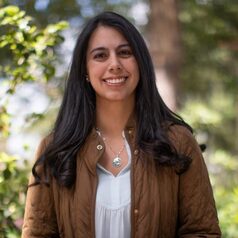
Assistant Professor, Department of Art History, Universidad de los Andes Natalia's areas of interest include the study of pre-Hispanic rock art and ceramics from the Caribbean and Orinoco regions, with an emphasis on archaeometric studies and indigenous technologies. She has also studied the representation of indigenous people in the New Granada region during the early colonial period, using ethnohistorical sources and colonial-era paintings.
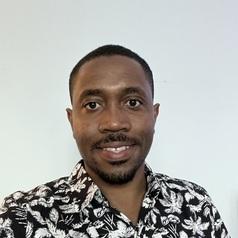
Reader in Latin American Archaeology, Institute of Archaeology, UCL As a Reader Latin American Archaeology, my interests are quite broad, covering practically all periods of human history in the Americas, from Paleoamerican to the early colonial period, particularly in South America (Andes and tropical lowlands) and the Caribbean Islands. Since 1992, I directed (PI) archaeological excavations along the Mississippi River (Tennessee, Arkansas), the Gulf Coast of Florida-Alabama, Dominican Republic, Puerto Rico, Culebra Island, St. Tomas-Virgin Islands. Since joining the Institute of Archaeology (1994), I have continued to direct projects in Puerto Rico (Utuado-Caguana Archaeological Project) and northern Dominican Republic (Macorix Archaeological Project) and currently added the margins of the Orinoco river region of Venezuela and Colombia. My research topics are quite diverse, including among others the development of agricultural economies, the rise of middle-range to complex state polities, the archaeology of sacred landscapes (burial caves, rock art, megalithic architecture), the meaning and symbolism of potent/powerful objects (material culture), trade and exchange, and processes of ethnogenesis and culture change. One particular interest is in ceramic analyses, its classification methods, and theoretical assumptions, and what these tell us about social relations among producers and consumers and about their identities. In my fieldwork, I adopt a reflexive approach to archaeology approach, which involves partnerships with indigenous communities and leaders in jointly building past and recent historical knowledge and enhancing the conservation as well as promotion of tangible and intangible cultural heritage. I teach undergraduate (yrs. 2-3) modules on the archaeology of the Andes and Amazonia and co-teach two graduate (Masters) courses: "Comparative Archaeologies of the Americas-1: First Peoples to Emerging Complexity". and "Comparative Archaeologies of the Americas-2: Empire, States & Settlement." I also teach the 1st year undergraduate core module "Introduction to Social Anthropology".
Lecturer in Archaeological & Palaeoenvironmental Modelling, Bournemouth University Philip Riris is a Lecturer in Archaeological & Palaeoenvironmental Modelling at the Institute for Modelling Socio-Environmental Transitions, Bournemouth University, UK. He earned his PhD from the University of Southampton in 2015. Between 2015 and 2019 he held postdoctoral positions at the Institute of Archaeology, University College London, latterly a British Academy Postdoctoral Fellowship, as well as a Visiting Fellowship at the Sainsburys Centre for Visual Arts, University of East Anglia. His research focuses on socio-environmental relationships in the ancient past, in particular population history, food production systems, and landscape archaeology in tropical South America. He has also contributed toward rock art studies in the Amazonian and Orinocan lowlands.
Research Professional, Université Laval I hold a PhD in agricultural economics. My areas of interest include food systems, agricultural policies, agricultural markets, behavioural economics, and new institutional economics.
Director, McEwen School of Architecture, Laurentian University Dr. Tammy Gaber is Director and Associate Professor at the McEwen School of Architecture, which she joined as Founding Faculty in 2013 and helped create new curriculum for the undergraduate and graduate programs. Dr.Gaber has won awards for the impact of her teaching and research, won several federally funded grants, and has published extensively and taught in architecture programs for the past two decades. Dr.Gaber’s ground breaking book , Beyond the Divide A Century of Canadian Mosques Design published by McGill-Queen’s press was profiled in the Globe and Mail and various journals, periodicals and television. In 2019, Dr. Gaber won the Women Who Inspire Award from the Canadian Council of Muslim Women and in 2020 she was awarded Laurentian University’s Teaching Excellence Award for a Full-time professor. Dr.Gaber was awarded Canadian Federal funding, again, in 2022 for her research on the sacred spaces designed by the Modernist architects Alvar, Aino and Elissa Aalto and is currently working in collaboration with the Alvar Aalto Foundation in Finland on an exhibition set for 2024. As an acclaimed pedagogue and academic, Dr.Gaber’s leadership of the McEwen School of Architecture has demonstrated tenacity and proactive initiatives to address the particular challenges during her term. As one of the first women of colour to lead a school of architecture in Canada, she has led the amelioration of curriculum and set the course visioning the future.
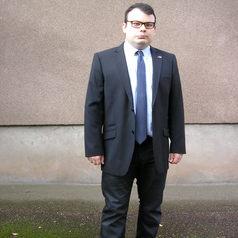
Doctorant en Science politique, Université de Lorraine Travaille sur l'extrême droite en Autriche et plus généralement intéressé par les partis politiques au niveau européen.