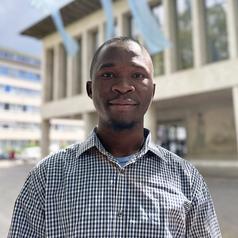
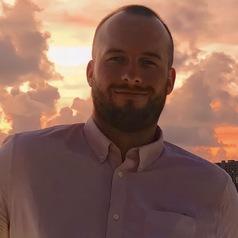
Visiting Professor of Strategy, INSEAD Lite Nartey is a visiting professor of strategy at Insead (Fontainebleau campus), in France. Leveraging her professional background in international development, her academic research seeks to demonstrate the business case for stakeholder engagement and the business case for international development. Her research focus on stakeholder engagement and management examines the contingencies and dynamics at the nexus of the relationships among multinational firms, governments, and civil society actors, as well as the implications of these dynamics on both firm performance and societal value. Her research focus on development explores the role of multinational firms in the development of emerging markets, specifically Africa, and her work in this area seeks to draw strategic and policy implications. Her work has been published in the Strategic Management Journal, Administrative Science Quarterly and Strategy Science and has received numerous international academic awards and honours including the Ralph Gomory Best Industry Studies Paper Award, Best Conference Paper and Best Conference Paper Prize for Practice Implications at the Strategic Management Society. She has worked in different capacities with multinational extractive companies in oil, gas and (gold) mining, in different parts of Africa, as well as with non-governmental organisations and with multilateral organisations, including the International Finance Corporation. More recently, she has worked with different organisations on banking and mobile money adoption in west Africa. She received her PhD in management from The Wharton School, University of Pennsylvania. She also holds an MPA in public and nonprofit management and policy, with a focus on international development, from the Robert Wagner School of Public Service, New York University, as well as an MSc in management from The Wharton School. She was formerly on the faculty of the Sonoco International Business Department, Darla Moore School of Business, at the University of South Carolina. She is originally from Ghana.
Research Assistant, University of Basel I currently hold a Bachelors degree in Sociology and Anthropology from Njala University, Sierra Leone, and I am currently studying for the Master of Art in African Studies at the University of Basel, Switzerland. In recent years, my main research role has been on an EU-funded multi-country and multi-disciplinary research project entitled 'ALIVEAfrica" which focuses on the role of animals in the livelihood strategies of people in sub-Saharan Africa, and the implications of these relationships for multi-species health and wellbeing.
Lecturer in Medical Anthropology with focus on Ebola burials and Communication, Njala University Tommy Matthew Hanson is a Lecturer in the Department of Sociology and Social Work, School of Social Sciences and Law, Njala University, Sierra Leone West Africa. He is an Honorary Fellow at the Department of Anthropology, Durham University and recently submitted his thesis for PhD in Medical. He is a founding member of the West Africa Social Sciences Emergency Response Network (WASSERN).
Professor of Anthropology, Durham University I'm a Professor of Anthropology. I trained as a social anthropologist with specialisation in medical anthropology. My research interests include: economies and practices of care; governance; the state; nursing; hospitals; global health interventions (especially around HIV/AIDS and viral haemorrhagic fevers); epidemics; development; community-based health care; and public health. My current research work is funded by an ERC starting grant, AliveAFRICA: Animals, Livelihoods and Wellbeing in Africa. This project explores changing animal-based economies in Kenya and Sierra Leone, and the implications of human-animal entanglements for health and well being.
Post-Doctoral Research Associate at the Department of Anthropology, Durham University I am a postdoctoral research associate in the Department of Anthropology at Durham University. At Durham, I work on the European Research Council-funded project 'ALIVEAfrica: Animals, Livelihoods and Wellbeing in Africa'. Within ALIVEAfrica, I lead a case study on hunting and bushmeat-related livelihoods in Sierra Leone, exploring topics such as the legitimacy and local knowledge of wildlife laws, dynamics of trust and secrecy among different actors, zoonotic disease risks in markets, and livelihood impacts of the bushmeat trade. This research builds upon my previous work investigating rural lives and livelihoods in Liberia and Sierra Leone, which examined how improved transport connectivity contributes to development in areas like agriculture, education, employment, community cohesion, health, and women's economic empowerment. Through my research, I aim to contribute to interdisciplinary understandings of the complex relationships between transport, mobility, livelihoods, and development in sub-Saharan Africa.
Assistant Professor of Education, College of Charleston I am an assistant professor of education with a focus on the intersection of immigration, nationalism, and education. I work extensively in Mexican border cities (Reynosa and Matamoros) with asylum seekers and examine how the realities of the borders and migration relate to the social studies classroom and broader social narratives.