Senior Lecturer in Architecture, Northumbria University, Newcastle Sebastian studied at the Mackintosh School of Architecture, Glasgow and at the Bartlett, University College London graduating in 1998. After completing a Diploma in Professional Practice and Management at the University of Newcastle, he registered as an Architect in March 2000. Following graduation, Sebastian was employed by John Potter Architect in Newcastle upon Tyne, a practice specialising in Expert Witness and Litigation services, Building Pathology and in research and development consultancy. His projects included designing, supervising and filming of a research project into airtight construction at the Building Research Establishment (BRE), Garston, for DuPont de Nemours Buildings Products Division. In April 2004 Sebastian joined Ian Belsham Associates Limited, a commercial architecture practice based in Gateshead, Tyne and Wear, becoming an Associate in July 2006. He was project architect for a variety of projects ranging from a contemporary extension to a Grade II listed folly, fit-outs of premises for Anderson & Garland auctioneers and Tyne Tees TV reception, to speculative residential and office developments. In 2005, Sebastian co-founded studioMWM which undertake art projects and architectural competitions between 2005 and 2010. Prior to joining Northumbria University full-time, he was a visiting lecturer on the undergraduate Architecture courses at Northumbria University and the University of Newcastle. Between 2000 and 2002 he tutored part-time on the Architecture degree course at the University of Central England, Birmingham and from 2002 to 2003 at the University of Newcastle, whilst working in practice. Since 2006 Sebastian has also tutored a student undertaking the RIBA Examinations in Architecture for Office-based Candidates administered by Oxford Brookes University who was one of only two of the twenty students in his cohort to complete and pass the Part 1 Examination in May 2011. In January 2010, with Carol Botton, Director of Northern Architecture, and Matthew Margetts, a Director at +3 Architecture, Sebastian began a project to help Architecture graduates who were struggling to find suitable employment in the region after graduating. Since starting, the G.R.A.D programme has undertaken a number of ‘live’ and self-instigated projects, as well as offering mentoring to the participants. Of the initial group, who had all been unemployed for over 6 months before joining the G.R.A.D project, 80% found employment in Architectural practices.
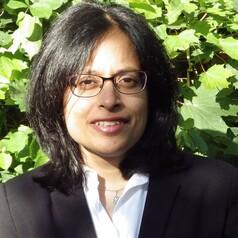
Head of Policy Engagement, Smith School of Enterprise and the Environment, University of Oxford and Fellow in Environmental Change, Reuben College, University of Oxford, University of Oxford Dr Anupama Sen is an energy economist who has published extensively on electricity sector restructuring and reform in the context of the energy transition in non-OECD Asia, the transition to renewables in resource-rich economies in the Middle East and North Africa, energy pricing reforms, and the impact of the energy transition on international energy markets. She has a strong interest in the socio-economic implications of the energy transition, its implications for energy consumers, producers and governments, and in the circular economy in relation to energy. Anupama holds a BA(Hons) in Economics from the University of Mumbai, MSc from the London School of Economics and PhD from the University of Cambridge. Anupama is a Fellow of the Cambridge Commonwealth Society, and has previously been a Junior Research Fellow and a Visiting Fellow at Wolfson College, Cambridge.
Senior scientist, South African National Biodiversity Institute Dr Mlungele Nsikani is a senior scientist at the South African National Biodiversity Institute, extraordinary lecturer at Stellenbosch University, research fellow at the Cape Peninsula University of Technology, and chairperson of the Society for Ecological Restoration - Africa. Dr Nsikani has broad interests in biological invasions and ecological restoration. His current work focuses on the restoration of native ecosystems in previously invaded areas, detection of new invasive species, eradication of invasive species limited to small areas, and risk analysis for alien and invasive species.
Environmental Social Science Research Fellow, University of Oxford Mark is a research fellow in environmental social science who is interested in addressing inter-linked social and environmental challenges through interdisciplinary research. He is broadly engaged with research that investigates issues of well-being, inequality and justice with respect to climate change and natural resource governance. He is interested how different values and knowledges interact with institutional and cultural contexts in driving the governance decisions which underpin environmental and social change across a range of scales. Previously Mark worked as a post-doctoral researcher working on the Ecosystem Services and Poverty Alleviation (ESPA) Ecolimits project. This interdisciplinary project investigated the linkages between ecosystem service provision and the multiple dimensions of poverty in coffee- and cocoa-dominated agricultural settings, focusing on Ethiopia and Ghana respectively. The project used a range of methods to develop a holistic understanding of how ecosystems influence, and are influenced by, socio-economic, political and cultural conditions across various scales. Mark completed his PhD at the University of Reading which examined land-use conflicts between mining and forests in Ghana.
Senior Fellow in Forest Governance and Leader of Ecosystems Governance Group, University of Oxford Profile Constance McDermott chairs the ECI's Ecosystems Governance Group (formerly the Forest Governance Group). Her research, described in detail on the Ecosystem Governance pages, addresses the linkages among diverse local, regional and global priorities for sustainable forest management. It examines both "new" and "old" institutions of forest governance, from market-based initiatives such as forest and carbon certification to sovereign state-based and traditional community-based approaches, to better understand how dynamics of trust and power shape environmental and social policies and facilitate or inhibit desired outcomes. Her methods range from locally focused case studies to large-scale comparative research examining cross-institutional and cross-boundary interactions. McDermott's work at ECI and the Oxford Centre for Tropical Forests includes an emphasis on the integration of forest governance into the global climate regime. Recent research directions include the examination of Reduced Emissions from Deforestation and Degradation (REDD) initiatives, and the role of both pre-existing and new forest institutions for addressing REDD-related environmental and social mandates. Before beginning at Oxford in April 2009, McDermott worked for five years at the Yale School of Forestry and Environmental Studies where she served as Associate Research Scientist and Program Director of the Program on Forest Policy and Governance. She has conducted research and applied work in multi-stakeholder processes, forest and green building certification, intergovernmental forest-related governance, and international development in North and Central America, South Asia, and globally. Research Interests Within the theme of comparative governmental and inter-governmental policy, McDermott addresses the effects of market globalization on domestic forest policy, and the conflicts and synergies between trade and conservation oriented objectives within inter-governmental processes. For example, McDermott is lead author of the book, Global Environmental Forest Policy, together with co-authors Professors Benjamin Cashore (Yale University) and Peter Kanowski (Australian National University). The book compares environmental forest policies in twenty countries worldwide, and serves as a launching point for research on the role of government regulation in addressing REDD-related climate objectives. McDermott's work on trade-based initiatives includes the study of the impacts of wood products trade with the US and China on forests of the Amazon, Borneo, Chile, Congo, Mekong, and Russian Far East. Outputs from this work include a framework for establishing a "results-based" approach to prioritize the engagement of producers and traders in wood product sourcing initiatives. The certification of forests and forest products, and related initiatives (for example, green building, forest carbon certification) are another focal point as new forms of non-state governance designed to balance stakeholder interests both "vertically" (i.e. from the local to global level) and "horizontally" (i.e. across diverse interest groups). McDermott's research in this area includes the study of trust and distrust among stakeholders in shaping certification standards and uptake. Outputs include the development of policy tools for evaluating the use of certified wood in green building.
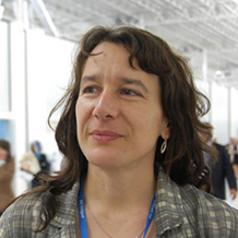
Associate Professor, School of Governance, University of the Witwatersrand Dr Caitlin Blaser Mapitsa’s research interests focus firstly on transboundary governance, of both land and people. She is interested in understanding what drives change in complex social and ecological systems, and which tools can best help us understand these changes. The second focus is on building contextually relevant evaluation approaches, and how evaluation can be a tool to align institutional practice with values systems and developmental objectives. She holds a PhD in migration and displacement from the University of the Witwatersrand’s African Centre for Migration and Society. She received an MA from the same institution, a BA from Wellesley college in international relations and French, and a postgraduate diploma from the University of Stellenbosch in monitoring and evaluation. She is also the research director at the School of Governance. She has worked as an evaluator in civil society, with Resilient Waters evaluating efforts to foster climate resilience in the Okavango and Limpopo river basins, as well as establishing learning systems with the Global Call to Action Against Poverty. She also worked with the Centre for Learning on Evaluation and Results, supporting efforts to strengthen monitoring and evaluation systems within public sector institutions across the region through peer learning.