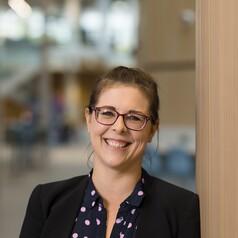
Tropical Ecologist in the Department of Plant Biology and Ecology, Université d’Antananarivo Seheno Andriantsaralaza is a biologist based in Madagascar. She holds a PhD degree in biology and ecology from the University of Antananarivo in collaboration with CIRAD (France). Her dissertation research focused on seed dispersal of two Malagasy baobab species. She is the principal investigator of the ARO Baobab Project, which aims to revitalise baobab forests in Madagascar.
Lecturer in Political Theory and Philosophy, Queen's University Belfast Working within political theory, my current area of research examines freedom of speech, academic freedom, and neo-republicanism. I have a BA(Hons) in Philosophy, an MA in Moral, Legal, and Political Philosophy, and a PhD in Philosophy, all gained at Queen's University Belfast.
Professor of Earth System Science, and Paul S. and Billie Achilles Chair of Environmental Science, Stanford University Professor Hadly uses a combined field and laboratory approach to examine how ecological perturbations link or decouple levels of biological organization, because understanding the links among ecosystems, species, populations and genes is central to understanding how organisms exist, evolve and become extinct. She addresses problems in organismal biology from both evolutionary and ecological perspectives, primarily using extant species. One of the unique aspects of her overall approach is the focus on the decadal to millennial time scale, a scale that is little studied, although it is a scale that is integral to understanding links between ecology and evolution, and increasingly important to understand the impacts of the Anthropocene.
Professor Emeritus, Department of Integrative Biology, University of California, Berkeley Professor Emeritus in the Department of Integrative Biology at the University of California, Berkeley. Author of numerous scientific publications, op-eds, blog posts, and books. I study how changes in the physical environment (such as climate change and mountain building) contribute to the evolution of mammal species and faunas at varying temporal and geographic scales. Field aspects of the work include collecting fossils from long stratigraphic sequences that can be well-dated by biostratigraphic, paleomagnetic, or radioisotopic techniques. Lab analyses utilize database and GIS systems to identify faunal changes through space and time; the faunal patterns are then compared with independently identified changes in the physical environment to test various evolutionary and biogeographic predictions.
Senior Lecturer in Marketing (Strategic Marketing and Business-to-Business Marketing), University of Bath I teach Contemporary Marketing Theory and Application to full-time and Executive MBA students, Business-to-Business marketing to final-year undergraduates, and Strategic Marketing at the post-graduate level. My teaching researches and embeds the use of Generative AI and Large Language models in teaching, learning, assessment, and feedback. As well as developing experiential learning through authentic assessment practices. My research interests are Customer inspiration, technology use and shopper behaviour.
Professor of global affairs, director of the McKenna Center for Human Development and Global Business, University of Notre Dame Offenheiser served as the inaugural William J. Pulte Director of the Keough School’s Pulte Institute for Global Development, where he oversaw and developed the Pulte Institute’s academic, research, and public policy activities, as well as its strategy for long-term growth. He also identified and cultivated critical, strategic partnerships between the institute and companies, federal agencies, foundations, and private philanthropists. Additionally, he represented the Pulte Institute at local, national, and international events. A widely known nonprofit leader and innovator with a broad range of international development experience in Asia, Africa and Latin America, Offenheiser served as president of Oxfam America for 20 years. Under his leadership, the agency grew eightfold and repositioned itself in the United States as an influential voice on international development, human rights and governance, humanitarianism, and foreign assistance. Prior to joining Oxfam, Offenheiser represented the Ford Foundation in Bangladesh and the Andean and Southern Cone regions of South America. He has directed programs for the Inter-American Foundation in Brazil and Colombia, and he has worked for Save the Children Federation in Mexico. At the 2012 G20 Summit, he was appointed by the Obama administration to represent civil society interests on the leadership council of the New Alliance for Food Security and Nutrition in Africa. Offenheiser has served as honorary president of Wetlands International, and he was a co-founder of the ONE Campaign, the Modernizing Foreign Assistance Network and the Food Policy Action Network. He has served on the advisory boards of the World Economic Forum, the Council on Foreign Relations, the Aspen Institute, the World Agricultural Forum, the Gates Foundation, the Clinton Global Initiative, Harvard Business School, the Kennedy School of Government at Harvard, and Cornell University. A 1971 graduate of Notre Dame, Offenheiser also holds a master’s degree in development sociology from Cornell University. He currently serves as chair of the board of directors for BRAC USA is the US-based affiliate of international development organization BRAC, one of the largest nongovernmental organizations in the world, which reaches more than 100 million people in 11 countries with evidence-based approaches that assist families to break out of the cycle of poverty. He also serves on the board of the Consensus Building Institute and the Oxfam America Action Fund and on the Forum for Corporate Responsibility of the BHP Corporation and the advisory board of the Emerging Markets Investors Alliance (EMIA). Offenheiser has been a frequent commentator with US and international media.