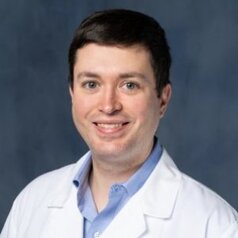
Assistant Professor of Hematology, University of Florida My name is John A. Ligon, MD, and I am an assistant professor in the department of pediatrics at the University of Florida College of Medicine. I earned my medical degree from the Baylor College of Medicine in Houston, completed my residency in pediatrics at the University of Texas Southwestern Medical Center in Dallas, and pursued a fellowship in pediatric hematology and oncology at Johns Hopkins University and the National Cancer Institute in Maryland. In the following years, I completed a senior fellowship in pediatric immunotherapy at the National Cancer Institute and another in pediatric sarcoma at Johns Hopkins University. I knew I wanted to be a pediatrician from a young age, as I loved going to my own pediatrician as a kid. This passion for caring for children persisted through medical school and into my residency training, where I was inspired by my amazing mentors and the strength of their patients to pursue additional training in hematology and oncology. I am board-certified in both general pediatrics and pediatric hematology and oncology by the American Board of Pediatrics. In addition to my numerous original research publications and editorial review appointments, I am a member of various professional societies, such as the Children’s Oncology Group and the American Association for Cancer Research. I have been honored with a variety of awards for my research skills and academic excellence, and my research interests include immunotherapy, tumors and bloodstream infections. I am a member of the Pediatric Cancer Immunotherapy Initiative (PCI2) at the University of Florida. I serve as a translational partner with my collaborators, Drs. Elias Sayour and Paul Castillo, to advance new treatments which harness the power of the immune system into early phase pediatric clinical trials. My work is supported by a number of foundations and organizations including the V Foundation, Hyundai Hope on Wheels, the Society for Immunotherapy of Cancer, the National Pediatric Cancer Foundation, the Pediatric Cancer Research Foundation, MIB Agents and the Children’s Miracle Network. My goal as a physician is to discover new treatments that will allow more children to be cured of their cancer than could be with currently available treatments. I want my patients to know that rather than focusing on one specific type of cancer, I am interested in using the immune system to find ways to cure all kinds of pediatric cancer. The immune system is the same across all kinds of cancer and I believe there is a way to unlock it for many diseases that we currently have trouble treating. When I’m not practicing medicine, you can find me watching San Antonio Spurs basketball games, playing Magic: the Gathering trading card game and taking care of my three small children.
Assistant Professor of Neurosurgery, University of Florida Christina von Roemeling, PhD is an Assistant Professor of Neurosurgery at the University of Florida. Collectively she has nearly 15 years of translational research experience involving the targeted and immunologic treatment of cancer. Her studies focus on delineating mechanisms of tumor-induced innate immune suppression in pediatric and adult brain malignancies, and identifying different strategies to co-opt this cellular cross-talk pharmacologically with small molecule inhibitors and through biomedical engineering tactics using recombinant adeno-associated virus to enhance immune recognition of cancer. She continues to draw from her multidisciplinary training including molecular cancer cell biology, drug development, nanomedicine, and biomedical engineering to identify and develop unique targeted treatment platforms that can be directly translated into clinical therapies for brain tumor patients. Dr. von Roemeling specializes in three dimensional imaging of cleared tissue specimens, providing unique insights into the geo-spatial features of malignancy, such as biophysical barriers that contribute to disease progression, or unique prognostic and therapeutic indicators of tumor response to treatment.
Professor, School of Events, Tourism and Hospitality Management, Leeds Beckett University Professor Kate Dashper is the Director of Research Degrees in the School of Events, Tourism and Hospitality Management. Her research applies a critical sociological lens to examine practices of work and leisure, particularly focusing on gender issues and interspecies encounters. Kate is an internationally recognised researcher for her work in human-animal studies. Through her research on equestrian sport and leisure, Kate examines how humans and nonhumans work and play together, and the interspecies relationships that can develop through joint action and interaction. Her research considers the potential contributions that multispecies perspectives can make to understanding events, tourism and hospitality practices and organisations. She is author of the 2017 monograph Human-animal Relationships in Equestrian Sport and Leisure (Routledge) and co-editor of the first book on multispecies events, Humans, horses and Event Management (CABI, 2021). Kate’s other main area of expertise is gender, and she has conducted research and consultancy projects within both the events and equestrian industries, evaluating gender equality initiatives in organisations and exploring the gendered experiences of women and men within professional and leisure contexts. She is editor of Sport, Gender and Mega-events (Emerald, 2021).
Researcher and Lecturer in Tourism, Universidad Autonoma del Estado de Mexico Carlos Monterrubio holds a PhD in Tourism from the Manchester Metropolitan University, UK. He is currently a researcher and Lecturer in Tourism at the Universidad Autónoma del Estado de México, Mexico. His main research interests are vulnerable groups, gender and interspecies relations in tourism, leisure and events.
Reader in Sustainability, Manchester Metropolitan University Helen is a Reader in Sustainability & Doctoral College Faculty Head (Business & Law) at Manchester Metropolitan University, UK. Her research explores collaboration across species, sectors and communities. She is particularly interested in how domestic animals shape our understanding of "human" concepts like work, leisure and heritage. Current projects centre on horse-logging, Mexican rodeo, and how retired racehorses move into new work and home lives post-racing. Helen's work has been funded by the British Academy, UKRI, and The Sociological Review Foundation among others. She is a fellow of the Royal Anthropological Institute, and a member of the Academy of Business in Society, and the European Group of Organisation Studies.
Research Officer, Centre for Environmental Research Innovation and Sustainability (CERIS), Atlantic Technological University My research interests revolve around the area of biomass and bioenergy. With a background in both chemistry and environmental chemistry, I am committed to contributing to the discovery of solutions that can help reduce carbon emissions and waste build-up in local communities. My expertise lies in hydrothermal processing of biomass, which I had the opportunity to explore during my master's thesis in Switzerland. Subsequently, I focused on producing bio-petroleum oil from microalgae using hydrothermal liquefaction. Additionally, I have worked on a project aimed at valorizing black liquor to produce hydrogen and agricultural waste to produce bio bitumen binder. My proficiency in this field makes me a valuable addition to any team focused on tackling the challenges of biomass and bioenergy.