Senior Research Fellow, Centre for Environmental Research Innovation and Sustainability (CERIS), Atlantic Technological University Dr. Ehiaze Ehimen is a Senior Research Fellow in Developmental Sustainable Energy Systems at Atlantic Technological University, Sligo. He completed a PhD in Physics (Energy Systems) from the University of Otago, Dunedin, New Zealand in 2010, prior to which he had a European MSc in Environmental Technology and Management from De Montfort University, Leicester, UK. Dr Ehimen has worked extensively on a range of renewable energy, environmental technology, waste utilisation and bio-processing optimisation projects in a variety of research projects, roles and institutions in different European countries. He is currently the coordinator and lead PI of the Irish Research Council ( IRC) COALESCE award funded CEANGAL project which is focused on transnational research collaboration to afford improved renewable energy uptake in Sub-Saharan African communities, Ehiaze is also the coordinator and principal of the Sustainable Energy Authourity of Ireland (SEAI) funded MOBILISE project which researches economic, political, and technological factors affecting the implementation of energy efficiency measures in Traveller communities in Ireland. Previously, he was the Project Coordinator for the Rep. of Ireland for the EU INTERREG VI Renewable Engine project (2018-2021). Here, in collaboration with a local SME, Organic Power, he contributed to the development of a small scale AD plant for decentralised gas and electricity generation. He was also a PI on the EU NPA funded SYMBIOMA project (2019-2022) which supported bio-based industries in sparsely populated EU Atlantic regions with mechanisms for valorising their waste streams. Previously, Dr. Ehimen worked an Researcher at Flemish institute of Technological Research (VITO), Mol, Belgium investigating enzymatic process optimisation and intensification routes (FP7 BIOINTENSE project), and at Aalborg University, Esbjerg, Denmark on the EU INTERREG 4A funded “Large Scale Bioenergy Lab” project and the EU regional fund project “Algae Innovation Centre”.Dr Ehiaze Ehimen, ATU’s Senior Research Fellow,
Visiting Assistant Professor of Religious Studies, Oklahoma State University Dr. Ryan M. Armstrong teaches Religious Studies and Biblical Hebrew at Oklahoma State University. His research focuses on biblical literature and language, its Ancient Near Eastern context, and the history of its interpretation. He is the author of The Book of Job in Wonderland: Making (Non)sense of Job's Mediators (Oxford University Press, 2024), which explores mediation in the book of Job and the history of its interpretation by rabbis, theologians, philosophers, and artists. Along the way, it draws from a comparative-literary analysis of Lewis Carroll’s Alice’s Adventures in Wonderland. He has written on Hebrew Poetry and Narrative, Qumran and the Dead Sea Scrolls, New Testament Canonization, and Jewish and Christian interpretations of the Bible. He is proficient in numerous dead languages and speaks five modern ones.
Assistant Professor of History, Purdue University Christopher Ewing graduated with a B.A. from Vassar College and a Ph.D. in History from the Graduate Center of the City University of New York. His research takes a transnational approach to LGBTQ+ politics and he is currently working on a project that examines the development of hate crimes activism between Australia, Europe, and the United States. He is the author of The Color of Desire: The Queer Politics of Race in the Federal Republic of Germany.
Professor of Anthropology, Middlebury James L. Fitzsimmons is a Professor of Anthropology at Middlebury College, where he delivers courses on the anthropology of death, the rise of complex societies in Mesoamerica, and the origins of writing. As an epigrapher and an archaeologist, Fitzsimmons has more than 25 years of experience studying ancient Maya politics, religion, and social organization. He has either directed or been a member of several archaeological projects in Belize, Guatemala, Honduras, and the United States. Fitzsimmons holds a BS in Anthropology and Latin American Studies from Tulane University as well as an MA and PhD from Harvard University; he is also the author or editor of six books on the ancient Americas on topics ranging from death to politics to war.
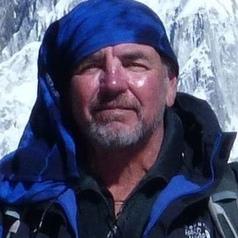
Senior Research Associate, Institute of Arctic and Alpine Research, University of Colorado Boulder Alton C. Byers is a mountain geographer, conservationist, and mountaineer specializing in applied research, high altitude ecosystems, glacier hazards, and implementation of integrated conservation and development programs in the Himalayas, Andes, and East African Highlands. He has published widely on a range of scientific and popular topics, and is an author and co-editor of Mountain Geography: Human and Physical Dimensions (University of California Press at Berkeley, 2013). Following receipt of his PhD from the Department of Geography at CU Boulder in 1987, he accepted a two-year position as Co-Manager of the Ruhengeri Resource Analysis and Management (RRAM) project in Ruhengeri Prefecture, Rwanda, volunteering as Scientific Advisor to the late Dian Fossey’s Karasoke Research Center. Following this he was hired by the then-Woodlands Mountain Institute to assist in the design, fundraising, and co-management of the new Makalu-Barun National Park and Conservation Area in eastern Nepal, where he lived for two years (1993-95) in a Nepali village with his young family. Upon his return to the U.S. in 1995, he established, funded, and worked as Director of the Andean Program with a base of operations in the Cordillera Blanca of Peru, turning the program over to a Peruvian national in 1997 who has managed the project ever since. This period of his career corresponded with a growing interest in alpine conservation and restoration, particularly in tourist-impacted regions of the Himalayas and Andes, where he combined applied research with community awareness building to form several local Alpine Conservation Councils in Nepal and Peru that remain effective to this day. He became Director of Appalachian Programs in 1998, developing a range of local conservation, mountain education, and teacher training programs, including the School for Mountain Studies that regularly took undergraduates on field courses to the Mt. Everest region of Nepal and Cordilleras Blanca and Huayhuash in Peru. In the 2000s, Byers added climate change impacts on high mountain environments to his ongoing portfolio of alpine research and conservation, landscape change, and glacial lake management and risk reduction interests, funding and hosting three international, field-based climate change workshops in Nepal and Peru between 2009 and 2013. The High Mountains Adaptation Partnership (HiMAP), that he has co-managed since 2012 with the University of Texas at Austin, has been a particular highlight in his career, where he developed approaches to integrating results from HiMAP glacial lake rapid reconnaissance research into the local adaptation plan of action (LAPA) process. After 25 years at TMI of project implementation, applied research, cross-programmatic and institutional fundraising, he left TMI in April 2015 to pursue a range of writing, research, and high mountain projects and initiatives, and currently serves as Senior Research Associate at INSTAAR.
Executive Director, Oklahoma Aerospace Institute for Research and Education, Oklahoma State University Jamey Jacob is the Executive Director of the OSU Oklahoma Aerospace Institute for Research and Education (OAIRE) and the Williams Chair in Energy Technology and Regents Professor of Aerospace Engineering in the School of Mechanical and Aerospace Engineering at Oklahoma State University. His current efforts are focused on advanced air mobility and their enhanced operation in the national airspace for broader innovative applications. He is currently lead on the NASA University Leadership Initiative program WINDMAP to develop aviation weather solutions for advanced aerial mobility applications, including drones and urban air taxis, and is the director for the Counter-UAS Center of Excellence focused on assessing and mitigating UAS threats both at home and abroad. As part of recent EDA funding through the Build Back Better program, he is leading the development of the LaunchPad Center for Advanced Air Mobility in Tulsa. He received his B.S. in Aerospace Engineering from the University of Oklahoma in 1990 and his M.S and Ph.D. in Mechanical Engineering from the University of California at Berkeley in 1992 and 1995, respectively. He was a National Research Council Summer Faculty Fellow in the Air Force Research Laboratory and received the SAE Ralph Teetor Award, the Lockheed Martin Teaching Award, and the OSU Regents Distinguished Teaching and Research Awards, among other mentoring accolades. He is a native Oklahoman and dedicates much of his efforts to STEM workforce development, tribal engagement, and increasing diversity in engineering and science.