


 CDC Expands Ebola Screening Efforts at U.S. Entry Points Amid Congo and Uganda Outbreak
  Goldman Sachs Raises USD/JPY Forecast, Sees Yen Weakness Persist Through 2027
  GSK Reportedly Nears $9 Billion Acquisition of Cancer Drug Developer Nuvalent
  Morgan Stanley Says China’s Reusable Rocket Progress Poses Long-Term Challenge to SpaceX
  White House Seeks $1.4 Billion to Combat Growing Ebola Outbreak
  Goldman AM Sees Strong Buyout Opportunities in Japan, South Korea and Australia
  AstraZeneca Shares Sink After Wainua Trial Misses Key Heart Disease Goal
  Takeda Hit With $885M Verdict Over Amitiza Generic Drug Delay Scheme
  USA at 250: the Black American struggle for life, liberty and the pursuit of happiness
  Venezuela Earthquake Health Risks Rise as Disease Monitoring Intensifies
  RFK Jr. Orders Extended Hantavirus Quarantine for Cruise Passenger
  JPMorgan Cuts Gold Price Forecast, Sees Bullion Reaching $4,500 by End of 2026


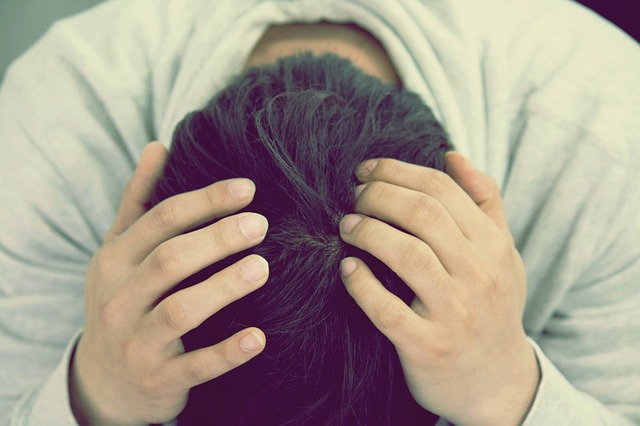

Americans are becoming more anxious about their safety, health, finances, politics and relationships, a new online poll from the American Psychiatric Association finds. Compared to the results of a similar poll a year earlier, 39 percent of adults in the U.S. are more anxious today than they were a year ago.
As a psychiatrist and neuroscientist, I believe studies and polls like these help to identify individual and group vulnerabilities. They may provide clues for providing better clinical practice, implementing more effective public policies, and designing research projects that yield a better understanding of the causes of anxiety and better treatments.
Although anxiety is rising across all age groups and demographic categories, there are notable distinctions between certain groups.
For example, millennials are more anxious (especially about finances) than Gen-Xers or baby boomers – though boomers’ overall anxiety increased more than the other age groups. Women reported a greater increase in overall anxiety in all dimensions than men, and non-Caucasians’ overall anxiety rose faster in the preceding year than did Caucasians. Sometimes, anxiety occurs without clearly defined worries or awareness, suggesting the poll may have only captured part of a rise in adult Americans’ anxiety levels – and those adults’ anxiety may be affecting children and teenagers too.
While this poll was not designed to detect or diagnose anxiety disorders or pathological anxiety, it does indicate that people are perceiving greater potential danger to many elements of their well-being.
Anxiety is a lower-grade version of a fear response. Severe instances of fear – such as actual direct threats of pain, injury or death – can cause very real physical reactions, including a release of stress hormones into the bloodstream and changes in heart rate and blood pressure, as the body prepares to react rapidly.
Anxiety-triggered physiological responses are slower to develop, but can last longer. Rather than being caused by an immediate threat, it can happen as people adapt to changing situations, such as visiting new countries, starting a different job or experiencing major life transitions such as marriage, parenthood and aging. Often, anxiety dissipates as a person becomes more familiar with the new situation. Short-term and mild-to-moderate anxiety states are adaptive as they increase our alertness and prepare us for new challenges.
Although our genetic makeup controls much of our fear and anxiety responses, recent studies also implicate our social environment. Children are especially sensitive to their caretakers’ emotional states, which means that if more adults are more anxious, the same is true for kids.
But if it lasts, anxiety, like fear, can bring long-lasting physiological changes such as prolonged muscle tension, chronic high blood pressure and sleep disorders. Some groups may be particularly vulnerable to long-term anxiety, such as people with physical or cognitive limitations that make it hard to adapt to new situations.
For others, worrying can become so overwhelming that a person does not focus on other important areas of life issues such as work, school or relationships. An especially anxious person may become excessively sensitive to minor concerns, which may be manifested by overreacting or avoiding people or situations that are not dangerous.
Although regular exercise, relaxation, healthy eating and time with friends and family are all known to reduce anxiety, these fixes may not be sufficient. To quote Martin Luther King Jr., given the social nature of anxiety, “We are caught in an inescapable network of mutuality, tied in a single garment of destiny. Whatever affects one directly, affects all indirectly.” This suggests that addressing actual threats and communicating carefully about perceived ones can have a beneficial impact on anxious Americans.
 Jacek Debiec receives funding from University of Michigan, National Institutes of Health and Brain & Behavior Research Foundation.







