


 SpaceX’s Starship Completes 11th Test Flight, Paving Way for Moon and Mars Missions
  FDA Adds Fatal Risk Warning to J&J and Legend Biotech’s Carvykti Cancer Therapy
  Trump Administration to Launch Autism Initiatives Targeting Acetaminophen Use and New Treatment Options
  Is space worth the cost? Accounting experts say its value can’t be found in spreadsheets
  NASA and Roscosmos Chiefs Meet in Florida to Discuss Moon and ISS Cooperation
  Trump and Merck KGaA Partner to Slash IVF Drug Costs and Expand Fertility Coverage
  Neuralink Expands Brain Implant Trials with 12 Global Patients
  Trump Signs Executive Order to Boost AI Research in Childhood Cancer
  Lost in space: MethaneSat failed just as NZ was to take over mission control – here’s what we need to know now
  CDC Vaccine Review Sparks Controversy Over Thimerosal Study Citation
  SpaceX Prioritizes Moon Mission Before Mars as Starship Development Accelerates
  Cogent Biosciences Soars 120% on Breakthrough Phase 3 Results for Bezuclastinib in GIST Treatment


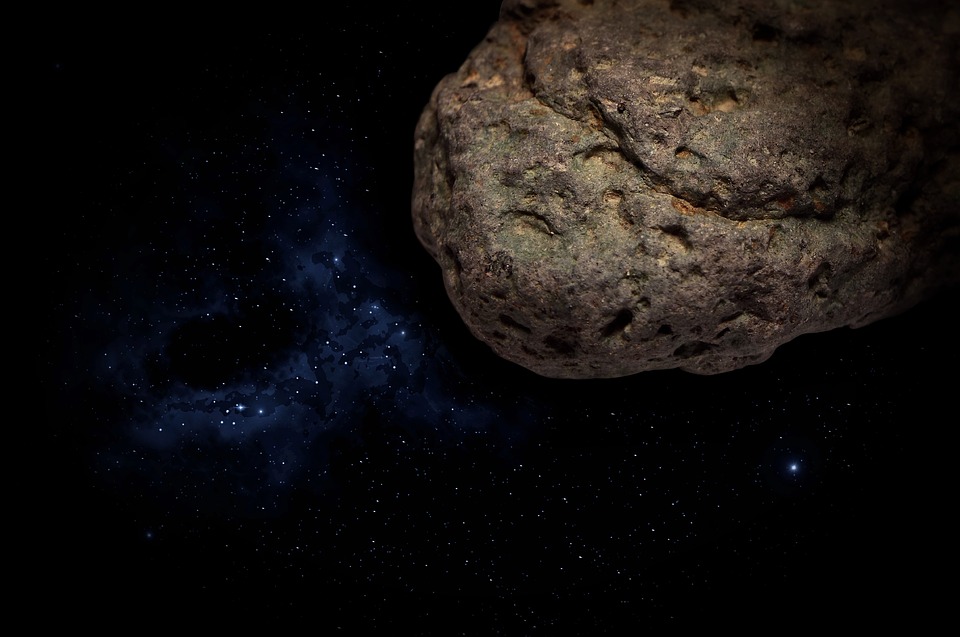
Asteroids are known for being responsible for ending the dinosaurs millions of years ago. However, it looks like a similarly deadly asteroid may be making its way towards the Solar System and towards the vicinity of the Earth, according to NASA.
Express reports that the space agency’s asteroid trackers have caught sight of an asteroid measuring a little over 1,800 feet in diameter. This would make the space rock bigger than the Sears Tower in Chicago. Classified as Potentially Hazardous by the agency, the asteroid could cause very serious damage if it ever decided to make an unannounced visit to Earth, passing through the atmosphere and into full view of the world. The astronomers predict that the asteroid referred to as 2019 UO would be coming towards the Earth’s orbit by the 10th of January.
UO was first spotted back in October 2019, and NASA’s astronomers confirmed its trajectory at that time as well. The asteroid will be approaching Earth at a speed of 9.40 kilometers per second and the closest it will get to the planet will be at 0.03021 astronomical units. In human terms, the asteroid will be at its closest to the planet at a distance of 4.5 million kilometers. Thankfully far, but it is still close enough for space agencies everywhere to take notice. This will not be the last we will see of UO, as astronomers have also predicted that it will be making its return to the planet’s orbit come 2032, on the 18th of November.
Meanwhile, Express previously reported that some asteroids that are orbiting by Jupiter could be the ones who might be approaching Earth and when those do approach the Earth, there may be a chance of impact. According to Kenta Oshima of the National Astronomical Observatory in Japan, the space objects that are in a high inclination of the solar plane are the ones people should be worried about, such as the asteroids that may be lurking around Jupiter’s orbit.
The solar plane is the level that planets orbit the Sun on, and anything above it is already a high inclination. Those objects above can interact with the gravitational pull and can, therefore, push and shove each other into different orbits, including the Earth’s own orbit.













