


 Ohio Man Indicted for Alleged Threat Against Vice President JD Vance, Faces Additional Federal Charges
  US Pushes Ukraine-Russia Peace Talks Before Summer Amid Escalating Attacks
  Trump Signs “America First Arms Transfer Strategy” to Prioritize U.S. Weapons Sales
  Trump Signs Executive Order Threatening 25% Tariffs on Countries Trading With Iran
  Japan Election 2026: Sanae Takaichi Poised for Landslide Win Despite Record Snowfall
  Missouri Judge Dismisses Lawsuit Challenging Starbucks’ Diversity and Inclusion Policies
  TrumpRx Website Launches to Offer Discounted Prescription Drugs for Cash-Paying Americans
  U.S.-India Trade Framework Signals Major Shift in Tariffs, Energy, and Supply Chains
  TrumpRx.gov Highlights GLP-1 Drug Discounts but Offers Limited Savings for Most Americans
  New York Legalizes Medical Aid in Dying for Terminally Ill Patients
  Trump Allegedly Sought Airport, Penn Station Renaming in Exchange for Hudson River Tunnel Funding
  India–U.S. Interim Trade Pact Cuts Auto Tariffs but Leaves Tesla Out
  Trump Says “Very Good Talks” Underway on Russia-Ukraine War as Peace Efforts Continue
  Pentagon Ends Military Education Programs With Harvard University
  Trump Endorses Japan’s Sanae Takaichi Ahead of Crucial Election Amid Market and China Tensions
  Norway Opens Corruption Probe Into Former PM and Nobel Committee Chair Thorbjoern Jagland Over Epstein Links
  Netanyahu to Meet Trump in Washington as Iran Nuclear Talks Intensify


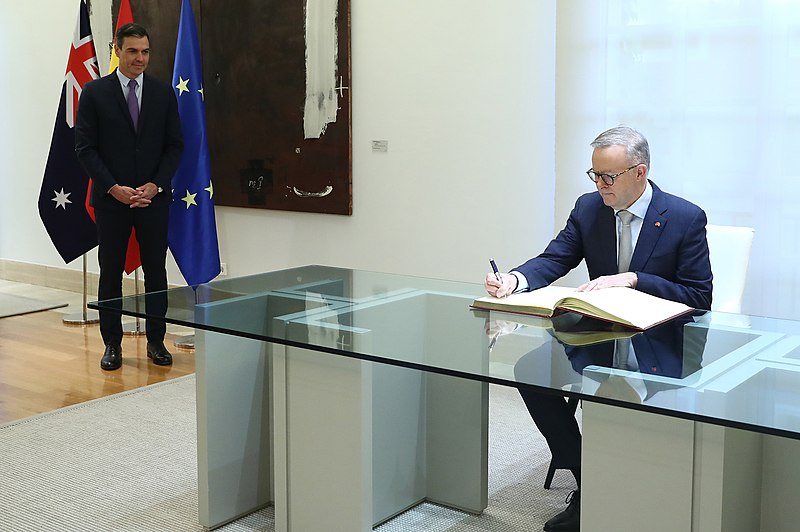
Australian Prime Minister Anthony Albanese marked his first 100 days as the country’s leader and the Labor Party’s government this week. Albanese said his government was focusing on reforming the workplace as the country recovers from the COVID-19 pandemic.
In his speech at Canberra to mark 100 days of being in office, Albanese said pro-worker and pro-business was his government’s main agenda for growth.
This comes as the government will be hosting a jobs summit to help bring together employer and union groups to talk about wage growth, productivity, workplace reform, and migration.
“The biggest single outcome I am hoping for is the beginning of a culture of cooperation,” Albanese told the National Press Club Monday.
Albanese said skills shortages posed a challenge to the country’s economy and that it was a mistake for the previous government to tell temporary visa holders to leave Australia during the pandemic just as the borders were closed.
Albanese also said that aside from discussing migration intake, his government plans to look into “creating more paths to permanent migration” to get foreign workers back in areas such as nursing and engineering, among others.
Shoring up the economy to provide families and businesses with much-needed security was a priority for Albanese’s government. Albanese noted that the pandemic was a challenge that the country was not prepared for.
“Australia is already in the ‘recovery’ phase – and that’s presenting its own economic challenges including significant and unpredictable supply and demand imbalances which are driving up costs, for businesses and families,” said Albanese.
Thursday last week, the Pentagon announced that the State Department has approved a potential sale of military helicopters and related equipment to Australia as it seeks to increase its presence in the Indo-Pacific region.
Australia requested to buy 40 UH-60M Black Hawk helicopters with Lockheed Martin Corp. as the principal contractor, according to the Pentagon.
The latest approval follows another sale to Australia back in May when the State Department approved the sale of mobile rocket launchers, along with several weapons in a sale to allies worth $3.1 billion.
The sales in recent months came at a time when governments are looking to invest in weapons systems in light of Russia’s invasion of Ukraine.













