


 Washington Post Publisher Will Lewis Steps Down After Layoffs
  Alphabet’s Massive AI Spending Surge Signals Confidence in Google’s Growth Engine
  TSMC Eyes 3nm Chip Production in Japan with $17 Billion Kumamoto Investment
  Uber Ordered to Pay $8.5 Million in Bellwether Sexual Assault Lawsuit
  Once Upon a Farm Raises Nearly $198 Million in IPO, Valued at Over $724 Million
  SpaceX Updates Starlink Privacy Policy to Allow AI Training as xAI Merger Talks and IPO Loom
  Trump Backs Nexstar–Tegna Merger Amid Shifting U.S. Media Landscape
  SpaceX Prioritizes Moon Mission Before Mars as Starship Development Accelerates
  Elon Musk’s SpaceX Acquires xAI in Historic Deal Uniting Space and Artificial Intelligence
  Elon Musk’s Empire: SpaceX, Tesla, and xAI Merger Talks Spark Investor Debate
  SoftBank and Intel Partner to Develop Next-Generation Memory Chips for AI Data Centers
  SoftBank Shares Slide After Arm Earnings Miss Fuels Tech Stock Sell-Off
  FDA Targets Hims & Hers Over $49 Weight-Loss Pill, Raising Legal and Safety Concerns
  Weight-Loss Drug Ads Take Over the Super Bowl as Pharma Embraces Direct-to-Consumer Marketing
  Sam Altman Reaffirms OpenAI’s Long-Term Commitment to NVIDIA Amid Chip Report
  Amazon Stock Rebounds After Earnings as $200B Capex Plan Sparks AI Spending Debate


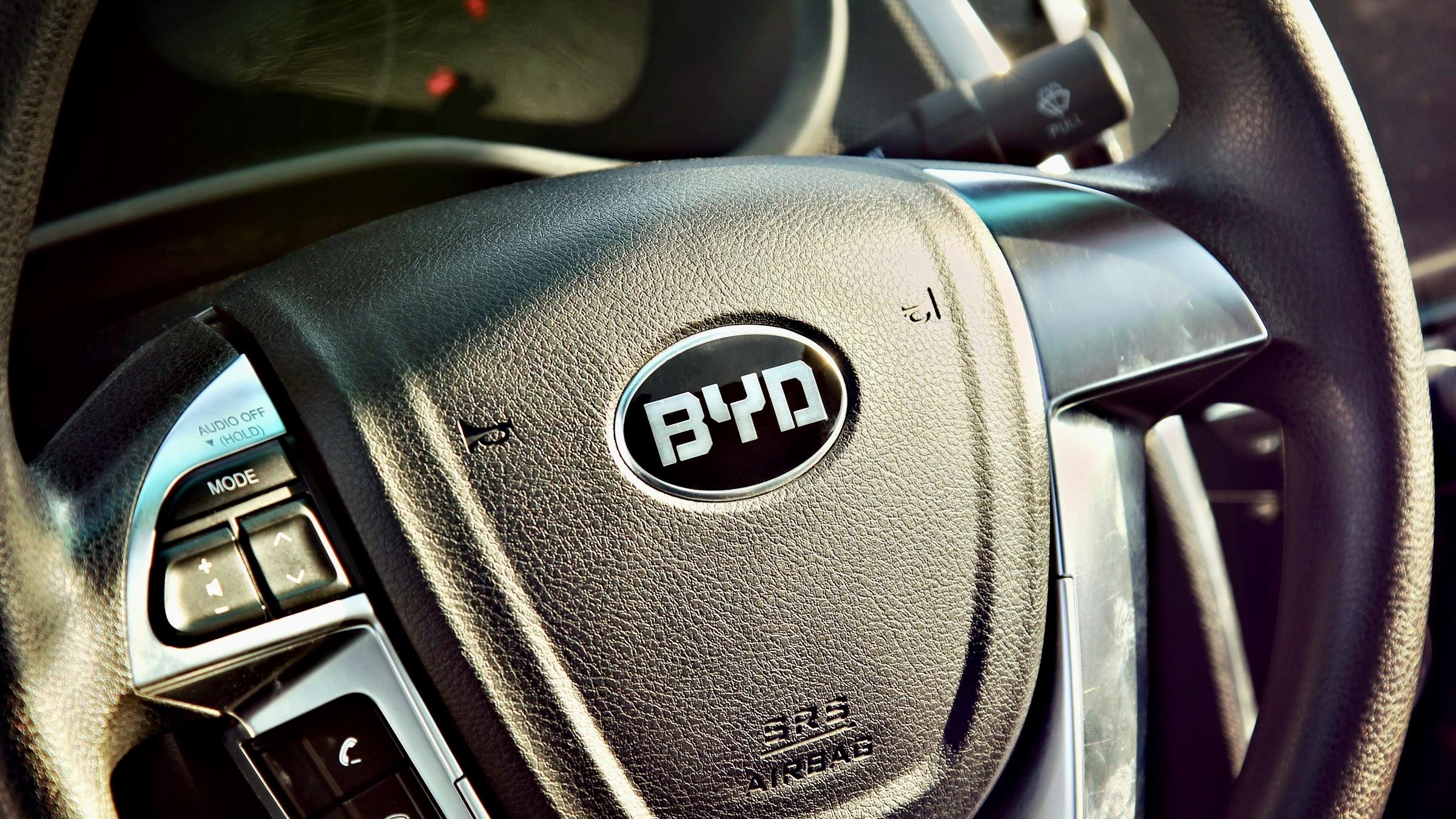
BYD shows resilience in the face of new EU tariffs on Chinese EVs, achieving significantly higher profits in Europe compared to China, recent studies indicate.
Following the announcement of increased tariffs by the European Union (EU) on Chinese electric vehicle (EV) imports a few days ago, BYD is subject to an additional 17.4% levy. Nonetheless, the market leader is anticipated to bounce back since BYD allegedly generates greater EV revenues in the European Union from models such as the Seal U compared to China.
Teslarati reports that although the EU has imposed fresh tariffs on Chinese EV imports, BYD appears unconcerned. According to analysts, the profits of Chinese carmakers from electric cars sold in Europe still outweigh those of domestic EU manufacturers.
Impact of EU Tariffs on Chinese EV Imports
Amidst its continuing investigation into possible subsidies, the European Commission levied additional taxes on EVs imported from China. Imports of certain Chinese EVs into Europe were subject to tariffs set by the Commission at 38%. Additional EV import charges from China will be applied to the existing 10% tariffs.
As an incentive for their cooperation with the EU's probe, three Chinese carmakers were granted exclusive duty rates. Additional tariffs received by BYD were the lowest at 17.4%. Total tariffs levied by BYD will approach 30%.
Rhodium Group (via CarNewsChina.com) claims that BYD's EU profitability will be unaffected by the approximately 30% tariff. To prove its claim, the group compared BYD's European and Chinese profits with the BYD Seal U.
Profit Comparison for BYD EV Models
Each BYD Seal U sold in Europe generates a profit of $15,400 for the Chinese carmaker. In contrast, BYD earns $1,400 for every Seal U device sold in China. What Chinese electric car manufacturers call the "EU premium" is BYD's substantial profit on each Seal U vehicle.
Rhodium Group said, "Our analysis of several other models sold in China and Germany indicates that even after a 30% duty, many Chinese EV models would still enjoy a strong EU profit premium."
Electrek elaborates that raising tariffs significantly would be necessary for the EU to decrease export incentives. Tariffs of 45–55% might be required to reduce earnings. On the other hand, it would have a greater negative impact on foreign automakers like Tesla and BMW, which export from China.
Economic Implications and Future Production Plans
According to BYD CEO Wang Chuanfu, Western countries are "afraid" of Chinese EVs last week. "If you are not strong enough, they will not be afraid of you," he continued.
According to Wang, the tariffs demonstrate how strong China's automotive sector is. Even if increasing tariffs could be a problem, BYD is prepared to start producing EVs later this year at its first European factory.
Photo: Mohammad Fathollahi/Unsplash













