


 Alphabet’s Massive AI Spending Surge Signals Confidence in Google’s Growth Engine
  Palantir Stock Jumps After Strong Q4 Earnings Beat and Upbeat 2026 Revenue Forecast
  Nvidia, ByteDance, and the U.S.-China AI Chip Standoff Over H200 Exports
  FDA Targets Hims & Hers Over $49 Weight-Loss Pill, Raising Legal and Safety Concerns
  Uber Ordered to Pay $8.5 Million in Bellwether Sexual Assault Lawsuit
  SpaceX Updates Starlink Privacy Policy to Allow AI Training as xAI Merger Talks and IPO Loom
  Global PC Makers Eye Chinese Memory Chip Suppliers Amid Ongoing Supply Crunch
  Elon Musk’s Empire: SpaceX, Tesla, and xAI Merger Talks Spark Investor Debate
  Nintendo Shares Slide After Earnings Miss Raises Switch 2 Margin Concerns
  SpaceX Prioritizes Moon Mission Before Mars as Starship Development Accelerates
  FxWirePro- Major Crypto levels and bias summary
  Tencent Shares Slide After WeChat Restricts YuanBao AI Promotional Links
  TSMC Eyes 3nm Chip Production in Japan with $17 Billion Kumamoto Investment
  Baidu Approves $5 Billion Share Buyback and Plans First-Ever Dividend in 2026


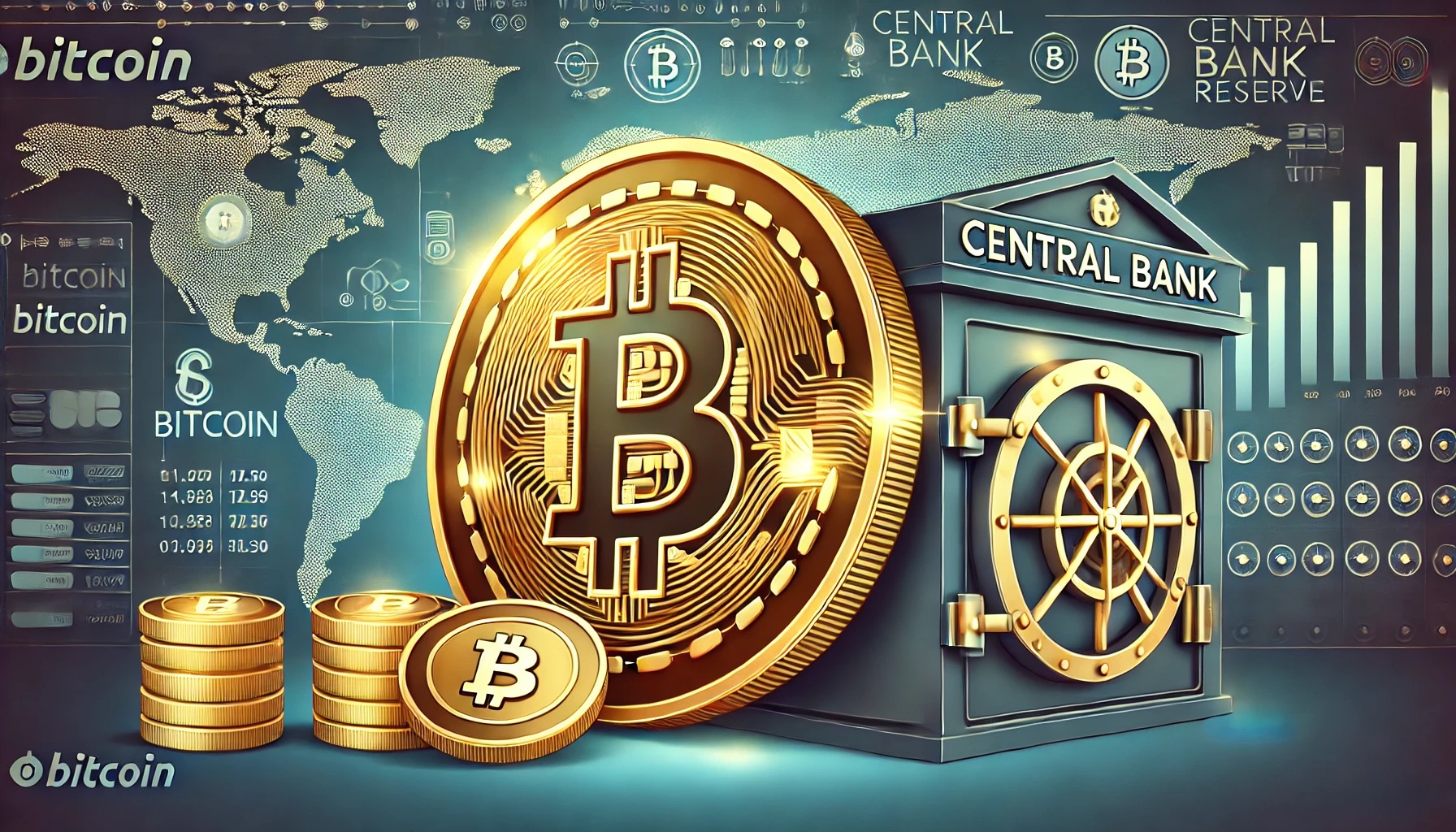
A new report from the Bitcoin Policy Institute suggests that Bitcoin could serve as a vital reserve asset for central banks. Economist Matthew Ferranti emphasizes that Bitcoin's weak correlation with traditional assets and lack of counter-party risk make it an effective tool against inflation and geopolitical risks.
Bitcoin Proposed as a Reserve Asset by Bitcoin Policy Institute
In a recent publication titled "The Case for Bitcoin as a Reserve Asset," the Bitcoin Policy Institute put forth the argument that central banks should hold Bitcoin in order to protect themselves from escalating inflation, risks related to geopolitics and capital control, the possibility of sovereign default, bank failures, and international sanctions levied by the U.S. government.
Bitcoin, according to the paper's author, economist Matthew Ferranti, is an "effective portfolio diversifier" because of the low degree of correlation between Bitcoin and other banking products.
The economist further emphasized that Bitcoin's absence of counter-party risk makes it a good protection against sovereign failures, such as financial sanctions, which Ferranti dubbed a type of "selective default" that affects countries like Russia and Venezuela, Cointelegraph shares.
Bitcoin's Hedging Qualities Compared to Gold
While not every central bank should allocate funds to Bitcoin and gold, the fledgling digital asset has the same hedging and store-of-value qualities as gold, according to Ferranti. This is especially true when it comes to protecting against fast currency depreciation.
Coincident with demands from U.S. politicians and presidential hopefuls, the Bitcoin Policy Institute published a study endorsing Bitcoin as a U.S. Treasury Department strategic reserve asset.
Momentum Builds for a Bitcoin Strategic Reserve
Senator Cynthia Lummis of Wyoming proposed the Bitcoin Strategic Reserve Bill in the United States Senate after former President Trump delivered the keynote speech at the Bitcoin 2024 conference in Nashville, Tennessee. Obtaining five percent of Bitcoin's total supply is an ambitious target that the bill sets out to achieve over time.
Trump alluded to the ability of the supply-limited asset to absorb and transform currency inflation into economic growth in an interview with Fox News' Maria Bartiromo, suggesting that the nation's debt could be paid off with Bitcoin.
Comparisons to Historic Economic Moves
The CEO of MicroStrategy and an authority on Bitcoin, Michael Saylor, has lauded the Bitcoin strategic reserve program, comparing it to the Louisiana Purchase in the nineteenth century. Thomas Jefferson, a founding father and former U.S. president, bought the Louisiana territories from France for $15 million in 1803, effectively doubling the size of the United States.
Not everyone is in favor of the strategic reserve initiative, even though it has widespread support among Bitcoin holders. Adopting Bitcoin as a strategic reserve asset would increase its price, but it would also give state actors the ability to influence the Bitcoin network, according to Charles Hoskinson, founder of Cardano.













