


 Trump Administration Releases New UFO Files and Apollo Mission Records
  NASA and SpaceX Target Crew-11 Undocking From ISS Amid Medical Concern
  Trump Administration to Launch Autism Initiatives Targeting Acetaminophen Use and New Treatment Options
  Tabletop particle accelerator could transform medicine and materials science
  FDA Adds Fatal Risk Warning to J&J and Legend Biotech’s Carvykti Cancer Therapy
  Blue Origin New Glenn Rocket Explodes During Launch Pad Test, Delaying Space Ambitions
  Cogent Biosciences Soars 120% on Breakthrough Phase 3 Results for Bezuclastinib in GIST Treatment
  Trump Signs Executive Order to Boost AI Research in Childhood Cancer
  China vs. NASA: The New Moon Race and What's at Stake by 2030
  Neuralink Plans High-Volume Brain Implant Production and Fully Automated Surgery by 2026
  SpaceX’s Starship Completes 11th Test Flight, Paving Way for Moon and Mars Missions


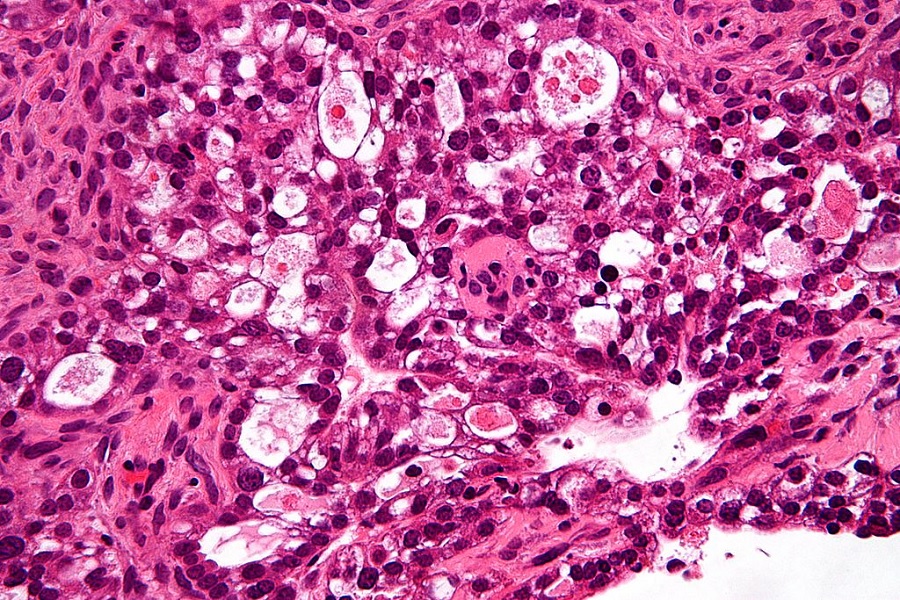
A group of researchers recently reported identifying a specific enzyme that they found to be speeding up the spread of a certain deadly type of ovarian cancer cells. By targeting it, they came up with a way to reverse that cycle.
Next, to finding a cure for cancer, the main goal among many researchers is to find better treatment strategies. Some studies are focused on increasing the survival rate among patients, while others are looking for ways to impede the spread of cancer cells.
Scientists looking to develop better ovarian cancer treatment
Researchers from Penn State College of Medicine, University of Colorado Anschutz Medical Campus, and Drexel University recently published a paper identifying the enzyme called isocitrate dehydrogenase 1 (IDH1). It is reportedly a major factor that contributes to the growth of a deadly type of ovarian cancer.
The paper, published in Molecular Cancer Research, reported that high-grade serous carcinoma (HGSC) is the most commonly diagnosed and fatal type of epithelial ovarian cancer. While treatments currently exist for this type of cancer, scientists observed that a high number of HGSC-diagnosed patients tend to be resistant or to relapse from chemotherapies.
Scientists learned that HGSC cells favor using glucose in the citric acid cycle and not for aerobic glycolysis as normal cells do. In other cases, cancer cells are known to prefer the aerobic glycolysis to convert sugar to energy, so it is the focus of other treatments.
However, the study found that a “wild-type” of IDH1 is greatly linked to the citric acid cycle and the enzyme’s protein production is increased among patients with HGSC cells. This discovery paves the way for new treatment strategies effectively targeting IDH1 with the spread of HGSC cells. The researchers observed that through pharmacological inhibition, targeting IDH1 reduced the spread of HGSC cells.
Cancer remains one of the most fatal diseases worldwide
Latest data from the World Health Organization show that various types of cancer account for around 9.6 million deaths in 2018, while 18.1 million new diagnoses were reported in the same year. The United States’ National Cancer Institute also reports that over 13,900 deaths are estimated in 2019 as the survival rate within five years is observed at 47.6 percent.







