


 Silver Prices Plunge in Asian Trade as Dollar Strength Triggers Fresh Precious Metals Sell-Off
  SpaceX Pushes for Early Stock Index Inclusion Ahead of Potential Record-Breaking IPO
  Gold and Silver Prices Slide as Dollar Strength and Easing Tensions Weigh on Metals
  Russian Stocks End Mixed as MOEX Index Closes Flat Amid Commodity Strength
  Nvidia CEO Jensen Huang Says AI Investment Boom Is Just Beginning as NVDA Shares Surge
  Nvidia Nears $20 Billion OpenAI Investment as AI Funding Race Intensifies
  Nvidia Confirms Major OpenAI Investment Amid AI Funding Race
  Japanese Pharmaceutical Stocks Slide as TrumpRx.gov Launch Sparks Market Concerns
  SpaceX Prioritizes Moon Mission Before Mars as Starship Development Accelerates
  Elon Musk’s Empire: SpaceX, Tesla, and xAI Merger Talks Spark Investor Debate
  Palantir Stock Jumps After Strong Q4 Earnings Beat and Upbeat 2026 Revenue Forecast
  Sony Q3 Profit Jumps on Gaming and Image Sensors, Full-Year Outlook Raised
  Bank of Japan Signals Readiness for Near-Term Rate Hike as Inflation Nears Target
  SoftBank and Intel Partner to Develop Next-Generation Memory Chips for AI Data Centers
  Singapore Budget 2026 Set for Fiscal Prudence as Growth Remains Resilient
  Asian Stocks Slip as Tech Rout Deepens, Japan Steadies Ahead of Election


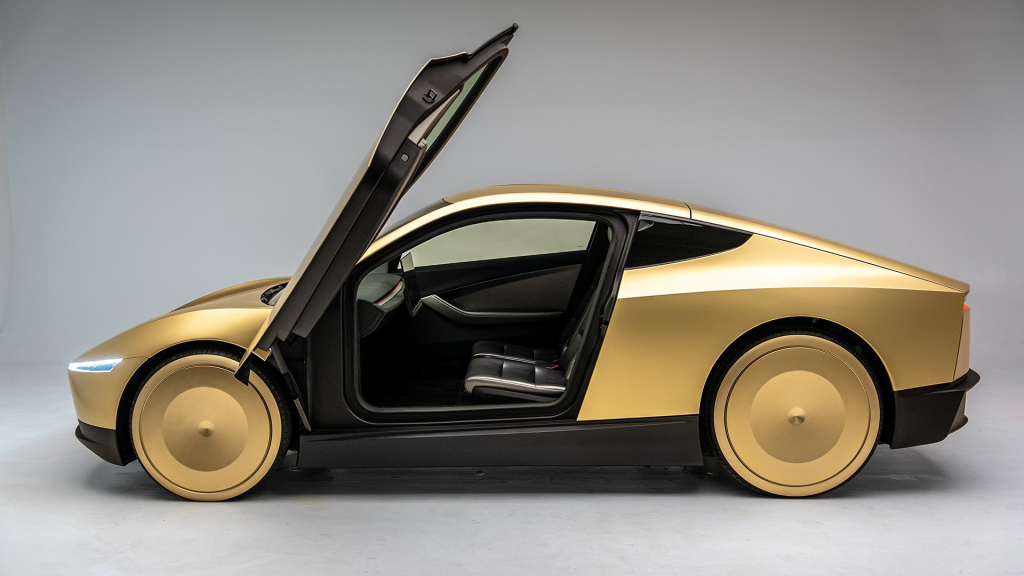
Tesla’s Cybercab, unveiled by the company’s lead engineer, pushes self-driving innovation with a compact two-seat design, half the parts of a Model 3, and impressive storage capacity. This efficiency-focused robotaxi sets a new standard for rideshare technology.
Tesla Cybercab's Two-Seat Design: A Solution for Efficiency
According to Teslarati, several intriguing details on the forthcoming autonomous robotaxi were recently divulged by Eric E., Lead Engineer at Tesla Cybercab. These encompass the Cybercab's two-seat layout, its effectiveness, and its unexpectedly sparse component count.
Because most kilometers driven today are with just one or two people, the Lead Engineer for Tesla's Cybercab says that the Cybercab is a two-seater. If more people need a robotaxi, Tesla could easily accommodate them with its other, larger vehicles, such as the Model Y.
“One of the questions we get constantly with this product is why is it two seats? There’s a couple reasons why it’s two seats. One is 82% of miles driven today are with two or fewer passengers. This product is meant to be of extreme efficiency. We worked really hard to deliver that. And the efficiency isn’t just on an energy consumption base. It’s on the concept of cleaning, it’s also on the concept of reliability and service as well,” Eric E. pointed out.
Half the Parts of a Model 3: Tesla’s Engineering Feat
Additionally, the Cybercab Lead Engineer clarified that the self-driving car will be manufactured with minimal components due to Tesla's emphasis on the robotaxi's efficiency.
Cybercab components are similar to those of a Model 3 sedan, according to Eric E. Considering the Model 3 is already among the most aerodynamic cars available, this is rather astounding.
“Two seats unlocks a lot of opportunity aerodynamically. It also means we cut the part count of Cybercab down by a substantial margin. We’re gonna be delivering a car that has roughly half the parts of Model 3 today. It also means when you need to clean the car as a rideshare asset, you really don’t have to worry about navigating multiple doors, multiple seats. You really just have what looks like a bench seat, easy to clean automatically,” the Tesla engineer observed.
Spacious Trunk Defies the Cybercab’s Compact Size
Other noteworthy design details of the Cybercab were also revealed by Eric E., including the fact that, for such a diminutive robotaxi, it has an enormous trunk.
A number of golf bags, two standard carry-ons, and two standard checked bags can all fit in the Cybercab's trunk simultaneously. It can also accommodate a foldable wheelchair and, depending on their size, a few bicycles.













