


 Innovent Biologics Shares Rally on New Eli Lilly Oncology and Immunology Deal
  American Airlines CEO to Meet Pilots Union Amid Storm Response and Financial Concerns
  Kroger Set to Name Former Walmart Executive Greg Foran as Next CEO
  OpenAI Expands Enterprise AI Strategy With Major Hiring Push Ahead of New Business Offering
  SpaceX Prioritizes Moon Mission Before Mars as Starship Development Accelerates
  Amazon Stock Rebounds After Earnings as $200B Capex Plan Sparks AI Spending Debate
  Weight-Loss Drug Ads Take Over the Super Bowl as Pharma Embraces Direct-to-Consumer Marketing
  Uber Ordered to Pay $8.5 Million in Bellwether Sexual Assault Lawsuit
  TrumpRx Website Launches to Offer Discounted Prescription Drugs for Cash-Paying Americans
  Toyota’s Surprise CEO Change Signals Strategic Shift Amid Global Auto Turmoil
  DBS Expects Slight Dip in 2026 Net Profit After Q4 Earnings Miss on Lower Interest Margins
  FDA Targets Hims & Hers Over $49 Weight-Loss Pill, Raising Legal and Safety Concerns
  Sony Q3 Profit Jumps on Gaming and Image Sensors, Full-Year Outlook Raised
  Washington Post Publisher Will Lewis Steps Down After Layoffs
  SoftBank Shares Slide After Arm Earnings Miss Fuels Tech Stock Sell-Off
  Global PC Makers Eye Chinese Memory Chip Suppliers Amid Ongoing Supply Crunch


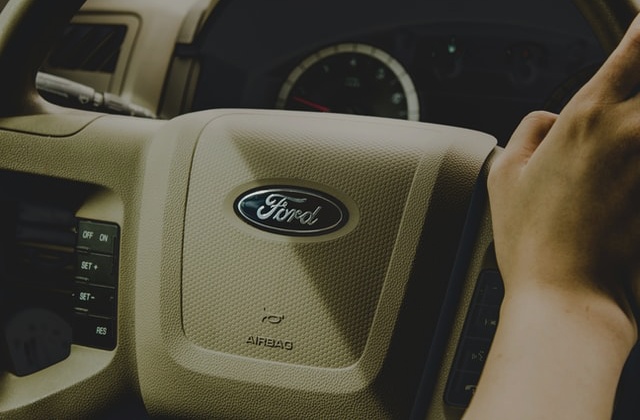
Ford will be losing money after the National Highway Traffic Safety Administration rejected its appeal in the airbag recall order. The NHTSA has been asked to recall three million vehicles earlier this month for the defective airbags after it was proven that the Takata airbags installed in many car units pose a great risk to drivers.
NHTSA dismissed Ford’s appeal
The traffic safety administration directed Ford to recall six of its vehicle models that were made from 2006 to 2012. In the formal response and order issued by the NHTSA, it cited “potential future rupture risk of the airbags” as the reason why it upheld its request for Ford to call back the affected models.
Moreover, the federal government agency on transportation stated that Ford’s appeal “suffers from far too many shortcomings, both when the evidence is assessed individually and in its totality.” This is why it is rejecting the petition of the American multinational automaker.
"Given the severity of the consequence of propellant degradation in these airbag inflators - the rupture of the inflator and metal shrapnel sprayed at vehicle occupants - a finding on inconsequentiality to safety demands extraordinarily robust and persuasive evidence," part of NHTSA’s statements reads.
The agency is giving Ford just 30 days to issue a notice and inform the vehicle owners that their cars are being recalled.
What set off the recall and how much Ford will lose
The issue with the airbags that were supplied by Takata to Ford was first detected a few years ago. Then in 2016, a 17-year-old student was killed while driving her car, and investigation revealed that she died due to the Takata airbag in her Honda car.
The airbag inflators were activated after being triggered by too much force. It then exploded and tore apart a metal canister. Shards of metal and plastic were found stuck on the girl’s neck, and this killed her. The explosion of the Takata airbag was said to have happened because ammonium nitrate is one of the components.
Fatalities involving the Takata airbags worldwide have now risen to 27, and about 400 injuries were recorded. Now, since this is the same airbag that was installed in Ford’s Ranger, Edge, Fusion, Lincoln MKX, Lincoln Zephyr/MKZ, and Mercury Milan models that were built between 2006 and 2012, the automaker was ordered to recall and replace their airbags. Finally, with the replacements of millions of car units, Ford is expected to spend around $610 million, as per WRDB News.













