


 India–U.S. Interim Trade Pact Cuts Auto Tariffs but Leaves Tesla Out
  Best Gold Stocks to Buy Now: AABB, GOLD, GDX
  U.S.-India Trade Framework Signals Major Shift in Tariffs, Energy, and Supply Chains
  Global Markets Slide as AI, Crypto, and Precious Metals Face Heightened Volatility
  China Extends Gold Buying Streak as Reserves Surge Despite Volatile Prices
  FxWirePro: Daily Commodity Tracker - 21st March, 2022
  Gold and Silver Prices Climb in Asian Trade as Markets Eye Key U.S. Economic Data
  Lee Seung-heon Signals Caution on Rate Hikes, Supports Higher Property Taxes to Cool Korea’s Housing Market
  Asian Currencies Stay Rangebound as Yen Firms on Intervention Talk


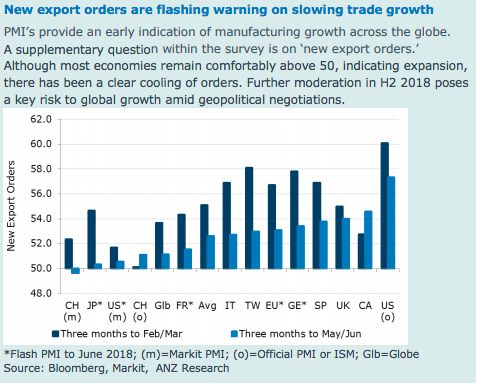
As the second half of 2018 gets under way, US trade policy is growing in importance for businesses and financial markets. Trade frictions appear to be escalating and geostrategic tensions have intensified with Washington threatening to curb Chinese investment in US technology firms, albeit through the less confrontational route of the Committee of Foreign Investment in the US (CFIUS), according to the latest report from ANZ Research.
Given China’s Belt and Road and Made in China 2025 initiatives, a protracted Sino-US trade dispute cannot be ruled out. Gradually, evidence is building that US trade policy is weighing on economic sentiment and activity. Initially, this was most apparent outside of the US. However, anxiety amongst American businesses is growing.
Fifty-one US trade groups and the US Chamber of Commerce have petitioned Capitol Hill asking that Congress pass any future tariffs Trump imposes under National Security concerns.
The announcement by Harley-Davidson that it will move part of its production to Europe in response to retaliatory EU tariffs was telling. Agreeing a framework to discuss US trade concerns is a necessary condition in stabilising business and investor confidence and ensuring the current trade “spat” does not translate into a more meaningful dispute.
Extended trade tensions have negative implications for investment and employment whilst financial markets have experienced heightened volatility in recent days as result.













