


 SoftBank Shares Slide After Arm Earnings Miss Fuels Tech Stock Sell-Off
  Toyota’s Surprise CEO Change Signals Strategic Shift Amid Global Auto Turmoil
  American Airlines CEO to Meet Pilots Union Amid Storm Response and Financial Concerns
  Trump Backs Nexstar–Tegna Merger Amid Shifting U.S. Media Landscape
  SpaceX Prioritizes Moon Mission Before Mars as Starship Development Accelerates
  DBS Expects Slight Dip in 2026 Net Profit After Q4 Earnings Miss on Lower Interest Margins
  Global PC Makers Eye Chinese Memory Chip Suppliers Amid Ongoing Supply Crunch
  U.S. Stock Futures Rise as Markets Brace for Jobs and Inflation Data
  TrumpRx Website Launches to Offer Discounted Prescription Drugs for Cash-Paying Americans
  Singapore Budget 2026 Set for Fiscal Prudence as Growth Remains Resilient
  China Extends Gold Buying Streak as Reserves Surge Despite Volatile Prices
  Nikkei 225 Hits Record High Above 56,000 After Japan Election Boosts Market Confidence
  Prudential Financial Reports Higher Q4 Profit on Strong Underwriting and Investment Gains
  Nvidia, ByteDance, and the U.S.-China AI Chip Standoff Over H200 Exports
  Bank of Japan Signals Readiness for Near-Term Rate Hike as Inflation Nears Target
  Russian Stocks End Mixed as MOEX Index Closes Flat Amid Commodity Strength


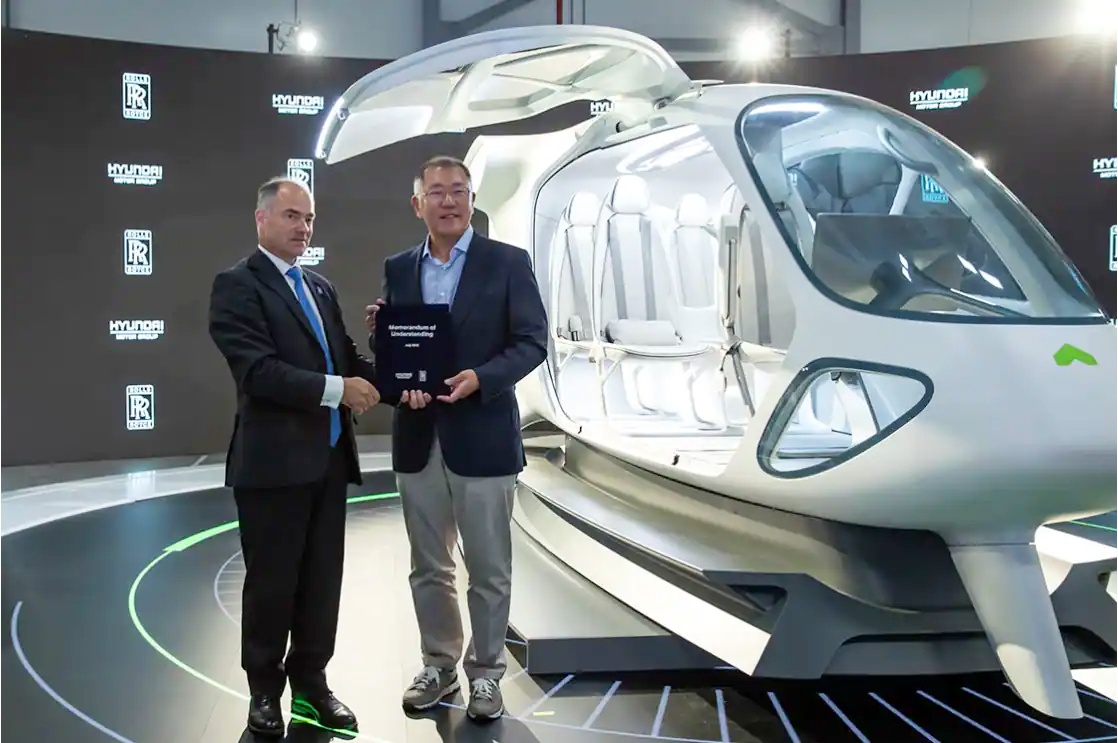
Hyundai Motor and Rolls-Royce were revealed to have joined forces for air mobility projects. They have signed a memorandum of understanding (MOU) to develop flying cars.
According to The Korea Herald, Hyundai Motor Group announced on Tuesday, July 19, that it will partner with the British automobile car manufacturer to produce all-electric propulsion and hydrogen fuel cell technology for advanced air mobility or AAM, a future mobility conceptualization that incorporates flying technology and transformational aircraft design.
The South Korean automaker has been focusing on AAM recently due to its future mobility business plans. The company has been preparing for this biz, and in fact, last year, it created Supernal, an AAM-dedicated firm based in the United States.
Hyundai Motor said that its collaboration with Rolls-Royce would boost its hydrogen fuel cell technologies in addition to commercialization capability through leveraging the latter’s expertise in the field of aero-engine manufacturing.
For the contract, Hyundai Motor and Rolls-Royce met up at the 2022 Farnborough Airshow in the United Kingdom. The event opened on Monday this week, and the signing ceremony was attended by Chung Euisun, Hyundai Motor Group’s executive chairman. It was mentioned that the chairman also met with officials of Boeing and other global aviation firms.
Based on their deal, Hyundai Motor and Rolls-Royce will work together on technology development, including building an electric propulsion system using hydrogen fuel cells as an energy source. This will be used for the former’s regional air mobility model units.
By 2025, they are also expected to deliver a demonstration of a fuel-cell electric aircraft. All the terms in their agreement highlight the shared vision of leading the way in the AAM global market by producing and offering battery-electric and fuel cell electric solutions to UAM or urban air mobility as well as air mobility models.
“We are pleased to partner with Rolls-Royce to draw upon their aviation and certification expertise to accelerate the development of hydrogen fuel-cell propulsion systems,” Shin JaiWon, Hyundai Motor Group’s president, said in a press release.
He added, “Hyundai has successfully delivered hydrogen fuel cell systems to the global automotive market and is now exploring the feasibility of electric and hydrogen propulsion technologies for aerospace integration. We believe this to be the key technology to support the global aviation industry’s goal to fly net zero carbon by 2050.”













