


 Japanese Pharmaceutical Stocks Slide as TrumpRx.gov Launch Sparks Market Concerns
  Alphabet’s Massive AI Spending Surge Signals Confidence in Google’s Growth Engine
  SpaceX Pushes for Early Stock Index Inclusion Ahead of Potential Record-Breaking IPO
  OpenAI Expands Enterprise AI Strategy With Major Hiring Push Ahead of New Business Offering
  U.S.-India Trade Framework Signals Major Shift in Tariffs, Energy, and Supply Chains
  Jensen Huang Urges Taiwan Suppliers to Boost AI Chip Production Amid Surging Demand
  Rio Tinto Shares Hit Record High After Ending Glencore Merger Talks
  AMD Shares Slide Despite Earnings Beat as Cautious Revenue Outlook Weighs on Stock
  SpaceX Prioritizes Moon Mission Before Mars as Starship Development Accelerates
  Baidu Approves $5 Billion Share Buyback and Plans First-Ever Dividend in 2026
  Trump Backs Nexstar–Tegna Merger Amid Shifting U.S. Media Landscape
  Nasdaq Proposes Fast-Track Rule to Accelerate Index Inclusion for Major New Listings
  TSMC Eyes 3nm Chip Production in Japan with $17 Billion Kumamoto Investment
  South Africa Eyes ECB Repo Lines as Inflation Eases and Rate Cuts Loom
  Elon Musk’s Empire: SpaceX, Tesla, and xAI Merger Talks Spark Investor Debate
  American Airlines CEO to Meet Pilots Union Amid Storm Response and Financial Concerns
  Asian Stocks Slip as Tech Rout Deepens, Japan Steadies Ahead of Election


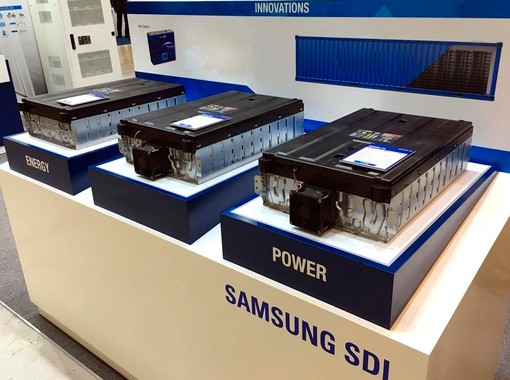
Samsung SDI shares traded on South Korea’s Kospi bourse took a battering early this week after Morgan Stanley downgraded its target price from 570,000 won to 550,000 won.
On Monday, Samsung SDI shares shed 1.7 trillion won in market cap, as the stock price dropped 3.91 percent, while the shares traded mostly flat on Tuesday near the previous day’s close at 615,000 won.
Morgan Stanley made the downgrade as battery manufacturers are failing to generate enough profits since their primary focus is currently on expansion and market share.
However, local experts question whether the Morgan Stanley downgrade is fair, pointing out that Samsung SDI's strategy is putting profitability ahead of expansion plans.
Han Byung-hwa, an analyst at Eugene Investment & Securities, noted that unlike rivals LG Energy Solution and SK Innovation, Samsung SDI doesn’t have a US battery plant and a joint venture with automakers.
LG Energy Solution and SK Innovation, have made ambitious tie-ups and expansion plans, even targeting the US market, which is the world’s largest.
Han added that Samsung SDI lacks the motivation to build a new battery plant in the US as it does not have automaker partners there who can guarantee massive battery supply deals.
The top US automakers with key participation in President Joe Biden’s push for EVs, GM and Ford, have already formed joined ventures with its LGES and SKI.
Samsung SDI recently signed a deal to supply batteries to Rivian, a local EV startup backed by investments from Amazon and Ford, and consolidated partnership with loyal clients such as BMW.
Samsung SDI and BMW will collaborate to develop a next-generation battery.
But Samsung SDI has to foray into the US by 2022 at the latest, should it decide to do so, since, under the United States-Mexico-Canada Agreement, automakers will have to certify by 2023 that 75 percent of their EV components are made in one of the three countries to avoid tariffs in the region.
Also, Samsung Group can’t go all-in on the batteries as their priority is on other businesses such smartphones, chips, and auto parts.
Furthermore, rather than splurge money on expanding its lithium-ion battery manufacturing capabilities, Samsung SDI is likely to divert its investments into the research and development of next-generation solid-state batteries.













