


 Astronomers have discovered another puzzling interstellar object − this third one is big, bright and fast
  NASA and SpaceX Target Crew-11 Undocking From ISS Amid Medical Concern
  FDA Adds Fatal Risk Warning to J&J and Legend Biotech’s Carvykti Cancer Therapy
  SpaceX’s Starship Completes 11th Test Flight, Paving Way for Moon and Mars Missions
  Cogent Biosciences Soars 120% on Breakthrough Phase 3 Results for Bezuclastinib in GIST Treatment
  Lost in space: MethaneSat failed just as NZ was to take over mission control – here’s what we need to know now
  Neuralink Plans High-Volume Brain Implant Production and Fully Automated Surgery by 2026
  Blue Origin’s New Glenn Achieves Breakthrough Success With First NASA Mission
  Is space worth the cost? Accounting experts say its value can’t be found in spreadsheets
  Neuren Pharmaceuticals Surges on U.S. Patent Win for Rare Disorder Drug
  Trump Administration to Launch Autism Initiatives Targeting Acetaminophen Use and New Treatment Options


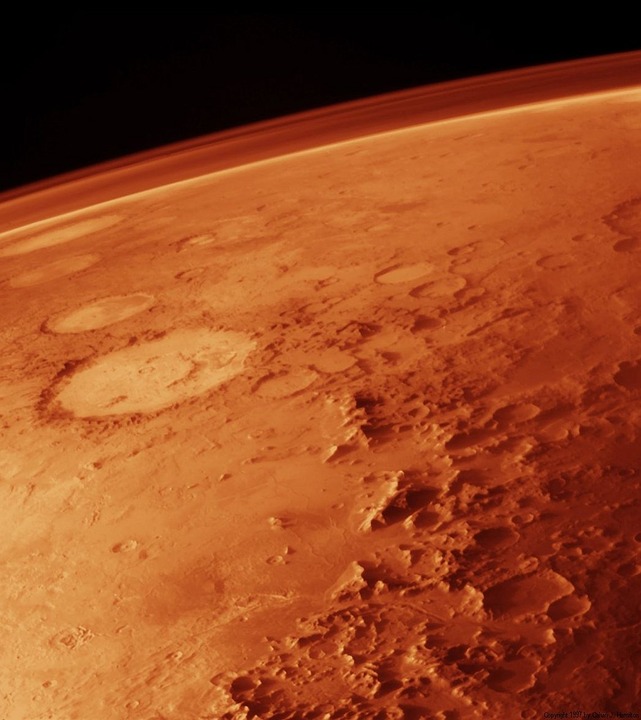
Agencies like NASA are in the midst of preparing for the future Mars mission in the coming years, with plans of colonization in tow. A recent breakthrough by a group of scientists shows the potential to grow crops on Martian terrain.
Express reports researchers from Wageningen University and Research in the Netherlands made a breakthrough in their experiment to grow crops on Martian soil as well as the surface of the Moon in simulations developed by NASA. They were able to cultivate 10 different crops, nine of which grew successfully including garden cress, rocket, radish, tomato, rye, spinach, quinoa, chives, leek, and peas. The spinach was the exception of the successful cultivation of the 10 crops.
Seeds from three species - radish, garden cress, and rye, were first tested for germination. The researchers simulated the soil on Mars and the Moon through grading particles of rock in various sizes and mixing them into portions that match the data analysis from the Martian soil collected by the rover. The Martian and Lunar soils were originally developed to help test potential rovers and spacesuits on Earth to see how both can handle the surface terrain of both the Red Planet and the Moon.
The researchers are now seeking to improve the crop yields by combining the soils with human urine which would become available in the future crewed Mars mission.
Colonization is one of the goals in the future Mars mission and is certainly part of SpaceX CEO Elon Musk’s vision. However, Musk warned those who will become part of the future Mars mission that their trip to the Red Planet may end up being fatal. But the potential sacrifice would be able to allow the next humans to be able to explore Mars.
“I want to emphasize that this is a very hard and dangerous, difficult thing, not for the faint of heart. Good chance you’ll die, it’s going to be tough going, but it will be pretty glorious if it works out,” said Musk.
However, another challenge that the astronauts will face is the journey to Mars, as it takes seven months to travel to the Red Planet. NASA has also revealed that on the journey, the astronauts will also be exposed to cosmic radiation, as well as communication from Earth to Mars.













