


 Japan’s Prime Minister Sanae Takaichi Secures Historic Election Win, Shaking Markets and Regional Politics
  Trump Backs Nexstar–Tegna Merger Amid Shifting U.S. Media Landscape
  Pentagon Ends Military Education Programs With Harvard University
  Trump Slams Super Bowl Halftime Show Featuring Bad Bunny
  U.S. Lawmakers to Review Unredacted Jeffrey Epstein DOJ Files Starting Monday
  Nicaragua Ends Visa-Free Entry for Cubans, Disrupting Key Migration Route to the U.S.
  Trump Lifts 25% Tariff on Indian Goods in Strategic U.S.–India Trade and Energy Deal
  India–U.S. Interim Trade Pact Cuts Auto Tariffs but Leaves Tesla Out
  Anutin’s Bhumjaithai Party Wins Thai Election, Signals Shift Toward Political Stability
  Israel Approves West Bank Measures Expanding Settler Land Access
  Jack Lang Resigns as Head of Arab World Institute Amid Epstein Controversy
  Sydney Braces for Pro-Palestine Protests During Israeli President Isaac Herzog’s Visit
  Antonio José Seguro Poised for Landslide Win in Portugal Presidential Runoff
  Ghislaine Maxwell to Invoke Fifth Amendment at House Oversight Committee Deposition
  Japan Election 2026: Sanae Takaichi Poised for Landslide Win Despite Record Snowfall
  U.S.-India Trade Framework Signals Major Shift in Tariffs, Energy, and Supply Chains
  Trump Signs Executive Order Threatening 25% Tariffs on Countries Trading With Iran


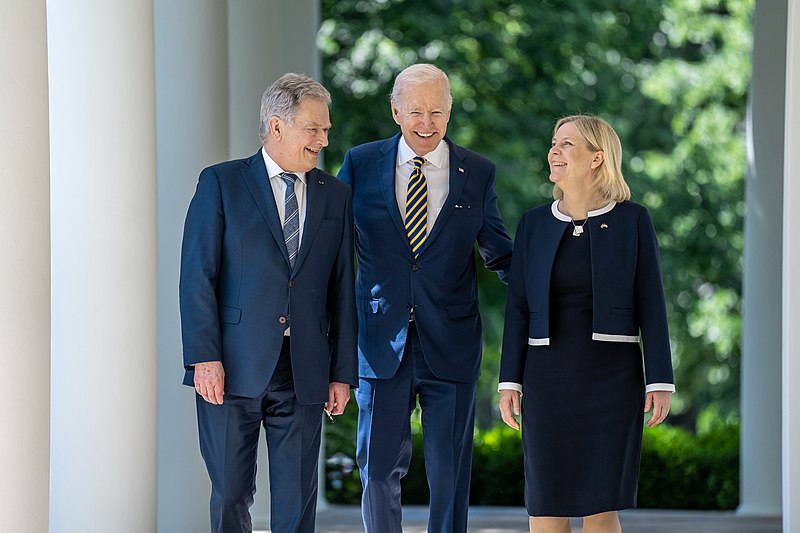
The NATO alliance is set to expand with the applications for accession by Finland and Sweden. The prime ministers of both countries sought to put on a united front by pledging to join the alliance together.
The Swedish and Finnish prime ministers said Friday last week that they will join the NATO alliance at the same time. The pledge comes as one member country, Turkey, raised concerns about their applications. Turkey has objected to the applications of the two countries as it accused them of harboring groups it deems as terrorists.
Finnish Prime Minister Sanna Marin said Turkish President Tayyip Erdogan had more concerns about her Swedish counterpart than Finland. However, Marin said that she would not leave Sweden behind in the process of accession to the alliance. Erdogan said in early October that he was still opposed to Sweden’s bid to join.
“It is very important for us, of course, that Finland and Sweden join NATO hand in hand,” Marin told reporters at a joint press conference in Helsinki. Both countries filed a joint application as a result of Russia’s invasion of Ukraine in February.
“We have been taking every step so far, hand in hand and none of us have any other ambition,” said Swedish Prime Minister Ulf Kristersson, who recently took office the week before. Kristersson also acknowledged Erdogan’s concerns and said they would be meeting soon.
“It’s completely legitimate that Turkey gets confirmation that Sweden is doing what Sweden has committed to do within the framework of the agreement,” Kristersson added.
Earlier in October, NATO Secretary-General Jens Stoltenberg said that the circumstances that the alliance might have to resort to using nuclear weapons are “extremely remote.” Stoltenberg added that there would also be “severe consequences” should Russia resort to nuclear weapons on Ukraine.
While Stoltenberg did not elaborate on the details as to how the alliance may respond to Russia’s potential use of nuclear weapons on Ukraine, the NATO chief said using such weapons would drastically change the nature of the war, and that “a very important line has been crossed.”
Stoltenberg stressed that the purpose of NATO’s nuclear deterrent was to preserve peace and prevent coercion against the allies, which is why the circumstances in which the alliance would use nuclear weapons would be “extremely remote.”













