


 Nvidia CEO Jensen Huang Says AI Investment Boom Is Just Beginning as NVDA Shares Surge
  Sydney Braces for Pro-Palestine Protests During Israeli President Isaac Herzog’s Visit
  Antonio José Seguro Poised for Landslide Win in Portugal Presidential Runoff
  Alphabet’s Massive AI Spending Surge Signals Confidence in Google’s Growth Engine
  Netanyahu to Meet Trump in Washington as Iran Nuclear Talks Intensify
  Elon Musk’s Empire: SpaceX, Tesla, and xAI Merger Talks Spark Investor Debate
  Nvidia Nears $20 Billion OpenAI Investment as AI Funding Race Intensifies
  Trump Administration Appeals Court Order to Release Hudson Tunnel Project Funding
  Instagram Outage Disrupts Thousands of U.S. Users
  Trump Lifts 25% Tariff on Indian Goods in Strategic U.S.–India Trade and Energy Deal
  Nvidia Confirms Major OpenAI Investment Amid AI Funding Race
  Trump Allows Commercial Fishing in Protected New England Waters
  US Pushes Ukraine-Russia Peace Talks Before Summer Amid Escalating Attacks
  Anutin’s Bhumjaithai Party Wins Thai Election, Signals Shift Toward Political Stability
  Sony Q3 Profit Jumps on Gaming and Image Sensors, Full-Year Outlook Raised
  U.S.-India Trade Framework Signals Major Shift in Tariffs, Energy, and Supply Chains
  SoftBank and Intel Partner to Develop Next-Generation Memory Chips for AI Data Centers


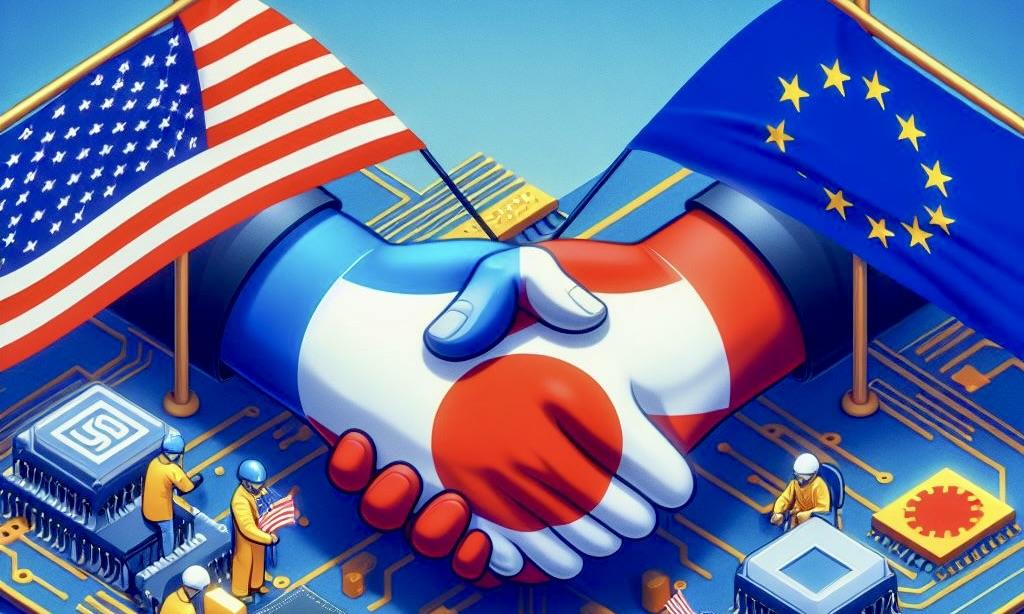
Japan and the United States are poised to deepen ties in the high-tech sector, signaling a strategic move to enhance their global partnership with a focus on artificial intelligence and semiconductor cooperation.
Strengthening Bilateral High-Tech Ties
According to the Asahi Shimbun newspaper(via Reuters), during a forthcoming joint statement, Japan and the United States are set to expand their cooperation in cutting-edge fields, including artificial intelligence (AI). This declaration is anticipated when Prime Minister Fumio Kishida meets with President Joe Biden in the United States next month.
The engagement, marked by Kishida's official visit on April 10, is expected to underscore the "global partnership" between the two nations, emphasizing a concerted push towards collaborative advancements in AI and semiconductors, though specific sources were not cited.
Asahi Shimbun reports that this agreement may create a framework for AI research and development, engaging tech giants such as Nvidia, Arm, and Amazon. This initiative underscores a significant step in bilateral relations, aiming to leverage the strengths of both nations in the face of global technological challenges.
Expanding Collaborations Beyond Bilateral Borders
Parallel to the Japan-U.S. accord, Japan and the European Union (EU) are gearing up to initiate dialogue on cooperation in developing innovative materials for next-generation processors and batteries. This effort seeks to mitigate their reliance on China for critical resources. Iliana Ivanova, the EU Commissioner for Innovation and Research, expressed in a written interview with the Business Daily the mutual benefits such a collaboration could bring.
The proposed framework, responding to an EU request and set to launch as early as April, aims to reduce dependency on China for essential commodities like rare metals. US News states that these materials are integral to various applications, including electric vehicle batteries, highlighting a strategic move to diversify sources and enhance technological resilience.
These developments mark a significant shift in international technology partnerships, indicating a broader attempt to foster innovation, secure supply chains, and address global challenges collaboratively.
Photo: Microsoft Bing













