


 Bangladesh Election 2026: A Turning Point After Years of Political Suppression
  Netanyahu to Meet Trump in Washington as Iran Nuclear Talks Intensify
  China Warns US Arms Sales to Taiwan Could Disrupt Trump’s Planned Visit
  US Pushes Ukraine-Russia Peace Talks Before Summer Amid Escalating Attacks
  India–U.S. Interim Trade Pact Cuts Auto Tariffs but Leaves Tesla Out
  Trump Administration Appeals Court Order to Release Hudson Tunnel Project Funding
  U.S.-India Trade Framework Signals Major Shift in Tariffs, Energy, and Supply Chains
  Japan Election 2026: Sanae Takaichi Poised for Landslide Win Despite Record Snowfall
  Nicaragua Ends Visa-Free Entry for Cubans, Disrupting Key Migration Route to the U.S.
  Trump Congratulates Japan’s First Female Prime Minister Sanae Takaichi After Historic Election Victory
  Trump Says “Very Good Talks” Underway on Russia-Ukraine War as Peace Efforts Continue
  Trump Allows Commercial Fishing in Protected New England Waters
  Jack Lang Resigns as Head of Arab World Institute Amid Epstein Controversy
  Trump’s Inflation Claims Clash With Voters’ Cost-of-Living Reality
  Trump Lifts 25% Tariff on Indian Goods in Strategic U.S.–India Trade and Energy Deal
  Ghislaine Maxwell to Invoke Fifth Amendment at House Oversight Committee Deposition
  Bosnian Serb Presidential Rerun Confirms Victory for Dodik Ally Amid Allegations of Irregularities


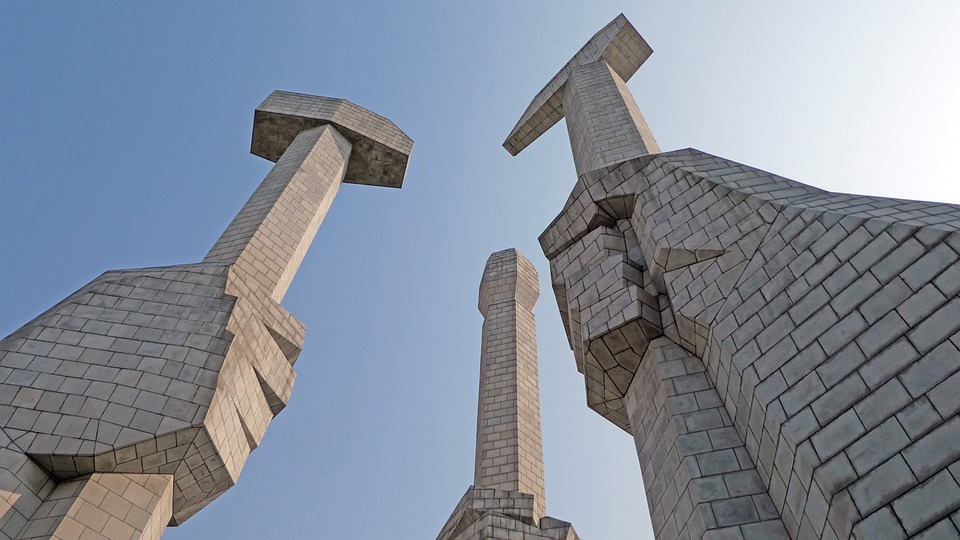
Human rights in North Korea will remain on the agenda of the United Nations Security Council. The issue will remain on the panel’s agenda following a push by the United States and Albania with the support of several other countries.
Human rights in North Korea will stay on the UN Security Council’s agenda after a note by the US and Albania on Tuesday requesting that the issue remains on the panel’s agenda. The push has the support of dozens of countries which is double the support Washington received last year. The move will likely anger Pyongyang which has constantly rejected the allegations of human rights abuses, blaming sanctions for its humanitarian situation.
North Korea has been under UN sanctions since 2006 for its ballistic missiles and nuclear weapons programs. However, there are exemptions for humanitarian aid deliveries.
The note to the UN Security Council was co-signed by the US and Albania and backed by 59 countries and the European Union. Council procedure states that if a public meeting has not been held on an agenda item in the past three years, then it would be subject to deletion unless a member objects. Should there be an objection, the issue will remain on the agenda for another year.
The council has usually discussed human rights in North Korea in closed-door meetings every year. China and Russia have objected to the issue being raised in the council. From 2014 to 2017, the council held annual public meetings on the alleged human rights abuses in North Korea. The issue was not discussed in 2018 in the midst of the unsuccessful talks between Pyongyang and Washington on denuclearization.
On Wednesday, the US Treasury Department issued a new set of sanctions targeting individuals and entities accused of illicitly generating revenue for Pyongyang.
The Treasury’s Office of Foreign Assets Control sanctioned the Chilsong Trading Corporation, which the agency says is used by the North Korean government to earn foreign currency and collect intelligence, and the Korea Paekho Trading Corporation, which is accused of generating funds for Pyongyang since the 1980s through art and construction projects throughout the Middle East and Africa.
Two individuals, Hwang Kil-su and Pak Hwa-song, were also sanctioned for helping Pyongyang generate revenue. Hwang and Pak allegedly set up a company called Congo Aconde SARL in the Democratic Republic of Congo to earn revenue from construction and statue-building projects with local governments.













