


 UN Says Hamas Disrupted Gaza Aid Distribution, Group Denies Allegations
  Western Allies Push for More Air Defenses for Ukraine at Paris Summit
  HHS Watchdog Reports $5.56 Billion in Healthcare Fraud Recoveries as Enforcement Actions Decline
  Iranian Missile Strike on UAE Oil Tankers Kills Indian Crew Member in Strait of Hormuz
  Venezuela Appoints Felix Plasencia to Lead Foreign Relations and Trade
  Trump Administration Bars U.S. Travelers From Congo Flights Amid Ebola Outbreak
  Trump Says U.S. Strikes on Iran Will Continue Until Nuclear Deal Is Reached
  Trump Administration Launches AI Cybersecurity Partnership to Protect Critical Infrastructure
  Reuters/Ipsos Poll: Most Americans Expect U.S.-Iran War to Be Prolonged
  EU Weighs New Trade Restrictions on Israeli West Bank Settlements
  Trump to Deliver National Address on 2020 Election Intelligence, Voting Machine Security
  Trump Administration Hands Over Key Evidence in Minnesota Immigration Shooting Investigations
  Trump Tells Congress Iran Hostilities Restarted, Citing New 60-Day War Powers Window
  Zelenskiy Plans Ukraine Government Shake-Up as Prime Minister Svyrydenko Set to Step Down
  Trump Recommends Darline Graham for Interim South Carolina Senate Seat
  Ukraine, Europe Launch Freyja Missile Shield to Strengthen Air Defense Against Russia


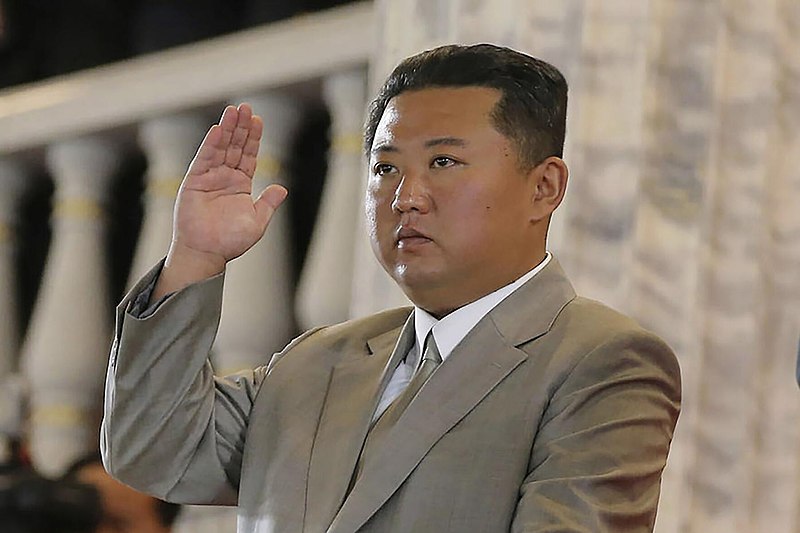
Following reports that North Korea’s nuclear facility has restarted operations, it is a sign that the isolated nation plans to move forward with its nuclear program. This week, state media reported that North Korean leader Kim Jong-un celebrated as the nation carried out a successful launch of its first hypersonic missile.
State media outlet KCNA reported that Kim celebrated the nation’s successful launch of its first hypersonic missile, marking North Korea’s entry into the group of global military powers. The missile was launched off the country’s east coast into the sea, according to people familiar with the matter in the South Korean military. The successful launch also comes as North Korea previously tested missiles over the past several weeks, effectively violating UN Security Council regulations on testing and firing such weapons.
Hypersonic missiles fly towards targets at low altitudes at five times the speed of sound at around 6,200 kilometers per hour. So far, only the US, China, and Russia have had such capabilities until now. The launch has since placed both the US and South Korea on alert, especially as North Korea has confirmed that the launch was a test of “navigational control and stability.”
Despite the success of the first hypersonic missile, experts are still questioning whether Pyongyang will be able to advance its nuclear program.
“It is unlikely that North Korea has reliably developed all the technologies its propaganda claim,” said Leif-Eric Easley, associate professor of international studies at Seoul’s Ewha Women’s University. “However, if Pyongyang managed to fit a nuclear warhead even on a rudimentary hypersonic, it would be a dangerous weapon because it wouldn’t have to be extremely accurate to threaten the nearby metropolis of Seoul.”
Previously, Kyodo News reports that Tokyo has named North Korea, China, and Russia as threats to cyberspace as the Japanese government drafted a cybersecurity strategy for the next three years, naming the three countries as threats for the first time. The plan is expected to receive an endorsement from the Cabinet.
The strategy stated that the three nations are suspected of being involved in “hostile” cyber activities, according to the outlet.







