


 Trump-Xi Summit 2026: U.S.-China Trade War Tensions and Tariff Talks
  Trump Endorses Steve Hilton for California Governor
  Britain Courts Anthropic Amid US Defense Department Dispute
  China's Anti-Corruption Purge Reaches New Heights as Politburo Shrinks to 25-Year Low
  Iran's Stranglehold on the Strait of Hormuz: What It Means for Global Markets
  Giuffre Family Urges King Charles to Meet Epstein Survivors During U.S. State Visit
  Indonesia Files Genocide Case Against Myanmar's Min Aung Hlaing Over Rohingya Crisis
  North Korea Tests Advanced Solid-Fuel ICBM Engine With Carbon Fiber Technology
  Trump's "Easter Miracle" Rescue Sparks Church-State Debate
  U.S. F-15E Shot Down Over Iran: One Crew Member Recovered Amid Escalating Conflict
  U.S. Commandos Execute Daring Rescue Mission Deep Inside Iran
  Ukrainian Drone Strikes Hit Novorossiysk, Injuring Eight and Cutting Power Across Russia
  U.S. Envoys Witkoff and Kushner Expected to Visit Kyiv in April Amid Stalled Peace Talks
  Israel Poised to Strike Iranian Energy Sites, Awaiting U.S. Approval
  Taiwan Opposition Leader's China Visit: A Peace Mission Amid Rising Tensions
  Ukraine Launches Massive Drone Offensive Across Russia, Knocking Out Power to Hundreds of Thousands
  Trump Issues Deadline for Iran to Reopen Strait of Hormuz Amid Escalating Conflict


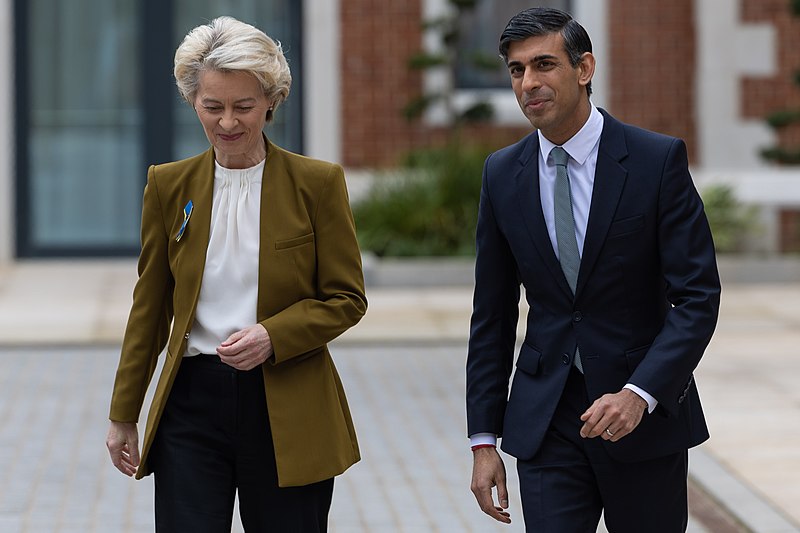
April marks the anniversary of the historic 1998 Good Friday Agreement that largely ended decades of sectarian violence in Northern Ireland. Some of those who played a role in brokering the peace deal said that they hope the landmark agreement would help find a solution to the region’s political crisis.
In an interview with Reuters, former British Prime Minister Tony Blair, one of the architects of the deal, expressed optimism that progress could still be made while sticking to the peace deal, as the region’s devolved assembly in Stormont currently remains due to the boycott of its largest pro-British Democratic Unionist Party due to the post-Brexit trade rules between the United Kingdom and the European Union. Some have expressed fears that the DUP’s current boycott may result in tremendous consequences for the region.
The UK’s departure from the EU has also apparently upset some of the balance of the deal, such as the principle of cross-community consent as a requirement for major legislation to have the support of the majority of nationalists and unionists in the assembly.
Nationalists in Northern Ireland have argued that the region was taken from the EU in a UK-wide vote even though its region voted 56-44 to remain within the bloc. Unionists, who backed the departure, said the trade barriers with the rest of the UK to avoid a hard land border with EU-member Ireland were made without their consent.
In February, the UK and the EU struck a new post-Brexit deal for the region, known as the Windsor Framework, with its Stormont Brake winning the backing of the British Parliament. However, the DUP has said it will continue its boycott until major changes are made to the agreement, with one DUP lawmaker saying that the Windsor Framework effectively scrapped the 1998 peace deal.
Last week, the region’s Orange Order also voted to oppose any return to the devolved assembly unless major revisions are made to the agreement but noted that they welcomed the brokering of the Windsor Framework, formerly known as the Northern Ireland Protocol.
“The Windsor Framework has delivered some limited, but welcome practical adjustments to the existing protocol. However, it does not resolve the fundamental concerns,” said the Orange Order in a statement, citing that aspects of the new deal were “oversold,” and that the deal “continues to treat Northern Ireland as a place apart within the United Kingdom and equal citizenship has not been restored.”







