


 How America courted increasingly destructive wildfires − and what that means for protecting homes today
  NASA and Roscosmos Chiefs Meet in Florida to Discuss Moon and ISS Cooperation
  Thousands of satellites are due to burn up in the atmosphere every year – damaging the ozone layer and changing the climate
  Lake beds are rich environmental records — studying them reveals much about a place’s history
  Parasites are ecological dark matter – and they need protecting
  Blue Origin New Glenn Rocket Explodes During Launch Pad Test, Delaying Space Ambitions
  Tabletop particle accelerator could transform medicine and materials science
  Rice feeds billions of people – but its role in fueling climate change is growing
  Cogent Biosciences Soars 120% on Breakthrough Phase 3 Results for Bezuclastinib in GIST Treatment
  Trump Signs Executive Order to Boost AI Research in Childhood Cancer
  Neuralink Plans High-Volume Brain Implant Production and Fully Automated Surgery by 2026


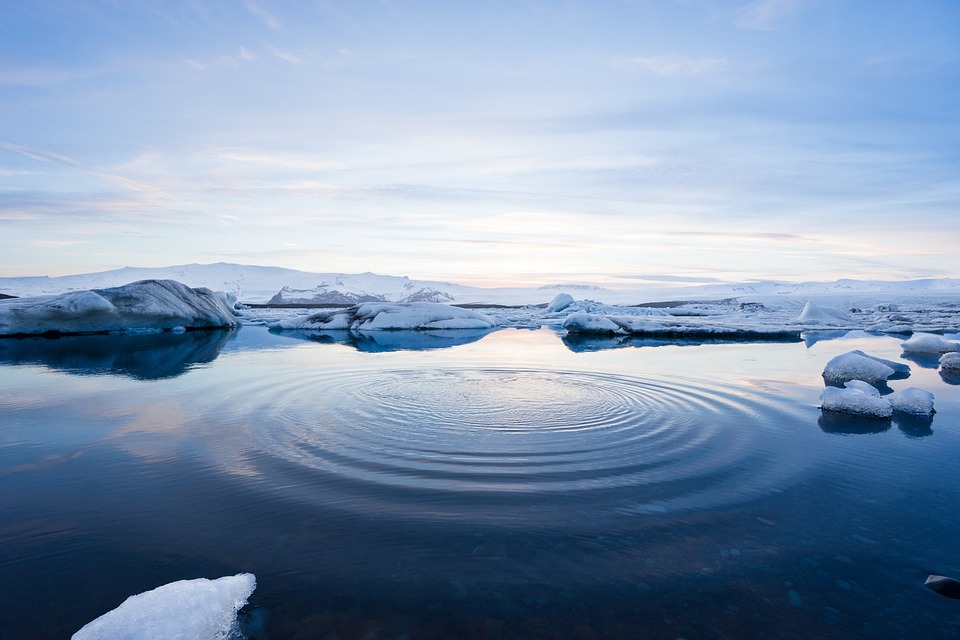
A lot of climate experts, global leaders, and financial giants have already declared Climate Change as the single biggest threat that humanity is facing as a species. Unfortunately, there are still a lot of people and groups who are resisting this truth, which is resulting in the melting of seawater ice in both the North and South Pole. Scientists believe that this pattern could still be reversed, but they would need $500 billion in order to do it.
Getting funding for scientific projects of any kind is usually an uphill battle, with climate science having more trouble than most fields. $500 billion is also obviously a huge asking price. According to the scientists asking for the money, they would need at least this much to build the necessary infrastructure that would allow them to refreeze the arctic, Futurism reports.
For anyone wondering why the scientists would even need such a huge amount, they are thinking about building about 10 million water pumps that will be powered by wind turbines. These pumps are meant to bring the ocean water from deep beneath the ice up to the surface where it will then freeze as it makes contact with temperatures below zero.
According to the paper that the scientists published, it’s likely that the Arctic will either have very few or no ice sheets left by the time 2030 comes around. This would be incredibly bad for the world, largely due to its effects on weather patterns and even the planet’s jet streams.
“This loss of sea ice represents one of the most severe positive feedbacks in the climate system, as sunlight that would otherwise be reflected by sea ice is absorbed by the open ocean,” the paper reads. “It is unlikely that CO2 levels and mean temperatures can be decreased in time to prevent this loss, so restoring sea ice artificially is an imperative.”







