


 Trump Lifts 25% Tariff on Indian Goods in Strategic U.S.–India Trade and Energy Deal
  Jack Lang Resigns as Head of Arab World Institute Amid Epstein Controversy
  Netanyahu to Meet Trump in Washington as Iran Nuclear Talks Intensify
  U.S. Lawmakers to Review Unredacted Jeffrey Epstein DOJ Files Starting Monday
  Trump Allegedly Sought Airport, Penn Station Renaming in Exchange for Hudson River Tunnel Funding
  Pentagon Ends Military Education Programs With Harvard University
  New York Legalizes Medical Aid in Dying for Terminally Ill Patients
  TrumpRx.gov Highlights GLP-1 Drug Discounts but Offers Limited Savings for Most Americans
  Missouri Judge Dismisses Lawsuit Challenging Starbucks’ Diversity and Inclusion Policies
  Trump Allows Commercial Fishing in Protected New England Waters
  Nighttime Shelling Causes Serious Damage in Russia’s Belgorod Region Near Ukraine Border
  U.S. Announces Additional $6 Million in Humanitarian Aid to Cuba Amid Oil Sanctions and Fuel Shortages
  U.S.-India Trade Framework Signals Major Shift in Tariffs, Energy, and Supply Chains
  South Korea Assures U.S. on Trade Deal Commitments Amid Tariff Concerns
  China Warns US Arms Sales to Taiwan Could Disrupt Trump’s Planned Visit
  US Pushes Ukraine-Russia Peace Talks Before Summer Amid Escalating Attacks


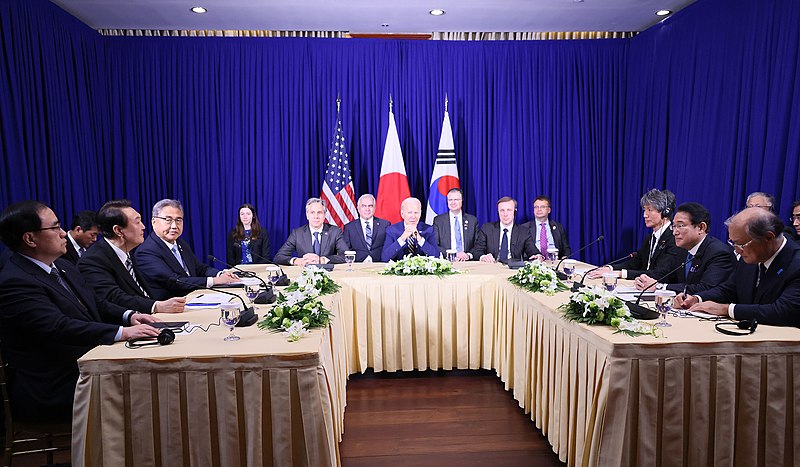
South Korean President Yoon Suk-yeol and Japanese Prime Minister Fumio Kishida pledged cooperation during the summit that took place this week. The summit in Tokyo comes amidst flared tensions in the region due to North Korea’s missile launches.
On Thursday, Yoon and Kishida pledged to improve relations between the two countries known to have strained ties dating back to Japan’s occupation of Korea from 1910 to 1945. The summit also marked the first visit to Japan by a South Korean president in 12 years and underlined the deepening relations between the two US allies over the shared challenges brought by Pyongyang and its increasing missile launches and China’s growing influence on the international stage.
During the summit, Japan and South Korea agreed to drop a long-running trade dispute on some materials used for chips, despite the increased political importance of semiconductors and the securing of the supply. Both countries also agreed to revive the regular bilateral visits and restart the security dialogue that was put on hold in 2018.
Yoon also declared the “complete normalization” of an intelligence-sharing agreement with Japan, known as GSOMIA. Japan also agreed to remove the curbs on some exports to South Korea of critical components for smartphone displays and chips that were imposed in 2019. Seoul will also drop a World Trade Organization complaint against Tokyo, according to officials from both countries.
The United States praised the summit and referred to Japan and South Korea as “indispensable allies.” China, however, criticized the summit, with its foreign ministry saying that certain countries were trying to form exclusive circles.
Top Japanese and South Korean businesses had also agreed on improving ties and working closely on chips and technology when Yoon met with executives from both countries in Tokyo on Friday.
Yoon said regarding the meeting that there was “a lot of room for cooperation” between the two countries on semiconductors, batteries, and electric vehicles.
“Both governments will do everything to create opportunities to interact and do business with each other,” said Yoon.
The business lobbies of both countries said they would jointly back a “future-oriented” fund or around $1.5 million for research into acquiring rare resources, addressing supply chain issues, and youth exchanges.













