


 Federal Judge Restores Funding for Gateway Rail Tunnel Project
  Netanyahu to Meet Trump in Washington as Iran Nuclear Talks Intensify
  Ghislaine Maxwell to Invoke Fifth Amendment at House Oversight Committee Deposition
  Anutin’s Bhumjaithai Party Wins Thai Election, Signals Shift Toward Political Stability
  Trump Lifts 25% Tariff on Indian Goods in Strategic U.S.–India Trade and Energy Deal
  Israel Approves West Bank Measures Expanding Settler Land Access
  Bangladesh Election 2026: A Turning Point After Years of Political Suppression
  Ohio Man Indicted for Alleged Threat Against Vice President JD Vance, Faces Additional Federal Charges
  Sydney Braces for Pro-Palestine Protests During Israeli President Isaac Herzog’s Visit
  Nicaragua Ends Visa-Free Entry for Cubans, Disrupting Key Migration Route to the U.S.
  Trump Backs Nexstar–Tegna Merger Amid Shifting U.S. Media Landscape
  Jack Lang Resigns as Head of Arab World Institute Amid Epstein Controversy
  Bosnian Serb Presidential Rerun Confirms Victory for Dodik Ally Amid Allegations of Irregularities
  Trump Says “Very Good Talks” Underway on Russia-Ukraine War as Peace Efforts Continue
  Trump Congratulates Japan’s First Female Prime Minister Sanae Takaichi After Historic Election Victory
  Taiwan Says Moving 40% of Semiconductor Production to the U.S. Is Impossible
  U.S.-India Trade Framework Signals Major Shift in Tariffs, Energy, and Supply Chains


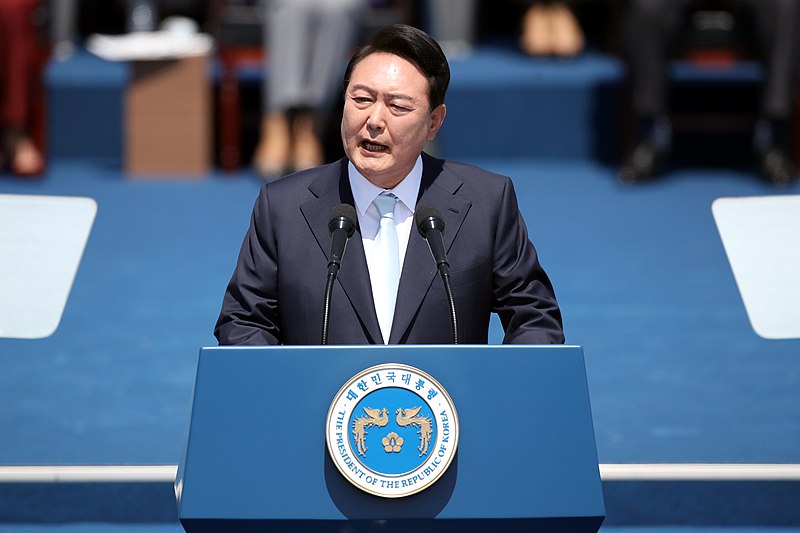
South Korean President Yoon Suk-yeol warned that there would be an unprecedented response should North Korea move ahead with its nuclear test. Yoon also called on China to dissuade North Korea from making such a test.
In an interview with Reuters Monday, Yoon said China must uphold the responsibilities of its position as part of the United Nations security council. Yoon said that not doing so would result in increased military assets deployed in the region. Yoon noted that North Korea’s multiple missiles and weapons tests this year have prompted countries to increase their defense spending and more aircraft and warships being deployed by the United States.
“What is sure is that China has the capability to influence North Korea, and China has the responsibility to engage in the process,” said Yoon, who added that it was in China’s interest to make efforts to persuade North Korea to denuclearize.
“It would be extremely unwise for North Korea to conduct a seventh nuclear test,” said Yoon, when pressed on what South Korea, the US, and Japan would do should Pyongyang move forward with the test.
During the G20 summit in Bali, US President Joe Biden told Chinese President Xi Jinping that Beijing had a responsibility to talk North Korea out of a nuclear test, but that it remained to be seen if China was actually willing to do so. Yoon said in the interview that the international community must “respond consistently, and in lockstep with each other,” when it came to North Korea.
On Tuesday, the South Korean government ordered around 2,500 truckers that went on strike to return to work in an unprecedented move that invoked strike-busting laws as construction sites all over the country are running out of building materials. During a cabinet meeting, Yoon said the truckers must return to work immediately after six days of striking over minimum pay.
The latest strike – the second one in less than six months – caused daily losses of $224 million and disrupted industrial activity in the country. Concrete laying was put on hold in 508 construction sites, and around half of the sites are running out of supplies, according to the government.













