


 Giuffre Family Urges King Charles to Meet Epstein Survivors During U.S. State Visit
  Trump-Xi Summit 2026: U.S.-China Trade War Tensions and Tariff Talks
  Indonesia Files Genocide Case Against Myanmar's Min Aung Hlaing Over Rohingya Crisis
  Trump Eyes Cabinet Shake-Up Amid Iran War Political Fallout
  U.S. Envoys Witkoff and Kushner Expected to Visit Kyiv in April Amid Stalled Peace Talks
  Israel Poised to Strike Iranian Energy Sites, Awaiting U.S. Approval
  U.S. and Israel Escalate Pressure on Iran Over Strait of Hormuz as War Enters Sixth Week
  Britain Courts Anthropic Amid US Defense Department Dispute
  Ukrainian Drone Strikes Hit Novorossiysk, Injuring Eight and Cutting Power Across Russia
  Judge Blocks DOJ Subpoenas in Federal Reserve Investigation, Delaying Powell Succession
  Iran's Stranglehold on the Strait of Hormuz: What It Means for Global Markets
  Taiwan Opposition Leader's China Visit: A Peace Mission Amid Rising Tensions
  Iran Tightens Grip on Strait of Hormuz as Israel Prepares Strikes and Oil Markets Spiral
  Trump Administration Seeks Emergency Order to Resume White House Ballroom Construction
  U.S.-Iran War Escalates: Downed Fighter Jet, Stalled Ceasefire Talks, and Ground Invasion Fears
  China's Anti-Corruption Purge Reaches New Heights as Politburo Shrinks to 25-Year Low
  Trump Issues Deadline for Iran to Reopen Strait of Hormuz Amid Escalating Conflict


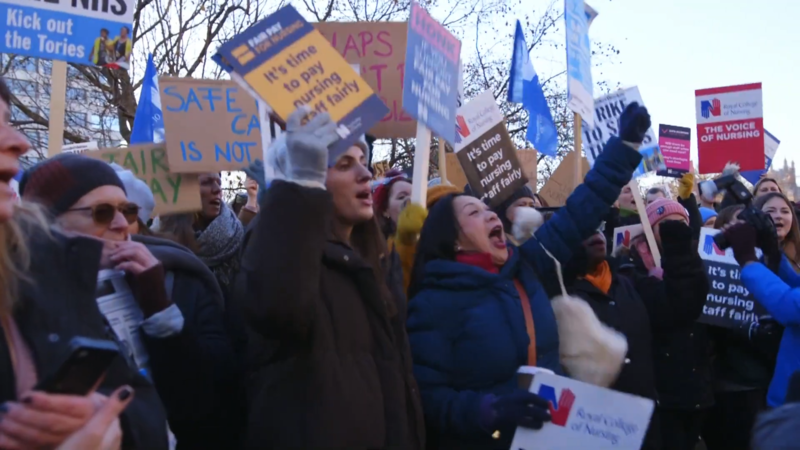
Nearly half a million teachers and civil servants in the United Kingdom took what is the biggest industrial action over pay this week. This comes as unions have threatened more disruptive strikes until the government agrees to their pay demands.
On Wednesday, nearly 500,000 teachers, train drivers, and civil servants in the UK staged a mass walkout over pay in what is the biggest industrial action taken in recent months. The walkouts resulted in schools getting shut down, halting most rail services, and forcing the military to be placed on standby to assist in border checks on a day referred to as “Walkout Wednesday.”
The mass walkout also comes as trade unions have threatened to take more disruptive action unless the government agrees to their demands. Unions say as many as 300,000 teachers participated in the walkout, making them the biggest group involved in what is a wider action taken by 500,000 people, the highest number since 2011.
The Conservative government under Prime Minister Rishi Sunak has taken a more hardline stance against the unions, saying that giving in to the demands would only worsen the country’s inflation problem. Sunak has also condemned the strikes.
“I am clear that our children’s education is precious and they deserve to be in school today being taught,” said Sunak.
The PCS union, which represents around 100,000 civil servants from over 12 government departments that are going on strike, said that further coordinated strikes may be done unless the government tries to resolve the issue.
Meanwhile, the country’s pharmaceutical trade body called for the government to scrap the plans to raise the repayment rates for drugmakers in order to prevent potential setbacks. Drugmakers under the UK’s voluntary scheme agreement are required to pay a part of their drug revenue to the government. The Health and Social Care department plans on raising the repayment rate to 27.5 percent from 24.5 percent.
The government’s plans to raise repayment rates will likely send the “worst possible signal” to global investors and boardrooms, according to the Association of the British Pharmaceutical Industry.
“Hiking these clawbacks to such uncompetitive levels risks undermining the UK’s offer to global life sciences companies,” said ABPI chief executive Richard Torbett in a statement.







