


 How will the Iran war change the Middle East? We asked 5 experts
  Iran Tightens Grip on Strait of Hormuz as Israel Prepares Strikes and Oil Markets Spiral
  Kim Jong Un's Daughter Emerges as North Korea's Likely Successor, South Korean Intelligence Says
  Trump Administration Seeks Emergency Order to Resume White House Ballroom Construction
  Trump's FY2027 Budget: Major Defense Boost and Domestic Spending Cuts
  U.S. F-15E Shot Down Over Iran: One Crew Member Recovered Amid Escalating Conflict
  U.S. Envoys Witkoff and Kushner Expected to Visit Kyiv in April Amid Stalled Peace Talks
  U.S. and Iran Edge Toward Potential 45-Day Ceasefire Amid Escalating Tensions
  U.S. Commandos Execute Daring Rescue Mission Deep Inside Iran
  Ukraine Launches Massive Drone Offensive Across Russia, Knocking Out Power to Hundreds of Thousands
  Indonesia Files Genocide Case Against Myanmar's Min Aung Hlaing Over Rohingya Crisis
  Israel Poised to Strike Iranian Energy Sites, Awaiting U.S. Approval
  Iran-US Ceasefire Talks: Pakistan Brokers "Islamabad Accord" to Reopen Strait of Hormuz
  Ukrainian Drone Strikes Hit Novorossiysk, Injuring Eight and Cutting Power Across Russia
  North Korea Tests Advanced Solid-Fuel ICBM Engine With Carbon Fiber Technology
  Iran's Stranglehold on the Strait of Hormuz: What It Means for Global Markets
  Judge Blocks DOJ Subpoenas in Federal Reserve Investigation, Delaying Powell Succession


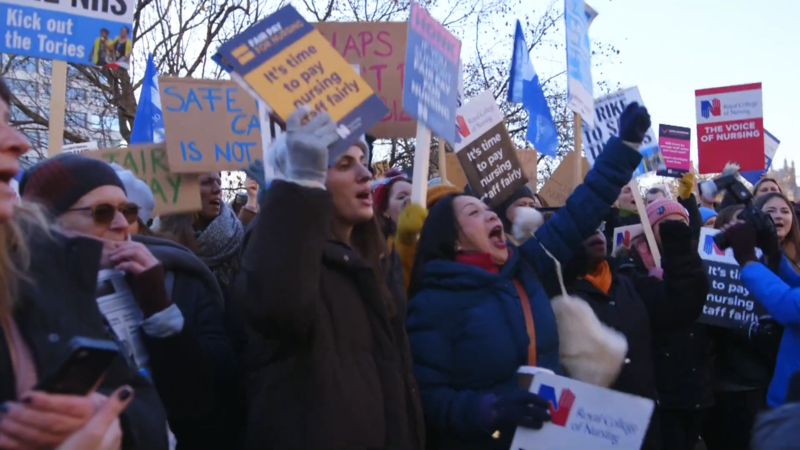
The United Kingdom has been facing waves of industrial action from key sectors, whose workers are protesting against pay and working conditions. In a blow to the British government, the country’s teachers rejected its pay proposal and announced further industrial action.
On Monday, the National Education Union said that 98 percent of the teachers it represents have voted in the ballot to reject the offer of a one-off payment this year of £1000 and an average pay increase of 4.5 percent in the next fiscal year. This comes as tens of thousands of teachers across the country have taken strike action demanding a pay increase that was enough to keep up with inflation.
“This resounding rejection of the government’s offer should leave education minister Gillian Keegan in no doubt that she will need to come back to the negotiating table with a much better proposal,” said NEU joint General Secretaries Mary Bousted and Kevin Courtney in a statement.
The NEU said its teachers would take two additional days of strike action on April 27 and on May 2. Keegan expressed disappointment in the decision by the union, suggesting that the government does not plan on further negotiations.
“Pay will now be decided by the independent pay review body, which will recommend pay rises for the next year,” said Keegan.
The Conservative government of Prime Minister Rishi Sunak has said that pay increases could only exacerbate inflation.
Separately, teachers in Wales have put an end to their strike action after they accepted a pay proposal of an additional three percent pay increase for 2022/2023 with a 1.5 percent one-off and a government-backed five percent increase for the following year. The largest teaching union in Scotland has also accepted a pay proposal that amounted to a 14.6 percent pay increase for most teachers by January 2024.
Friday last week, workers for Amazon’s warehouse in central England announced that they would take six more days of strike action in April over pay, according to the GMB trade union. GMB said over 560 workers at the warehouse would stage walkouts from April 16-18 and from April 21-23, following the first strike actions by the workers in January, with seven more days in February and March.







