


 Norway Opens Corruption Probe Into Former PM and Nobel Committee Chair Thorbjoern Jagland Over Epstein Links
  Sam Altman Reaffirms OpenAI’s Long-Term Commitment to NVIDIA Amid Chip Report
  TrumpRx.gov Highlights GLP-1 Drug Discounts but Offers Limited Savings for Most Americans
  Trump Backs Nexstar–Tegna Merger Amid Shifting U.S. Media Landscape
  U.S. Lawmakers to Review Unredacted Jeffrey Epstein DOJ Files Starting Monday
  TSMC Eyes 3nm Chip Production in Japan with $17 Billion Kumamoto Investment
  Oracle Plans $45–$50 Billion Funding Push in 2026 to Expand Cloud and AI Infrastructure
  Japan Election 2026: Sanae Takaichi Poised for Landslide Win Despite Record Snowfall
  SoftBank and Intel Partner to Develop Next-Generation Memory Chips for AI Data Centers
  Trump Allegedly Sought Airport, Penn Station Renaming in Exchange for Hudson River Tunnel Funding
  SpaceX Pushes for Early Stock Index Inclusion Ahead of Potential Record-Breaking IPO
  Trump Lifts 25% Tariff on Indian Goods in Strategic U.S.–India Trade and Energy Deal
  Trump Allows Commercial Fishing in Protected New England Waters
  Global PC Makers Eye Chinese Memory Chip Suppliers Amid Ongoing Supply Crunch
  Nvidia Nears $20 Billion OpenAI Investment as AI Funding Race Intensifies
  Elon Musk’s Empire: SpaceX, Tesla, and xAI Merger Talks Spark Investor Debate


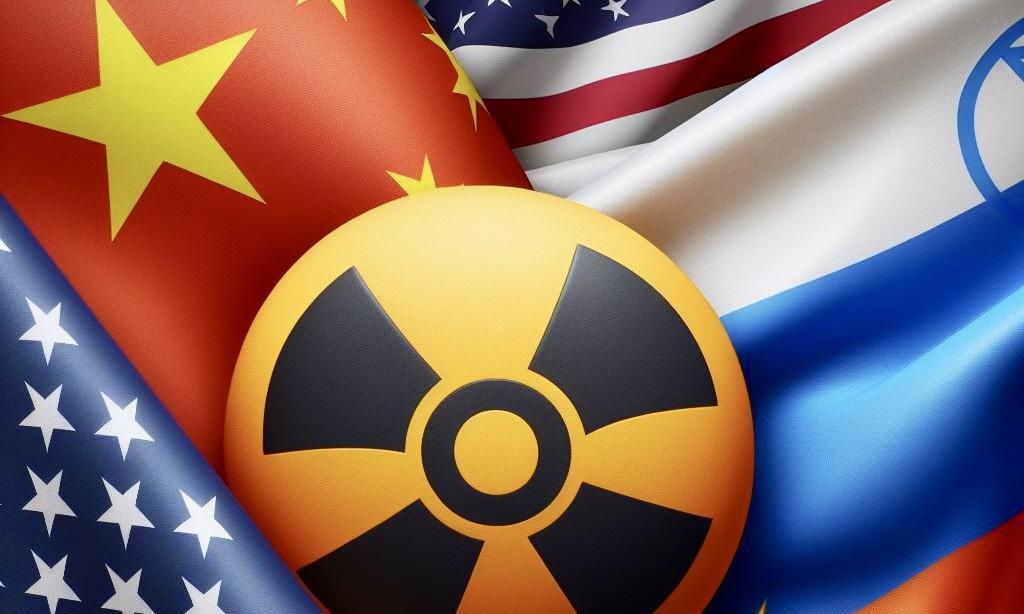
Paul Dean, a senior U.S. arms control official, emphasized the critical need for China and Russia to join the U.S. in declaring that humans will always decide on the deployment of nuclear weapons, not artificial intelligence (AI).
US, France, and Britain Stand United on Nuclear Control
As reported by Reuters on Thursday, China and Russia are implored to follow the lead of the United States and others in stating that decisions regarding the deployment of nuclear weapons would never be made by artificial intelligence but by humans.
During an online briefing, Paul Dean, an arms control official for the State Department, stated that Washington, together with France and Britain, had made a "clear and strong commitment" that humans had complete control over nuclear weapons.
Dean, principal deputy assistant secretary of the Bureau of Arms Control, Deterrence, and Stability, stated, "We would welcome a similar statement by China and the Russian Federation."
"We think it is an extremely important norm of responsible behavior and we think it is something that would be very welcome in a P5 context," he stated, alluding to the five permanent members of the U.N. Security Council.
Dean's comments coincide with efforts by U.S. President Joe Biden's administration to expand bilateral talks with China on the development of artificial intelligence and nuclear weapons policy.
The Chinese Ministry of Defense did not immediately answer a request for comment.
Blinken and Wang Yi's Talks Set Stage for AI Dialogue
During broad talks in Beijing on April 26, U.S. Secretary of State Antony Blinken and China's Foreign Minister Wang Yi talked about the growth of AI technology.
Blinken stated that in the coming weeks, the two parties will conduct their first bilateral discussions on artificial intelligence, during which they will exchange perspectives on managing the technology's associated risks and ensuring its safety.
Although formal arms control negotiations are not anticipated to happen anytime soon, U.S. and Chinese officials began discussing nuclear weapons in January as part of normalizing military relations.
Photo: Microsoft Bing













